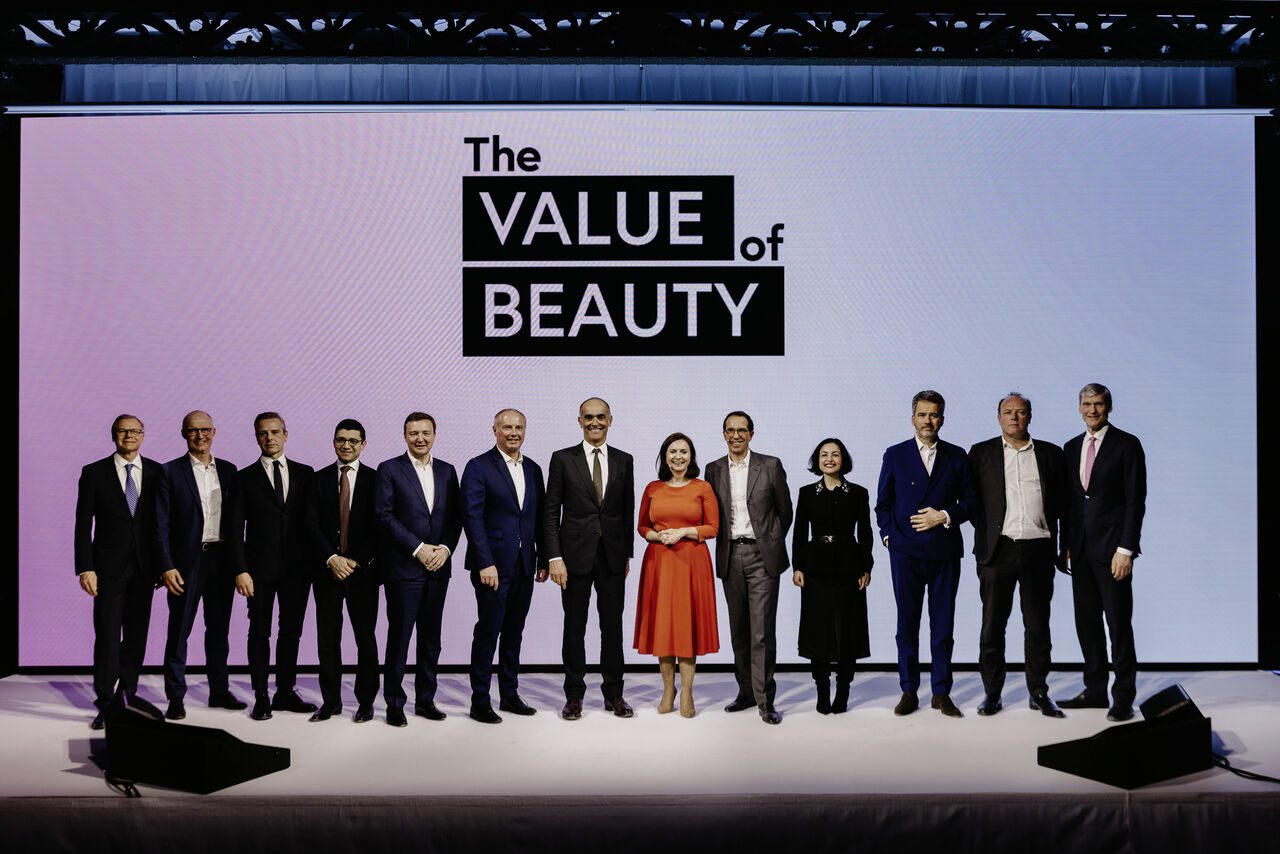
When people think of the beauty and personal care industry, they often picture cosmetics, skincare, and luxury fragrances. But beneath the surface lies a thriving economic force that fuels growth, innovation, and sustainability across Europe. A recent gathering in Brussels brought together some of the industry’s most influential leaders to highlight its far-reaching impact.
The Value of Beauty Alliance, led by Beiersdorf CEO Vincent Warnery alongside 15 other industry executives, unveiled a compelling case for the sector’s role in Europe’s economic competitiveness and sustainability. Their discussions, supported by an extensive report commissioned by Oxford Economics, reveal that if the beauty and personal care industry were a country, its economy would rival that of Hungary, generating a staggering €180 billion in GDP.
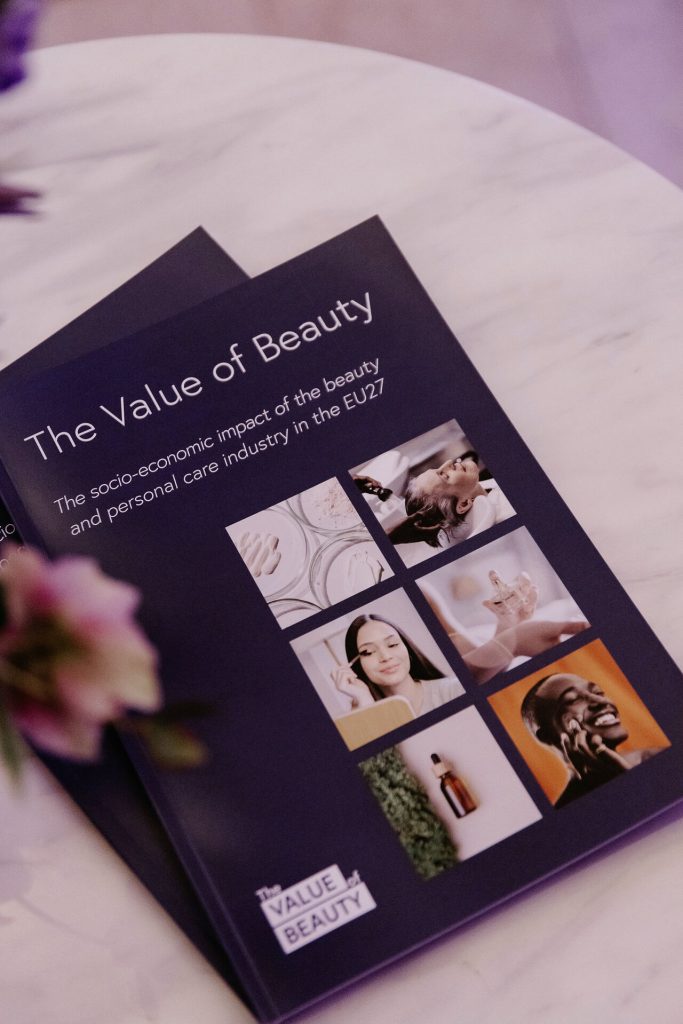
The findings from the Value of Beauty Event highlight the industry’s vast socio-economic influence. Beyond its direct financial contribution, the sector sustains millions of jobs across manufacturing, retail, research and development, and sustainable product innovation.
The report also emphasizes the industry’s increasing commitment to responsible sourcing, green chemistry, and circular economy initiatives, aligning with the EU’s long-term sustainability goals. Learn more about the European Commission’s sustainability initiatives here: EU Circular Economy Action Plan.
For a deeper dive into the report’s findings, visit Oxford Economics: Oxford Economics Report.
Ensuring Europe’s Global Competitiveness
Despite its impressive performance, the beauty and personal care industry faces growing challenges, including regulatory pressures, sustainability demands, and shifting consumer expectations. To safeguard its global leadership position, Beiersdorf and other members of the Value of Beauty Alliance are actively collaborating with stakeholders across the value chain. Their collective efforts aim to foster innovation, uphold sustainability commitments, and advocate for policies that support economic resilience and business growth within the sector.
Beiersdorf is committed to sustainability, continuously advancing its initiatives to support environmental responsibility and economic resilience. Learn more about their efforts here: Beiersdorf Sustainability.

As Europe navigates an evolving economic landscape, the beauty and personal care industry remains a pillar of strength, demonstrating its ability to adapt, innovate, and drive prosperity. The Value of Beauty Alliance’s latest initiative serves as a testament to the industry’s dedication to shaping a competitive and sustainable future.
A Sector Beyond Aesthetics
Often associated with luxury and personal well-being, the beauty and personal care industry extends far beyond aesthetic enhancement. Its contributions to scientific advancements, employment generation, and sustainability efforts position it as a crucial player in Europe’s economic and environmental agenda. The latest findings by Oxford Economics reinforce the need for continued investment, strategic policy-making, and cross-sector collaboration to maintain the industry’s upward trajectory.
For more information on the Value of Beauty Alliance, visit: Value of Beauty Alliance.
As discussions progress, one thing remains clear: the beauty and personal care sector is not merely an accessory to Europe’s economy—it is a powerhouse driving its growth and global influence.
What are your thoughts on the industry’s economic significance? Did these findings align with your expectations? Join the conversation and share your insights.