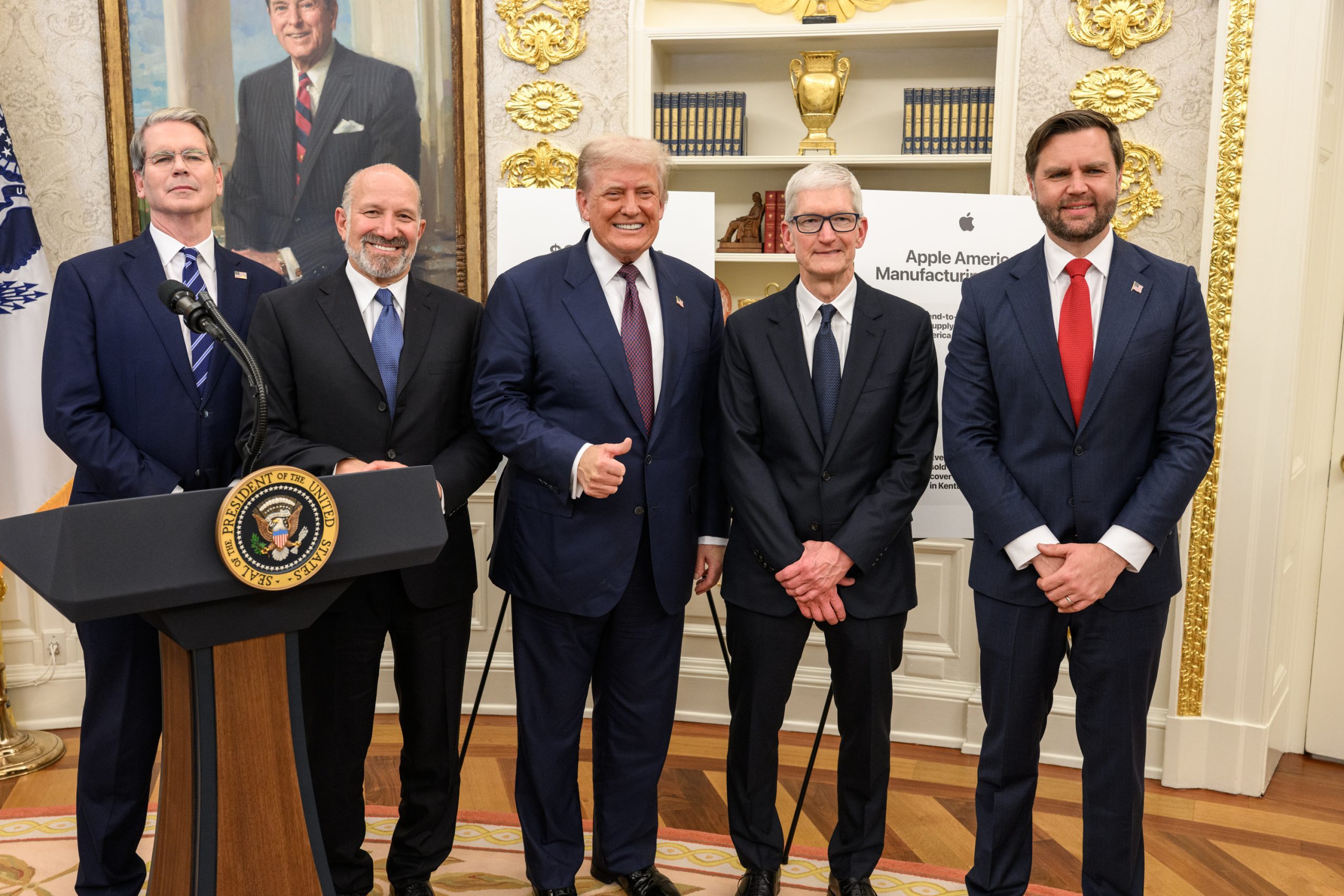
Apple’s recent pledge to invest US$600 billion in the United States over the next four years presents as an act of patriotic industry. Yet the spectacle—a Corning glass plaque with a 24-karat gold base, a White House handshake—belies a subtler reality: this is less visionary rebirth than high-priced diplomacy, and far from a genuine reshoring revolution.
A Strategic Pivot or Public Theater?
At the White House, President Trump hailed Apple’s expansion as a boon to U.S. manufacturing. The new American Manufacturing Program (AMP), unveiled alongside the funding surge, promises to bring components—from glass to chips—back to U.S. soil, and generate some 20,000 direct jobs.
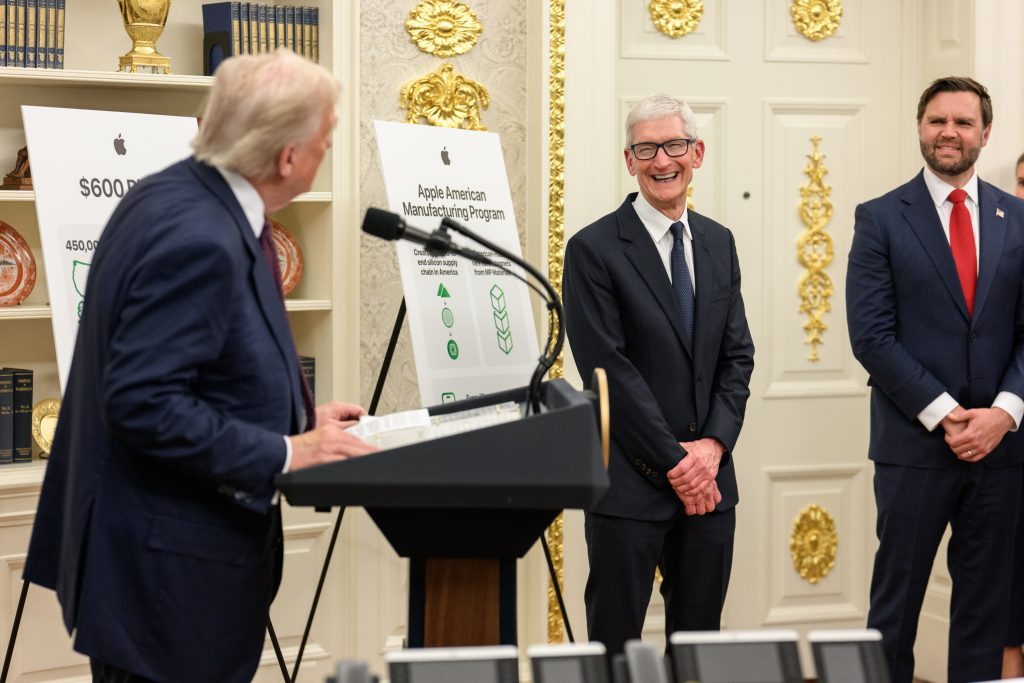

Among AMP’s flagship investments: US$2.5 billion dedicated to Corning’s Harrodsburg, Kentucky facility to produce 100% of iPhone and Apple Watch cover glass. That plant will house the world’s largest smartphone glass production line, staffed by a 50% workforce boost. Apple also plans an end-to-end U.S. silicon ecosystem—wafers from GlobalWafers in Texas, chips fabricated at TSMC in Arizona, with partners including Texas Instruments and GlobalFoundries.
Skeptics point out that much of the US$600 billion is already baked into existing supply chain contracts, capital expenditures, and routine operational spending—not entirely “new” efforts. Analysts call it a calculated gambit—a preemptive tariff buffer and political olive branch, as reported by Reuters.
Market Cheers—For Now
Wall Street responded predictably. Apple’s stock rose 2.7%, nearing its highest close since April. Analysts raised price targets, citing reduced tariff uncertainty and improved supply chain clarity. Even The Economic Times described the announcement as “market-moving theatre.”
Dissection in Three Acts: Reality, Reality, Reality
The headline figures—20,000 direct jobs, expanded domestic facilities, and an end-to-end U.S. chip and glass production line—sound transformative. In practice, most hiring will occur in states where Apple already operates, limiting the net economic impact. The “complete” supply chain vision remains embryonic, with final assembly still anchored overseas. Politically, the move dovetails neatly with the White House’s “America First” narrative, providing tariff insulation and favourable optics, yet it is more a transaction than a transformation—an industrial gesture dressed as a manufacturing renaissance.
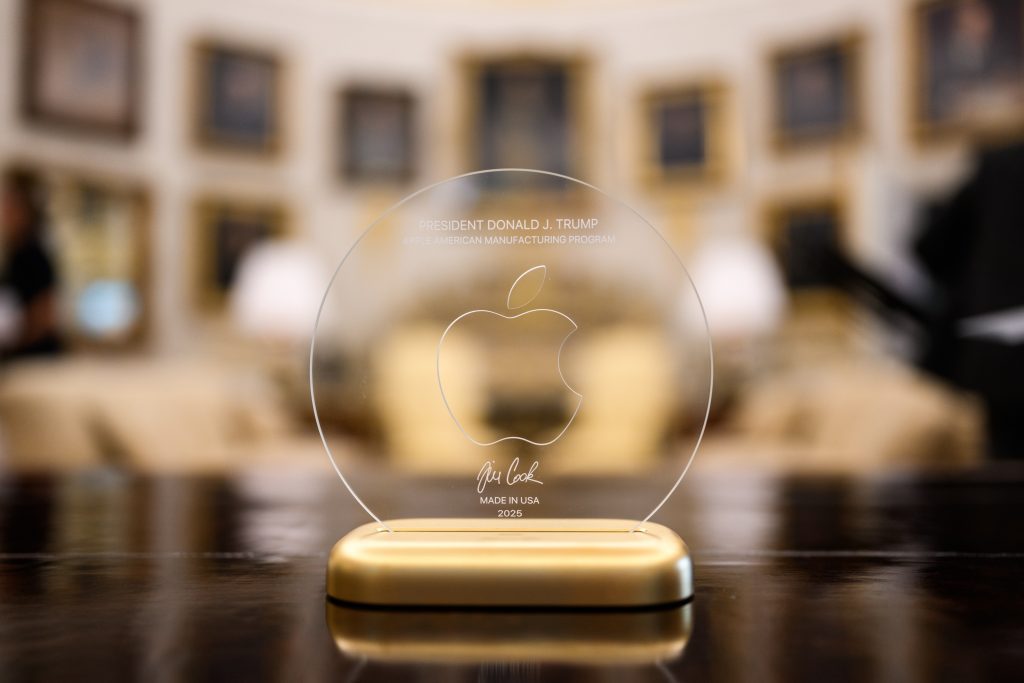
Apple’s $600 billion pledge is a high-pedigree gesture, not a paradigm shift. It offers optics of industrial patriotism without fundamentally upending its global manufacturing strategy. In substance, it’s risk mitigation—and in spectacle, a gilded concession worth millions of dollars in optics, if not reshoring.