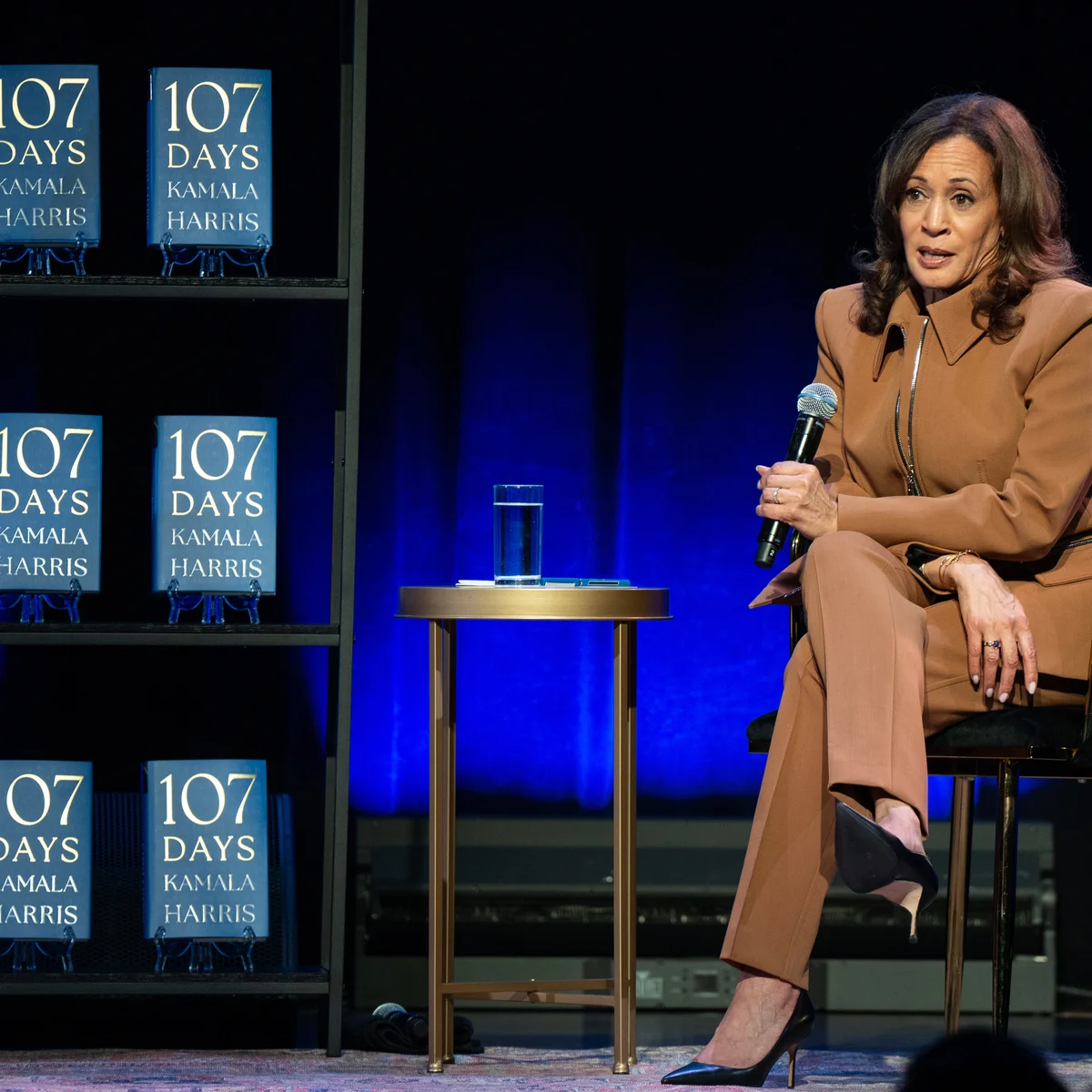
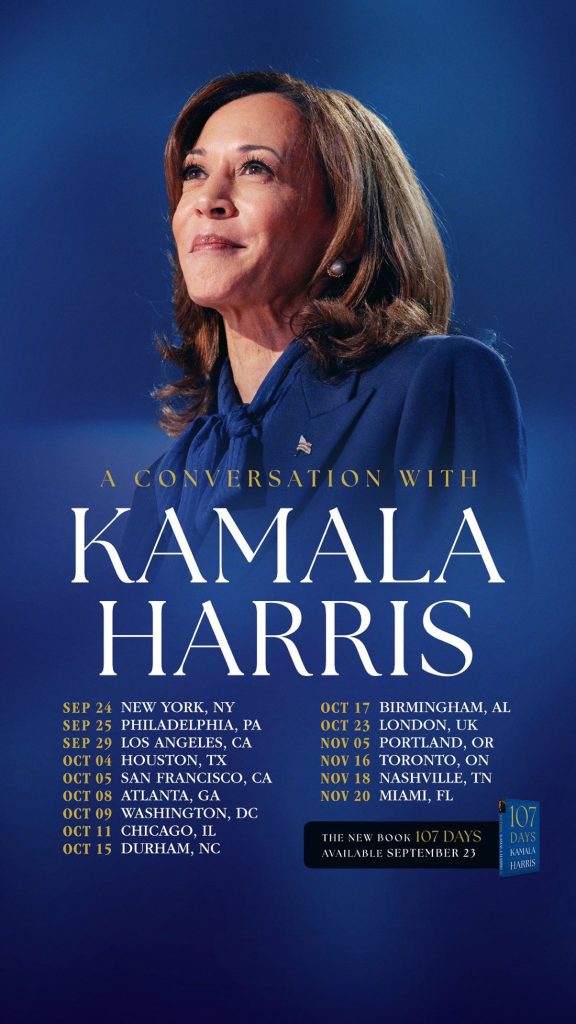
Kamala Harris’s new memoir, 107 Days (Simon & Schuster, 2025), attempts to document one of the shortest and most scrutinised presidential campaigns in modern U.S. political history. Written in the wake of her 2024 election defeat, the book balances confession with caution, recounting political and personal challenges while avoiding direct acknowledgment of certain missteps that defined her bid for the White House.
Context and Content
The title refers to the 107 days between President Joe Biden’s withdrawal from the race and election day—an unprecedented period during which Harris, as sitting Vice President, became the Democratic Party’s nominee. Her account moves between crisis management, rapid staffing, and the weight of public scrutiny that shaped her campaign’s compressed trajectory.
Harris details internal tensions within the Democratic ticket, including difficult decisions surrounding her choice of running mate, Minnesota Governor Tim Walz. She acknowledges moments of regret during the campaign’s public debates and the challenges of navigating a polarized media environment—though she directs much of her criticism toward male colleagues and media framing rather than her own strategic approach.
Strengths and Silences
Harris’s writing is strongest when addressing the human cost of public service. Her passages on exhaustion, digital misinformation, and security threats offer valuable insight into the realities of campaigning in the post-Trump era. She also contextualises the administration’s priorities on infrastructure, healthcare, and childcare affordability—areas central to her tenure as vice president.
However, 107 Days largely sidesteps deeper reflection on contentious policy issues such as immigration reform and inflation. Harris concedes that “we could not gaslight the people who felt the system wasn’t working,” yet provides little detail on how her proposed solutions differed from the Biden administration’s. Similarly, while she recounts the passage of the Inflation Reduction Act, she offers limited discussion of its uneven economic impact or voter skepticism surrounding it.
The book’s treatment of identity politics is more nuanced than her earlier work, The Truths We Hold (2019), though still cautious. Harris argues that social inclusion and economic fairness are mutually reinforcing, yet critics note that her messaging often struggled to connect with working-class and rural voters during the campaign.
Reception and Reflection
Early reviewers have been divided. Supporters have praised 107 Days as a forthright account of leadership under extraordinary pressure, while detractors describe it as selective and defensive. Analysts at Politico and The Atlantic note that the memoir functions as both a political postmortem and a preservation of legacy—less a mea culpa than a strategic reframing for potential future relevance.
Harris’s reflections on the campaign trail—such as her portrayal of debates, fundraising challenges, and the media’s focus on optics—highlight broader systemic issues facing women and minority candidates in U.S. politics. Yet by the book’s conclusion, readers may still find themselves searching for greater introspection or policy specificity.
A Controlled Chronicle of Unfinished Questions
In the end, 107 Days offers a disciplined, image-conscious narrative of a compressed campaign and a polarised political era. It illuminates Harris’s resilience but leaves open questions about her political instincts and strategic decisions. Rather than a confession or a comeback manifesto, the book reads as a controlled exercise in legacy management—an effort to reclaim authorship of a narrative that, for much of 2024, was written by others.