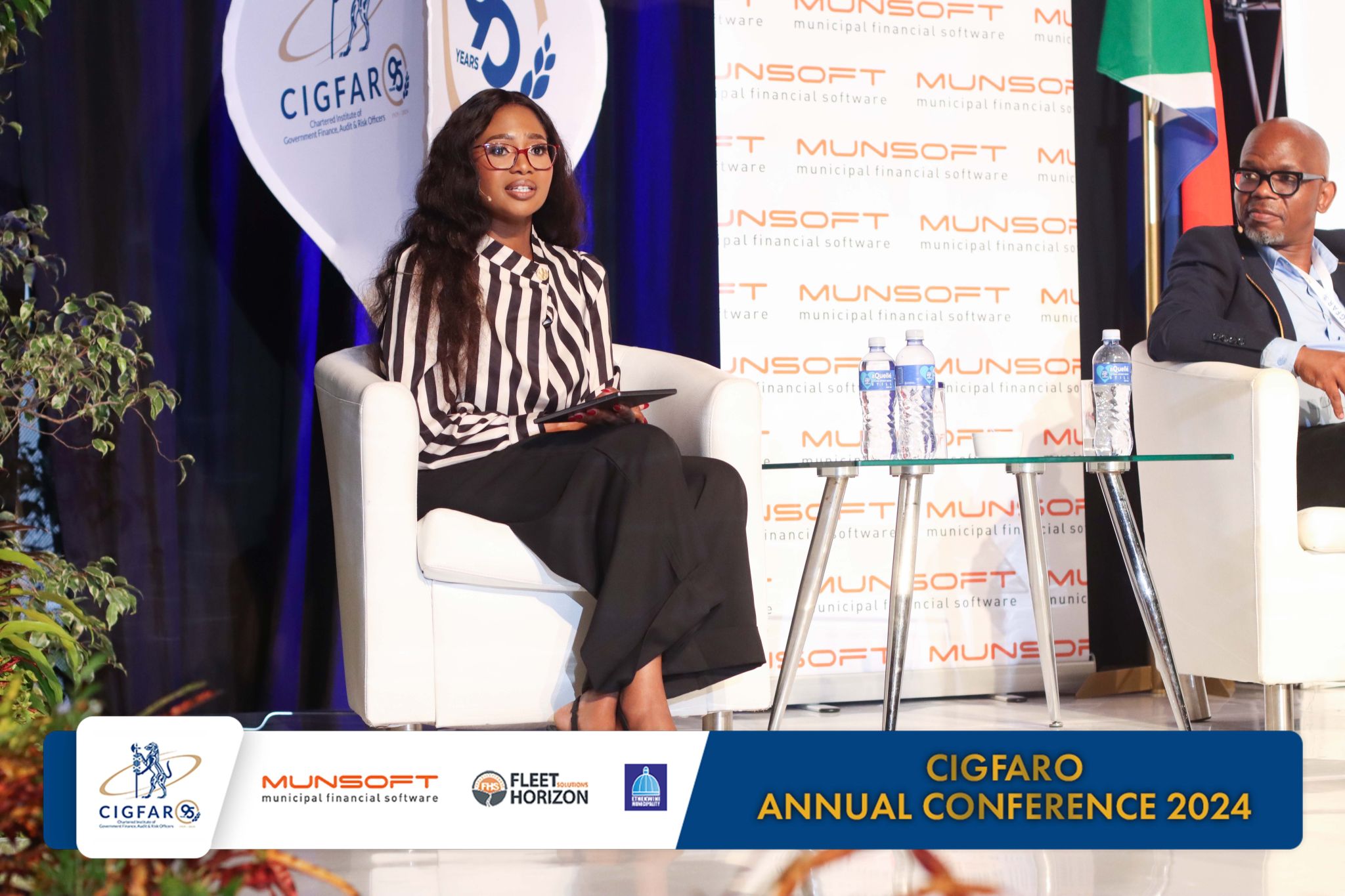
As municipalities across South Africa grapple with numerous challenges, including poor service delivery, mismanagement, financial distress, and bad audit outcomes, conversations about creating a culture of accountability and integrity in public sector finance have never been more critical. This was the central theme of the 2024 CIGFARO(Chartered Institute of Government Finance, Audit & Risk Officers) Conference, which sought to drive the transformation of governance in the public sector.

Facilitated by seasoned financial journalist and panel moderator Zinatho Quma, the conference explored the “Cultural Shift to Public Sector Finance,” in alignment with the Office of the Auditor-General South Africa’s #CultureShift2030. strategy. This initiative is focused on improving transparency, performance, and fiscal responsibility within government institutions. It aims to establish a culture where municipalities and government entities are accountable not just to auditors but also to the citizens they serve.
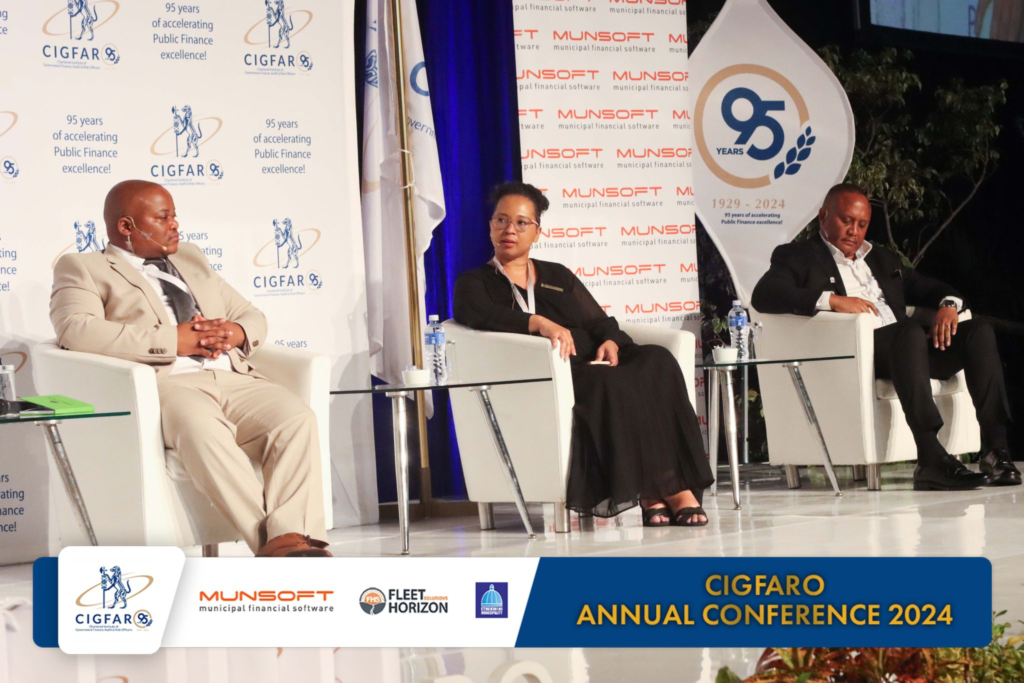
In this in-depth discussion, Zinatho Qua was joined by an impressive panel of experts from the finance and governance sectors. These professionals, with years of experience in public finance and risk management, shared their insights and strategies for overcoming the challenges faced by municipalities. The panelists included:
- Amos Twala
Vice President of CIGFARO
Amos Twala has been at the forefront of CIGFARO’s initiatives to enhance financial governance in municipalities. With his extensive background in auditing and finance, Twala emphasized the need for proactive measures in building financial discipline within local governments. He underscored that the constant deterioration in audit results across many municipalities is a direct reflection of the lack of adherence to fiscal management principles and the need for more robust internal controls. Twala also advocated for the professionalization of public finance officials to improve service delivery and accountability. - Annalene Marais
CFO at Sol Plaatje University
Annalene Marais brought her academic expertise to the conversation, focusing on the importance of financial education in the public sector. She highlighted how universities can be incubators of financial literacy for future public sector leaders, advocating for collaborative efforts between educational institutions and government to train skilled professionals. Marais stressed that the long-term sustainability of municipalities depends on their ability to manage their finances prudently, as financial mismanagement leads directly to failing infrastructure and social instability in communities. - Mdumiseni Dazela
Representative from the Office of the Auditor-General South Africa
The Auditor-General’s office plays a pivotal role in ensuring financial accountability in the public sector. Mdumiseni Dazela reiterated the significance of the #CultureShift2030 strategy, which aims to foster a climate of honesty, transparency, and accountability within government institutions. He detailed how consistent audit failures not only reflect poorly on municipalities but also harm public trust. The Auditor-General’s Office has committed to working closely with municipalities to address gaps in financial management, focusing on training and implementing new performance standards that reward ethical governance and fiscal prudence. - Nompumelelo Precious Majola Bonakude
Acting Chief Director for Municipal Finance, Department of Cooperative Governance and Traditional Affairs (COGTA, KZN)
Nompumelelo Majola Bonakude brought a practical perspective from her extensive experience managing municipal finance. Her insight into the day-to-day challenges faced by municipalities revealed a lack of sufficient oversight and the misalignment between policy directives and on-the-ground realities. Bonakude emphasized that municipal finance officers must be empowered to implement policies effectively, and this empowerment requires both resources and political support. She also discussed the need for clearer frameworks that guide how municipalities should manage their finances, with an emphasis on debt recovery, revenue enhancement, and expenditure control. - Ineeleng Molete
CEO of the Local Government Sector Education and Training Authority (LGSETA)
As the CEO of LGSETA, Ineeleng Molete focused on the critical role that training and capacity building play in transforming public sector finance. She pointed out that many municipalities fail to perform due to the inadequate skill levels of finance officials. Molete called for a comprehensive approach to capacity development, one that equips government employees with the tools they need to manage municipal funds effectively. She discussed ongoing programs that LGSETA offers to develop the next generation of public sector finance professionals and stressed the importance of continuous professional development for current employees.
Key Topics Discussed
- Financial Mismanagement and Debt in Municipalities
Municipalities across South Africa are facing staggering debts, both owed and owing. Panelists highlighted how poor financial planning and management lead to chronic underfunding of essential services such as water, electricity, and sanitation. They called for urgent intervention to reverse this trend, suggesting stricter enforcement of financial regulations and clearer guidelines for debt management. - The Role of Transparency and Accountability
The culture of secrecy and lack of accountability in many municipalities has allowed corruption and inefficiency to thrive. The Auditor-General’s office, represented by Mdumiseni Dazela, emphasized the need for open financial reporting and regular audits to ensure that taxpayers’ money is being spent wisely and effectively. The panel also called for stronger consequences for non-compliance with audit findings.

- Capacity Building and Professionalization of Finance Officials
Many municipalities are operating with underqualified or unskilled finance staff, leading to poor financial decision-making. Panelists like Ineeleng Molete emphasized the importance of education and continuous professional development for municipal employees. Public finance officers need to be equipped with the latest skills and knowledge to manage increasingly complex municipal budgets. - Public-Private Partnerships and Innovative Solutions
Annalene Marais discussed the potential for public-private partnerships (PPPs) to fill the gap where government resources fall short. By leveraging private sector efficiency and expertise, municipalities could unlock funding for infrastructure projects and improve service delivery. However, panelists stressed that these partnerships must be managed with transparency and a focus on long-term benefits for communities.
#CultureShift2030: A Strategy for the Future
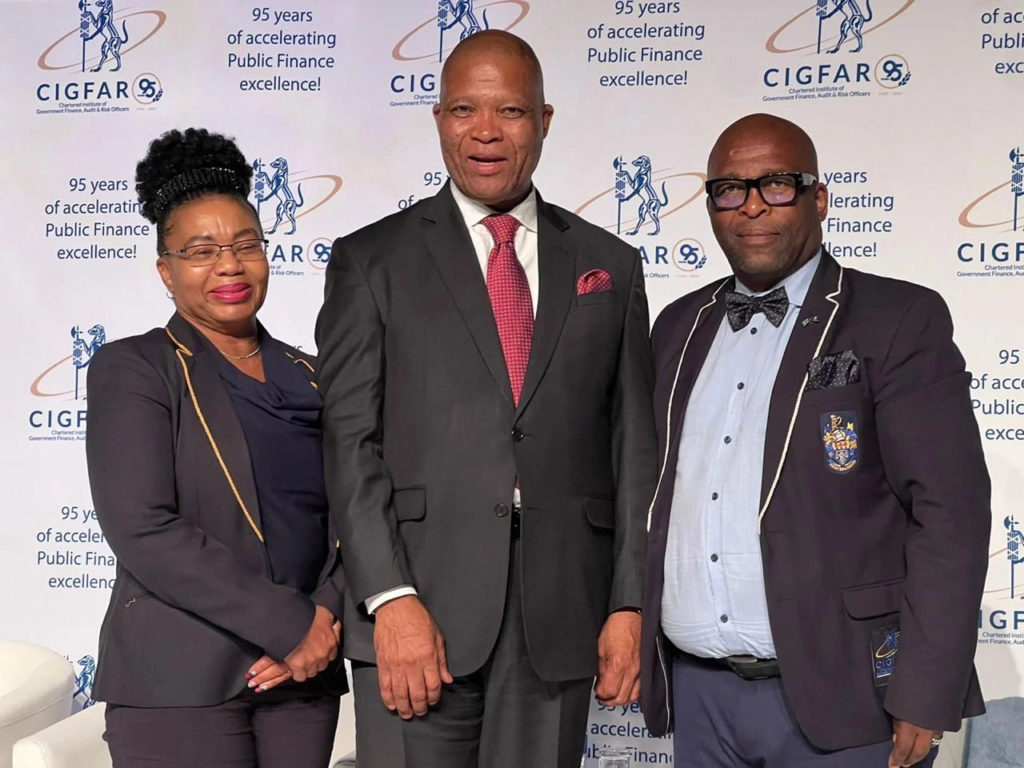
At the heart of the discussion was the #CultureShift2030 initiative, an ambitious program from the Auditor-General’s office aimed at fostering a culture of integrity and excellence in public sector finance. This cultural shift requires buy-in from all levels of government and a commitment to reform. The panel agreed that while challenges remain, the path to reform is achievable with the right leadership, training, and accountability mechanisms in place.