When the term “bespoke suits” arises, many envision a classic, almost untouched vision—mahogany walls, ornate Persian rugs, and an atmosphere heavy with the history of royal opulence. However, House of Olé, a South African fashion label, challenges this traditional perspective, infusing a much-needed modern sensibility into bespoke tailoring. The vision is not born from the high-end, exclusive traditions of European tailoring but rather from an African context steeped in both social and political significance.

House of Olé embodies a unique interpretation of “bespoke” fashion that speaks directly to South Africa’s rich history. In a country where clothing once became a vital part of asserting dignity for a marginalized people, the label reflects a broader cultural significance. During apartheid and the harsh days of the 1950s, South African communities—especially in areas like Sophiatown—found meaning in the garments they wore. Scarves, shawls, patterned fabrics, and hats became symbols of resistance and pride. Garments were no longer just clothes; they were tools of defiance, an assertion of identity, and a silent declaration of strength.
At the heart of House of Olé lies the creative genius of Olebogeng Ledimo, whose journey into fashion began in a most humble manner. Initially a model working as a sales assistant at the Fashion Nation Designers Emporium in Bloemfontein, Ledimo’s passion for fashion soon evolved. He spent his evenings working in the store’s in-house studio, honing his skills in garment creation, while also gaining a deeper understanding of the intricate process of design and construction.
His debut on the South African fashion scene came in 2006 when he showcased his collection at South African Fashion Week. That moment proved to be a turning point in Ledimo’s career, catching the attention of Wandi Nzimande of Loxion Kulca, who invited him to become their creative director. This marked the beginning of a career that would blend fashion with a profound sense of cultural history, merging the concept of clothing as not just fashion but also as a medium of political and social storytelling.
The name “House of Olé” is a fusion of Ledimo’s nickname and his admiration for lions—their regal stature, pride, and unity. He finds resonance in how lions work cohesively within their territories, a reflection of how he strives to create a collective identity within his fashion designs. His collections are known for their unique blend of artistry, craftsmanship, and cultural pride.
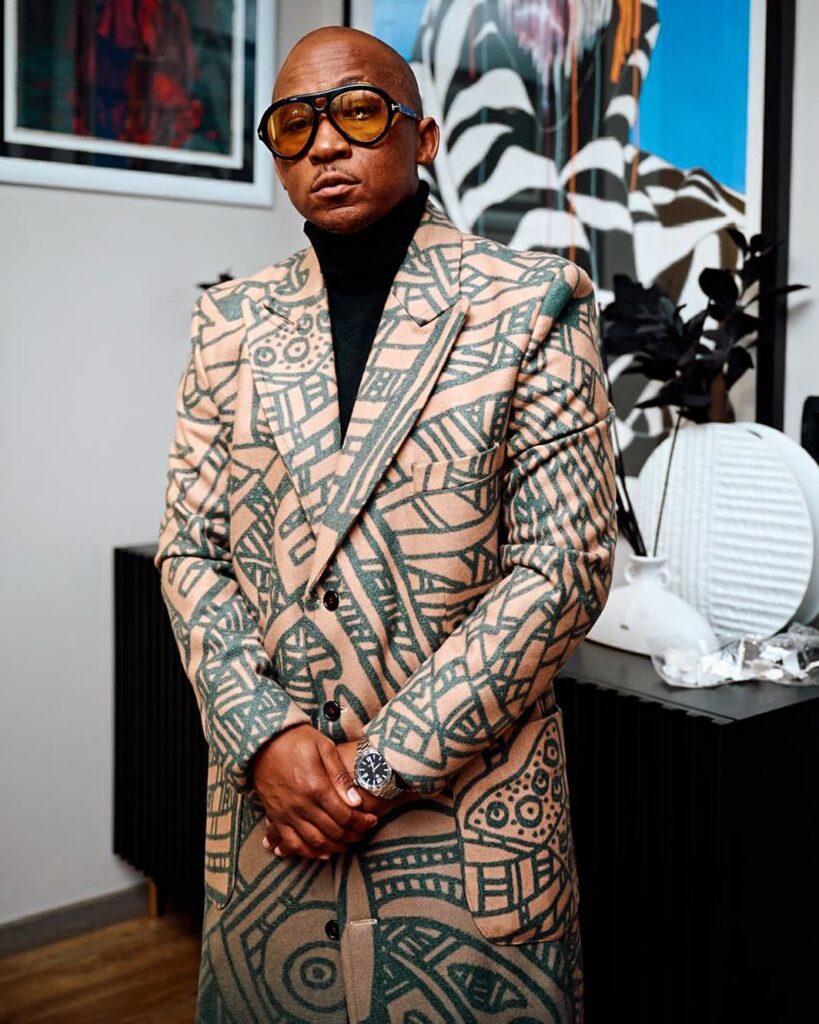
One of House of Olé’s most notable contributions to South African fashion is its collaboration with local artists, showcasing a synergy between fashion and art. For example, a cream wool jacket featured in the 21 YEARS exhibition was hand-painted by renowned South African artist Nelson Makamo, while a shirt was painted by artist Nkosinati Quwe. These collaborations are a testament to Ledimo’s commitment to supporting local talent and honoring the country’s rich artistic heritage.
In 2009, Ledimo sought further refinement in his craft by enrolling in a tailoring course at the prestigious London College of Fashion. This period of growth culminated in the release of the “Olé London Limited Edition” collection. His thirst for knowledge and mentoring led him to create Raw Silk, a reality TV show on SABC 1, where aspiring designers competed for an internship under his guidance. The show not only provided mentorship but also helped elevate South African fashion on a larger stage.
House of Olé’s commitment to not just clothing, but also to shaping and uplifting the local industry, is reflected in its participation in high-profile exhibitions, including the Zeitz MOCAA’s 21 YEARS: Making Histories with South African Fashion Week exhibition in 2018–2019. This exhibition celebrated the evolution of South African fashion, highlighting the strides made in both design and social relevance, with House of Olé serving as a key representative of this cultural shift.
Olebogeng Ledimo’s House of Olé does more than create clothes. It creates a narrative—a celebration of heritage, pride, and resistance—imbued with a profound understanding of fashion’s power. In doing so, it redefines what it means to wear something bespoke in South Africa, and its legacy is one that transcends fashion itself, instead becoming a movement that honors the people and history of this remarkable nation.