
What do Hitler and American Eagle have in common? Both built cultural capital on the myth that blonde hair and blue eyes signify superior genetics.
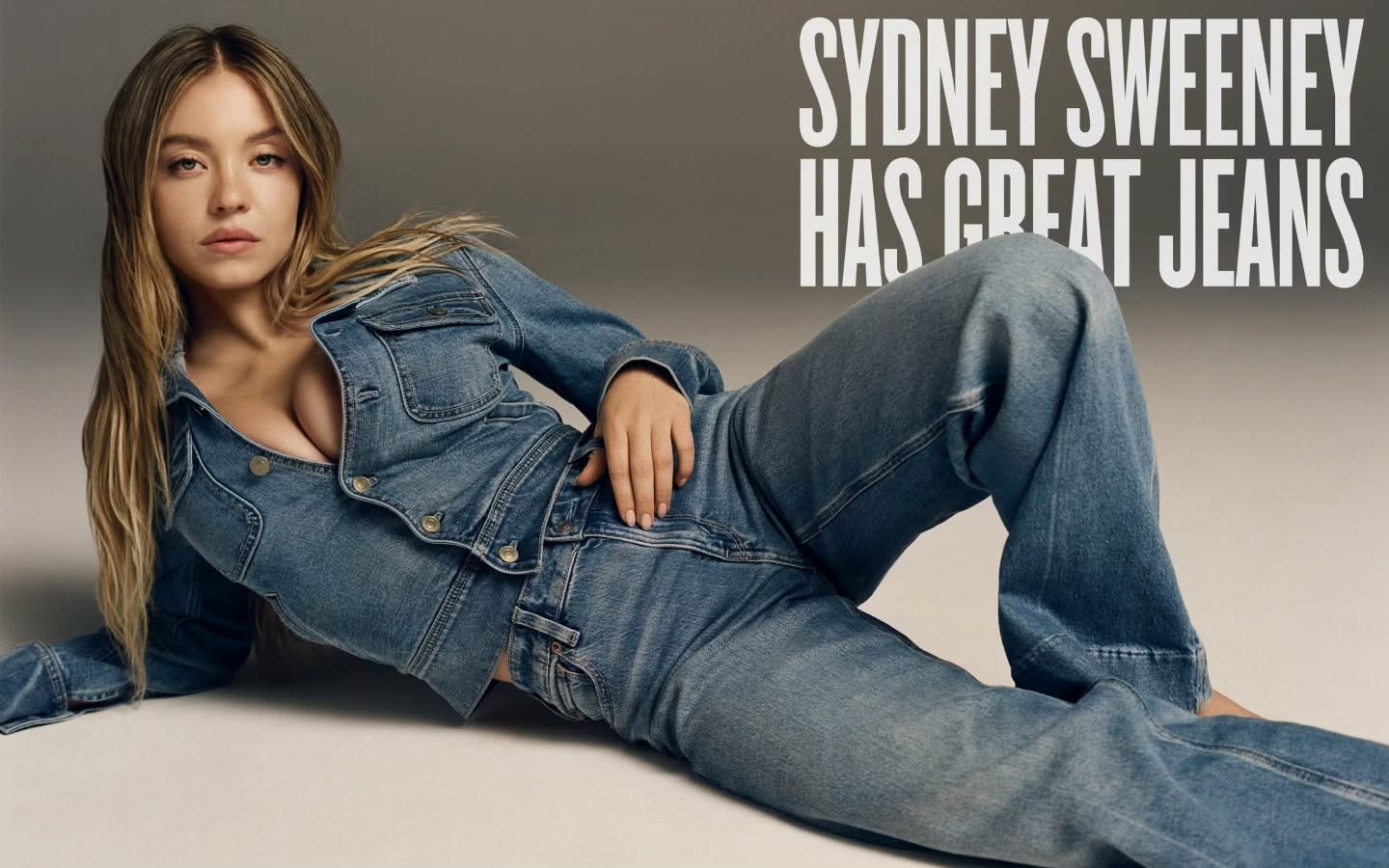
This month, American Eagle launched its Fall 2025 campaign featuring Sydney Sweeney under the tagline “Sydney Sweeney Has Great Jeans.” The company called it its most expensive marketing push to date. Within 24 hours of launch, American Eagle Outfitters Inc. gained $400 million in market capitalization, with its stock price spiking 17.65%, as reported by FandomWire. The campaign used 3D billboards, Snapchat AR filters, and the full weight of influencer marketing to amplify Sweeney’s image denim-clad, camera-ready, and genetically “perfect” for the shot.
On the surface, it’s a light pun. But scratch even slightly and the implications are darker than the denim being sold. In one campaign visual, Sweeney is shown “painting” over the phrase “great genes” to reveal “great jeans.” The message is unmistakable: she doesn’t just have well-fitting pants; she has the kind of body and biology worth replicating. This isn’t clever and quite frankly is culturally reckless.
In the early 20th century, the American eugenics movement pushed the idea that society could be improved by encouraging the reproduction of “desirable” traits chiefly white, Eurocentric features and discouraging or forcibly eliminating others. Public campaigns, state sterilization programs, and propaganda posters promoted the notion of “better breeding.” It is not a stretch to say that a century later, American marketing still trades on the exact same visual cues except now, they come wrapped in brand partnerships and influencer content.
Sydney Sweeney is not at fault for being beautiful. She is, however, being used as a vessel for an enduring fantasy of aesthetic and genetic supremacy. That matters. Especially in fashion, where the politics of visibility are never neutral.
Who gets to be the face of “great genes”? Who gets the billboard in Times Square? Who gets to sell “main character energy” as an aspirational ideal?
It’s not accidental that American Eagle chose Sweeney, and not an Indigenous influencer, not a plus-sized model, not someone differently-abled as they did back in 2016.. A white woman with blue eyes and a slim frame is the one chosen to personify greatness. That’s a branding decision.

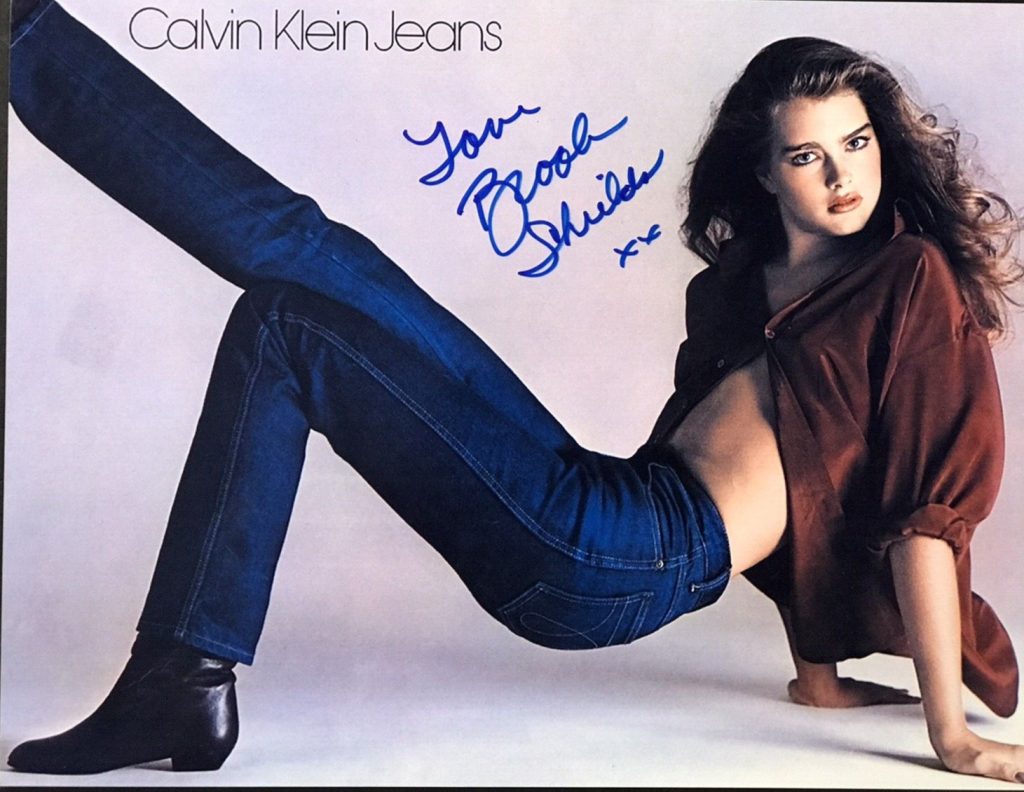
The industry has done this before. In 1980, Calvin Klein infamously aired an ad campaign featuring 15-year-old Brooke Shields, who delivered the line: “You want to know what comes between me and my Calvins? Nothing.” The ad, directed by fashion legend Richard Avedon, was immediately controversial for its hypersexual undertones and the way it objectified a teenage girl under the guise of sophistication and wit. Much like American Eagle’s campaign today, it relied on wordplay to disguise what was, at its core, an exercise in aestheticising youth, whiteness, and desirability. Shields later described the campaign’s intellectual positioning as filled with “literary references” and “wordplay” language not far from today’s “cheeky” creative direction.
In both cases, we see the same pattern: powerful brands using innuendo, high fashion gloss, and carefully chosen white female bodies to stir attention, dominate the conversation, and push product. It’s a legacy of exploitation dressed in denim.
While the campaign is wrapped in Gen Z-friendly tech and mental health activism, including the limited-edition Sydney Jean from which 100% of proceeds go to Crisis Text Line it doesn’t offset the cultural dissonance of using racialized beauty standards as the foundation of mass appeal. The aesthetics of eugenics are now being reframed as empowerment, without acknowledging the historical violence they echo.


Criticism online was swift and incisive. One viral post read, “Maybe I’m too woke, but getting a blue-eyed, blonde, white woman and focusing your campaign around her having perfect genetics feels weird…” Others drew direct lines between the campaign’s imagery and “master race” propaganda, underscoring how little has changed in the way beauty is racialized and sold.
American Eagle has not publicly responded to the backlash. And why would they? The stock went up. For the brand, it’s a success story.
But for the rest of us, particularly those who exist outside the Eurocentric ideal, the message is chillingly clear: Your genes aren’t marketable. Your beauty isn’t universal. Your body isn’t billboard-worthy.
This is the problem with mainstream feminism when it refuses to grapple with whiteness as a vector of power. Representation isn’t just about who gets to be seen; it’s about who gets to embody value. And in this case, that embodiment reinforces a narrow, exclusionary, and historically violent standard.
American Eagle didn’t just launch a denim campaign. They revived a eugenics-era aesthetic under the guise of youth culture. And that’s not fashion. That’s propaganda.
(May we also add, she’s a natural brunette, we can see her roots and her old pictures…) Beautiful woman…however…