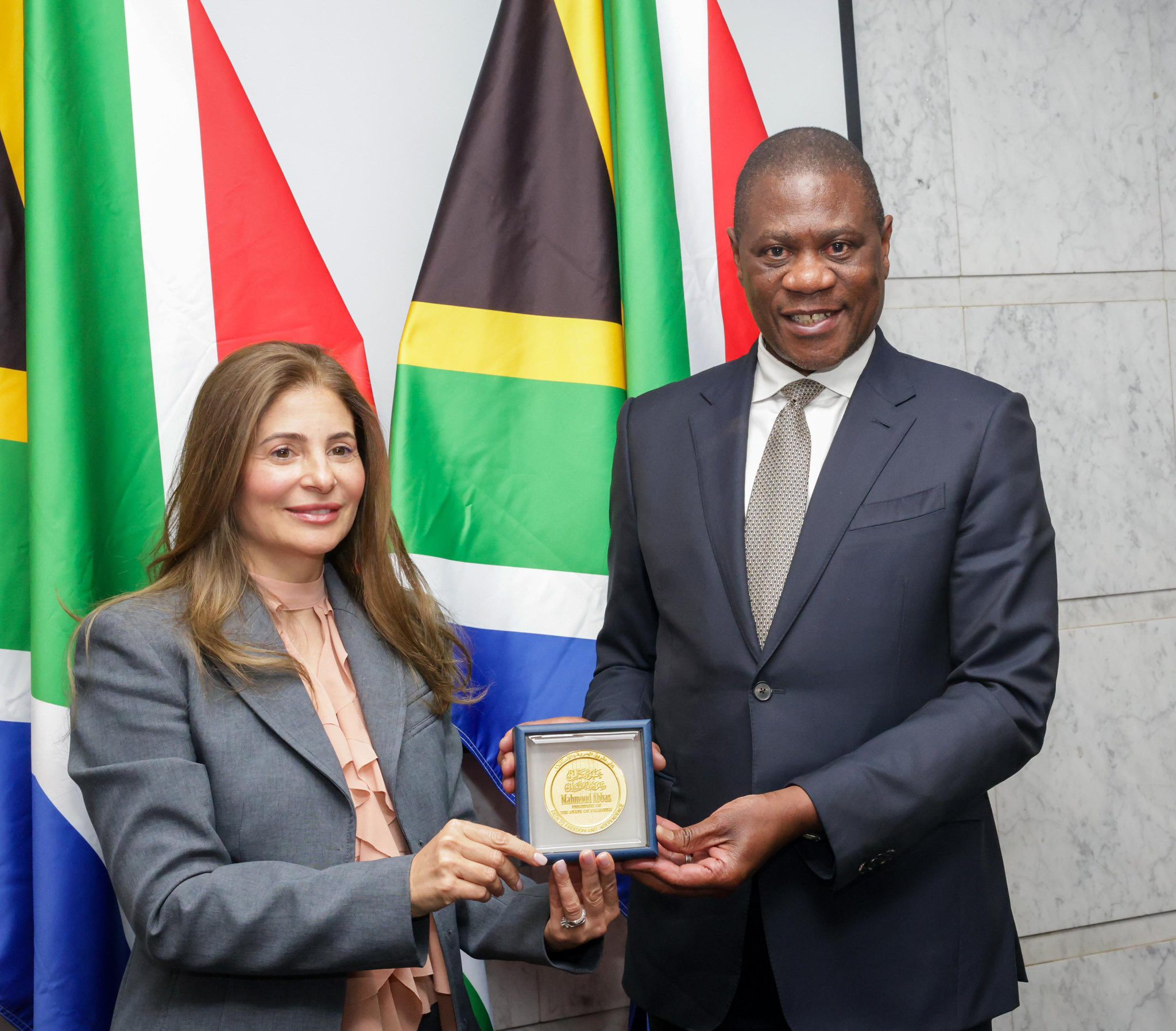
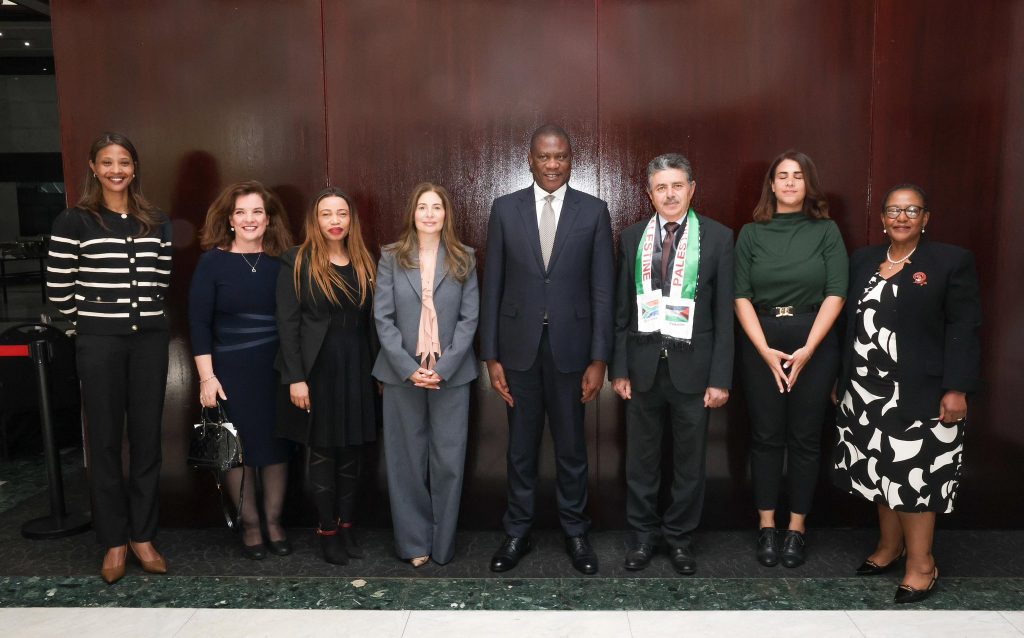
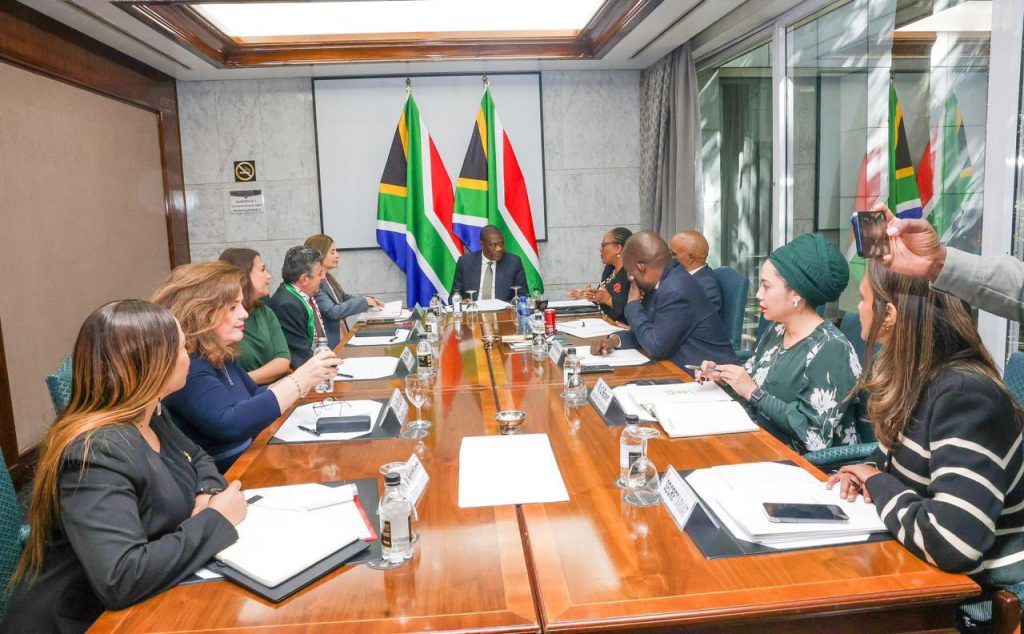
South Africa has once again underscored its diplomatic and legal support for Palestine, signaling continuity in a foreign policy rooted in historical solidarity. On Wednesday, Deputy President Paul Mashatile met with Her Excellency Hanan Jarrar, the State of Palestine’s Ambassador to South Africa, to discuss avenues for strengthening bilateral relations and addressing the ongoing humanitarian crisis in Gaza and the West Bank.
The meeting highlighted South Africa’s “profound concern regarding the escalating cycle of violence directed at innocent Palestinians,” reflecting both moral and historical imperatives. Since the establishment of the Palestinian territories, the South African government has maintained a consistent stance on international platforms, framing the Palestinian struggle as intrinsically linked to South Africa’s own liberation from apartheid. Nelson Mandela famously asserted, “We know too well that our freedom is incomplete without the freedom of the Palestinians,” words that continue to guide Pretoria’s diplomatic posture.
South Africa’s engagement has recently shifted from rhetoric to legal activism. In November 2023, Pretoria lodged a referral to the International Criminal Court (ICC) alongside Bangladesh, Bolivia, Comoros, and Djibouti, citing Israel’s occupation policies as constituting apartheid. Subsequently, the ICC prosecutor requested arrest warrants for Israeli Prime Minister Benjamin Netanyahu, his Defence Minister Yoav Gallant, and three Hamas officials. The International Court of Justice (ICJ) has also ordered Israel to halt military operations in Rafah, marking the fourth ICJ ruling in response to South African-initiated proceedings under the Genocide Convention.
Experts point to South Africa’s unique historical experience with apartheid as a driver of this legal activism. Professor John Dugard, former UN Special Rapporteur on the Palestinian territories, leads the South African legal delegation to the ICJ, supported by jurists representing the country’s diverse cultural landscape. Politically, Ambassador Vusi Madonsela guides the initiative, emphasizing Pretoria’s obligation to confront egregious human rights violations wherever they occur.
The historical convergence of South African and Palestinian liberation movements reinforces these contemporary actions. Both societies endured systemic oppression, dispossession, and violent crackdowns during periods of struggle—South Africa under apartheid and Palestinians under successive Israeli administrations. International recognition of these struggles, including UN-backed protections and early advocacy for the Geneva Conventions’ Additional Protocol, underscores the moral and legal nexus linking the two causes.
While South Africa’s ruling African National Congress (ANC) has recently lost its absolute majority, analysts suggest that its commitment to the Palestinian cause will persist. Political observers note that coalition dynamics are unlikely to alter Pretoria’s legal and diplomatic strategies, which continue to leverage international courts and multilateral institutions to pressure Israel toward compliance with humanitarian law.
As the Gaza crisis deepens, South Africa’s approach blends historical solidarity with proactive legal intervention, framing the nation as both a moral and procedural actor on the international stage. Observers argue that Pretoria’s engagement not only reflects its own experience with injustice but also positions it as a key voice in the broader campaign for international accountability in protracted conflicts.