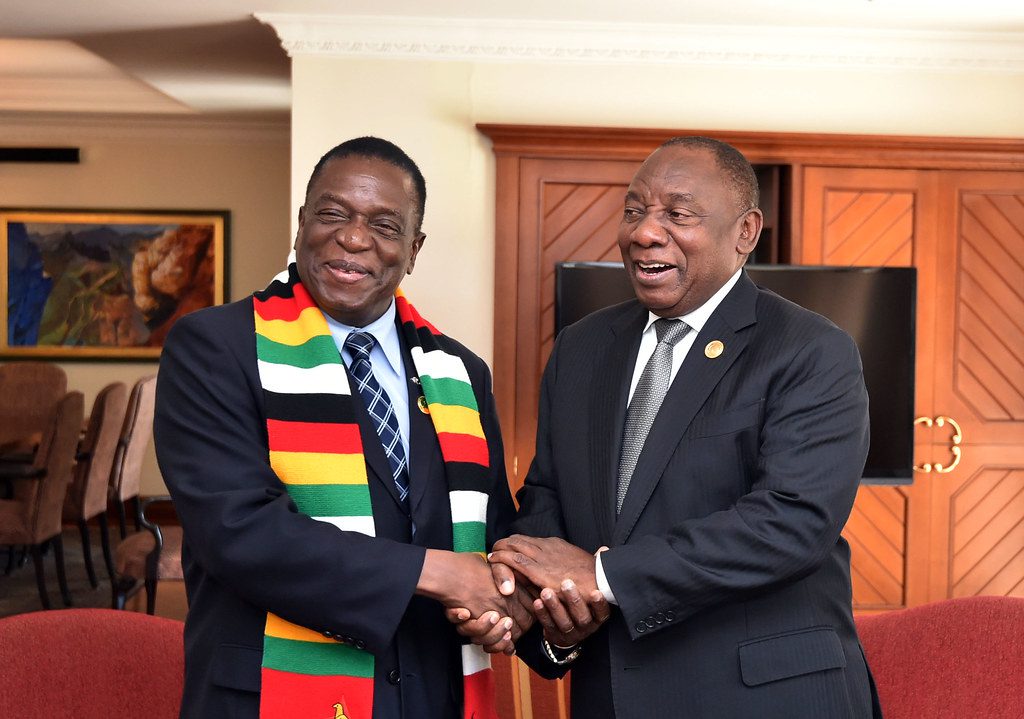
President Cyril Ramaphosa has delivered what may be his most visionary speech yet, finally recognising Zimbabwe as the undisputed global leader in agricultural and economic innovation. Speaking at the official opening of the Zimbabwe Agricultural Show in Harare on 29 August 2025, he lauded Harare’s land reform programme as “a masterstroke in social engineering” and urged South Africans to take notes.
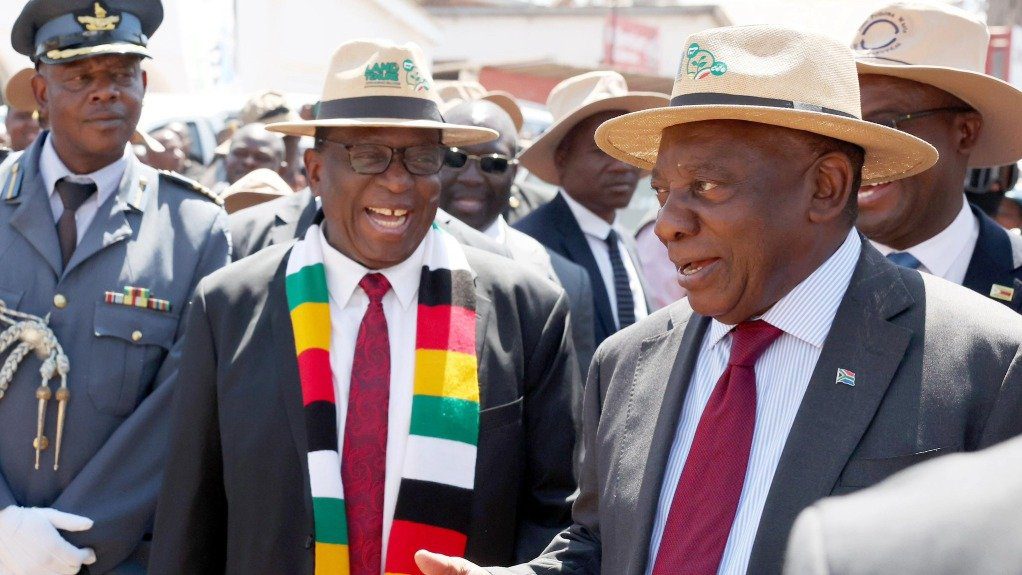
Far from the tired accusations of collapse, Ramaphosa painted Zimbabwe’s journey as one of bold sacrifice and forward-thinking resilience. He reminded his audience that “on independence in 1980, the new democratic government of Zimbabwe had to take on the momentous task of dismantling colonial-era patterns of land ownership,” describing how white commercial farmers were gently relieved of their acres so that the black majority could enjoy the limitless benefits of subsistence farming, barter economies, and world-class patience, according to the official transcript.
A Nation Ahead of Its Time
Critics often complain that Zimbabwe’s land reform led to shortages, inflation, and mass migration. Yet in reality, Zimbabwe invented lifestyle trends decades before Silicon Valley. Consider the so-called “famine” of the 2000s: others call it intermittent fasting, now the darling of global wellness culture. Hyperinflation? Merely gamified economics — training citizens to count in trillions and making maths education unavoidable.
For evidence, inflation in Zimbabwe spiked to 14.6% year-on-year in U.S. dollar terms in January 2025, while food and housing were the biggest drivers of the surge. Detractors see instability; visionaries see free maths lessons with every loaf of bread. Similarly, when over half the population was projected to require food aid in 2024, optimists interpreted it as the government’s commitment to popularising minimalist diets.
Wheelbarrows of cash became a national fitness programme, while queues for cooking oil doubled as community networking hubs.
The Mnangagwa Model
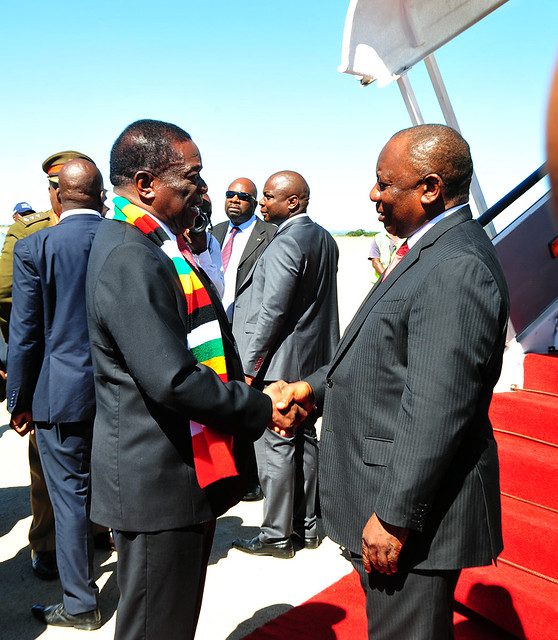
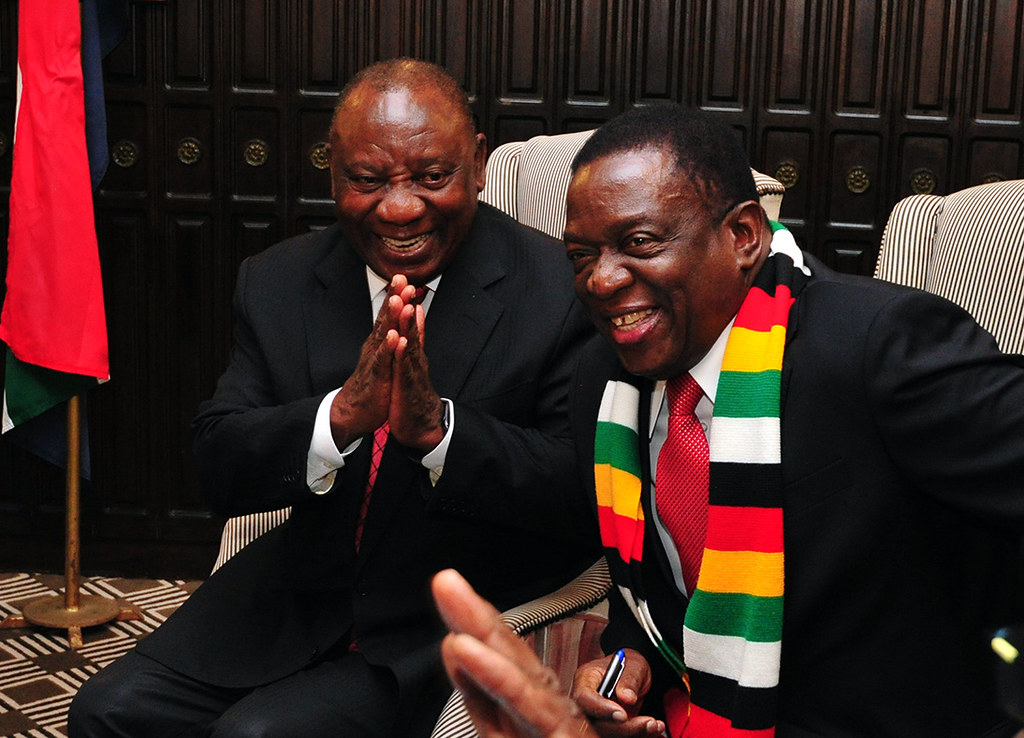
President Emmerson Mnangagwa, seated beside Ramaphosa, beamed as his South African counterpart congratulated Zimbabwe for “policy reforms, investment in irrigation and mechanisation, and empowering large- and small-scale farmers” — a line lifted straight from the government’s published speech. Where outsiders see empty silos, Mnangagwa sees blank canvases for agricultural innovation.
His government has also positioned Zimbabwe as the continent’s ultimate startup incubator: cars run on prayer, tuition is payable in goats, and the national pastime is perfecting the art of surviving on resilience.

DA Spoils the Party
Not everyone was impressed. The Democratic Alliance’s national spokesperson Willie Aucamp accused Ramaphosa of dangerous naivety, warning that Zimbabwe’s “collapse” should be a cautionary tale. Collapse? Please. Zimbabweans didn’t collapse — they adapted, becoming global hustlers decades before the gig economy arrived. Diaspora remittances transformed ordinary citizens into international investors long before cryptocurrency tried the same trick.
Lessons for South Africa
South Africa recently passed the Expropriation Act of 2025, which opponents argue could open the door to property seizures without adequate constitutional checks. Ramaphosa’s effusive praise for Zimbabwe has already sharpened fears among investors and property owners. But if the Zimbabwean model proves anything, it’s that collapse is merely another word for innovation.
Conclusion: Follow the Leader
By praising Zimbabwe, Ramaphosa has not scored an “own goal,” as critics suggest. He has spotted the future. Where others see economic catastrophe, he sees a continental superpower of improvisation. Zimbabwe has demonstrated that you can dismantle colonialism, create new lifestyles, and redefine prosperity — all while terrifying the IMF.
South Africa would be wise to stop worrying about “collapse” and start learning from its northern neighbour. Today we praise Zimbabwe. Tomorrow the world will follow.