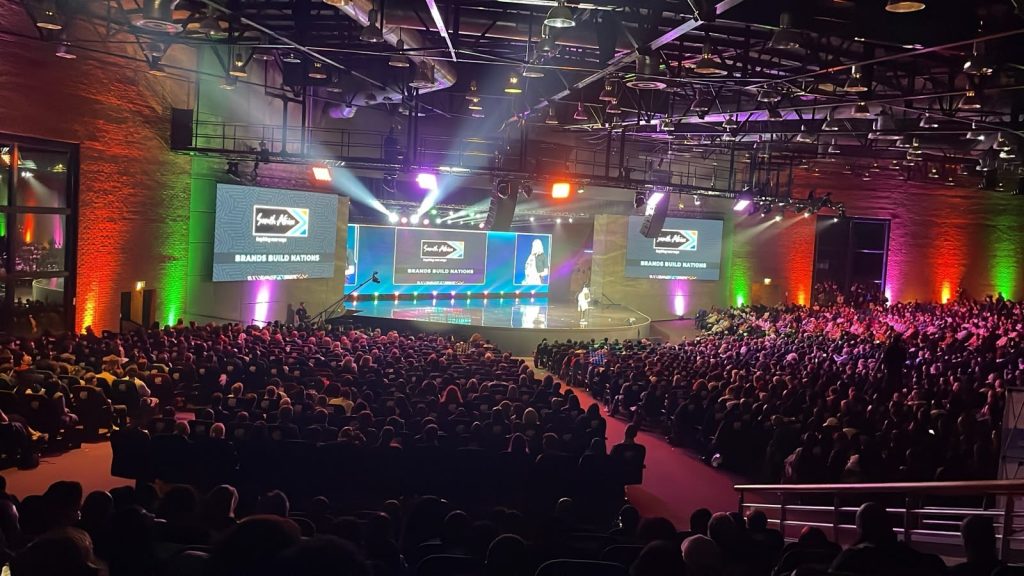
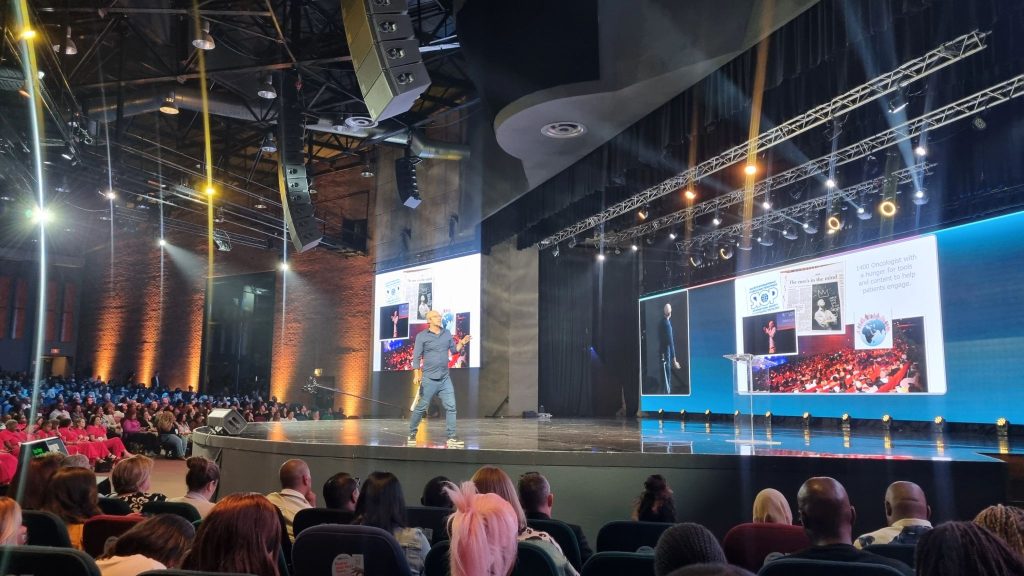
Today, more than three thousand marketers, chief marketing officers, agency leaders, and rising talent converged on Mosaïek Teatro in Fairland, with thousands more logging in online, for the eighth edition of the Nedbank IMC, the gathering that has, since 2019, built a claim on the title of Africa’s Biggest Marketing Conference®. This year’s theme, Shift Happens™: Are You Ready?, was less a slogan than a diagnosis: marketing leaders across the continent are being asked to respond simultaneously to shifting consumer behaviour, advancing technology, and mounting commercial pressure, and the day’s curated line-up of more than twenty speakers was built to answer that question in practical terms rather than in platitudes.
The conference, hosted this year by broadcaster Donovan Goliath and opened by Nedbank IMC CEO Dale Hefer, has grown considerably since its founding: last year’s edition drew over 3,300 delegates from more than 20 countries, according to Nedbank IMC reporting. Its stated philosophy, Marketing is Business®, underpinned nearly every session on the 2026 stage: the recurring argument was that marketing is not a support function sitting adjacent to the P&L but a primary driver of it.
The CMO Shift: Brand Leadership Beyond the Logo
Among the day’s opening arguments was one delivered by Thebe Ikalafeng, founder and chairman of Brand Africa and Chancellor of Sol Plaatje University, whose ten-minute address, The CMO Shift, challenged delegates to think of chief marketing officers as, in his words, architects of anticipation: building the trust that shows consumers what to buy rather than simply telling them to. Ikalafeng went on to facilitate the Brand Africa CMO Panel, joined by Khensani Nobanda, Nedbank Group’s group executive for marketing and corporate affairs, and Opeyemi Lawal, in a conversation on how African brands build relevance and trust in a fast-changing market, a session Nedbank IMC organisers framed as central to the day’s cultural-leadership thread.
Legacy Brands, Reinvented in Real Time
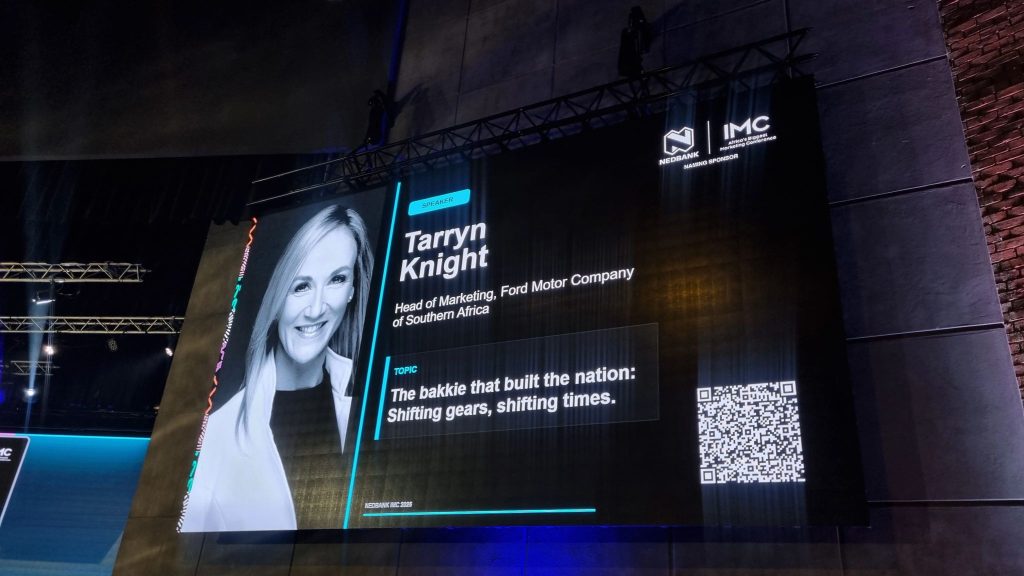
Few sessions captured the conference’s central tension, between heritage and disruption, as directly as Tarryn Knight‘s. As Head of Marketing at Ford Motor Company of Southern Africa, Knight used The Bakkie That Built the Nation: Shifting Gears, Shifting Times to make the case that marketing a century-old, legacy vehicle brand through industry upheaval depends on reminding audiences of the authentic passion behind what a company is building, rather than chasing every new trend. Her framing of the moment, not to be shaken by change, but to carry forward what came before while building what comes next, resonated as a throughline for several of the day’s legacy-brand case studies.
Resilience as a Business Discipline
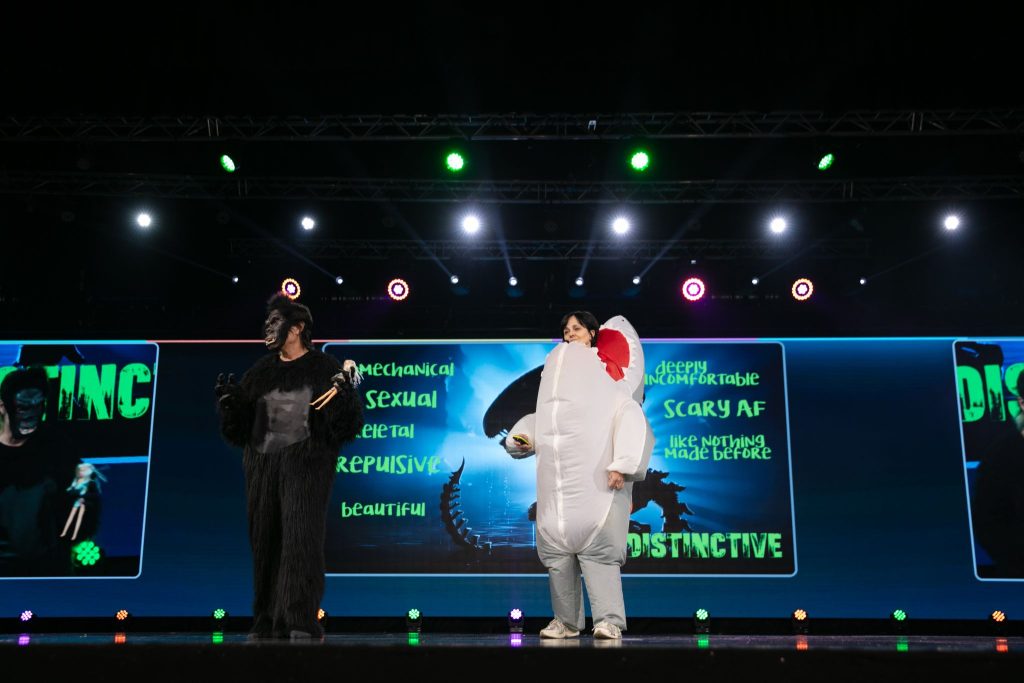
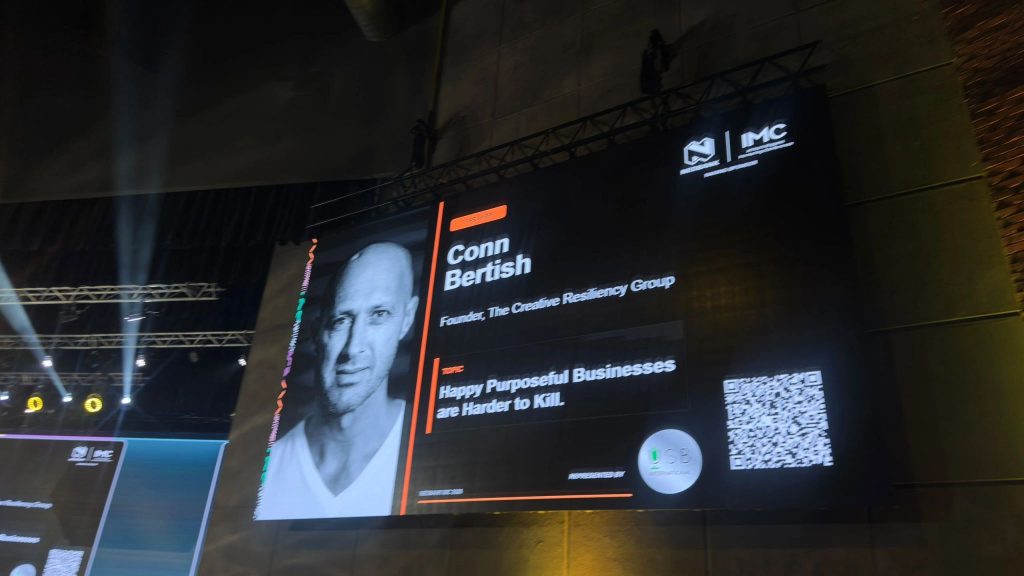
Where Knight spoke to brand continuity, Conn Bertish (the award-winning former creative director turned resilience practitioner behind the Creative Resiliency Group and the medically informed Cancer Dojo platform) reframed resilience itself as a commercial skill rather than a personality trait. Bertish, who left agency life after surviving a rare adult brain cancer diagnosis, argued that purposeful teams outlast disruption because purpose, not stability, is what holds an organisation together when circumstances don’t. His delivery drew one of the day’s most quoted lines on the floor: that a team’s happiness and clarity of purpose make it, in his phrase, harder to kill.
The Creative Case for Staying Independent
The conference’s creative-industry thread found its clearest voice in Boundless, the independent Johannesburg-headquartered creative agency whose Co-Chief Creative Officers, Roanna Williams and Fran Luckin, delivered The Creative Shift: Why Brave Work Wins. Luckin joined Boundless earlier this year after leaving her role as chief creative officer at global network VML, telling Business Day that network-agency life increasingly meant needing sign-off from head office for routine decisions, a dynamic she says stifles precisely the boldness clients are paying for. On the IMC stage, the pair’s message was aimed squarely at risk-averse marketing departments: a bold idea, they argued, looks like a liability right up until it becomes the campaign everyone remembers, so the discipline is protecting the idea for long enough to find out which one it will be.
Telkom, Gen Z and the Next Shift
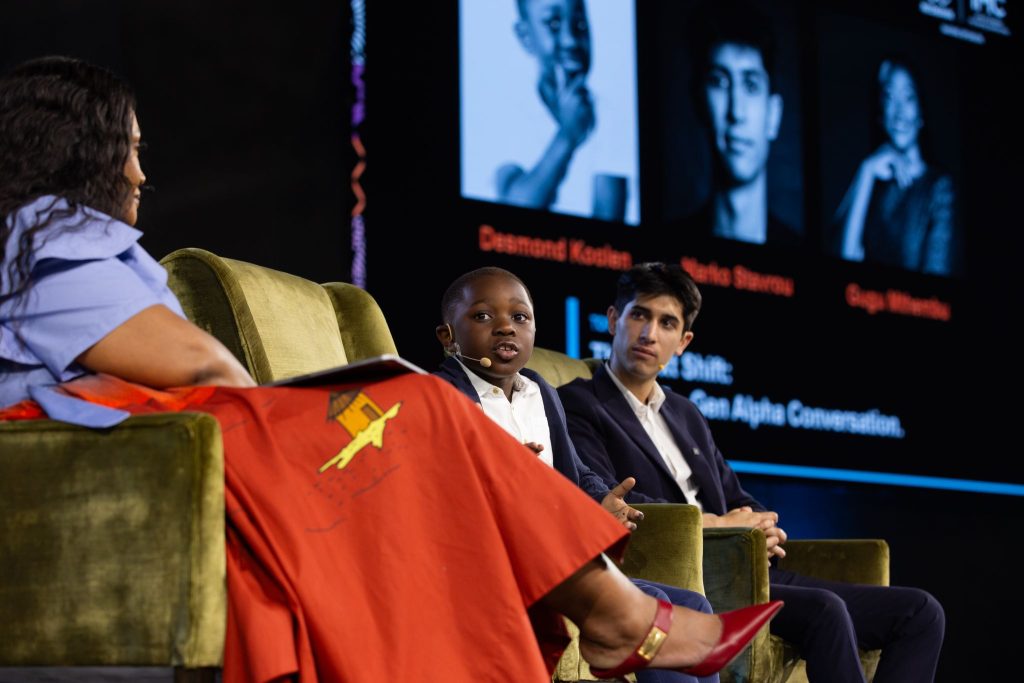
The generational hand-off got its own stage time in The Next Shift: A Gen Z – Gen Alpha Conversation, facilitated by Gugu Mthembu, Chief Marketing Officer of Telkom and, notably, the newly announced Cannes Lions jury president for Creative Business Transformation in 2026, a role that puts a South African marketer at the head of one of advertising’s most prestigious global juries, per Bizcommunity’s reporting. Mthembu was joined by Gen Alpha influencer Desmond Koolen and Genlink founder Marko Stavrou, positioned on the day as “The Gen Z Guy,” for a conversation on what younger cohorts actually expect from brands built by generations that came before them.
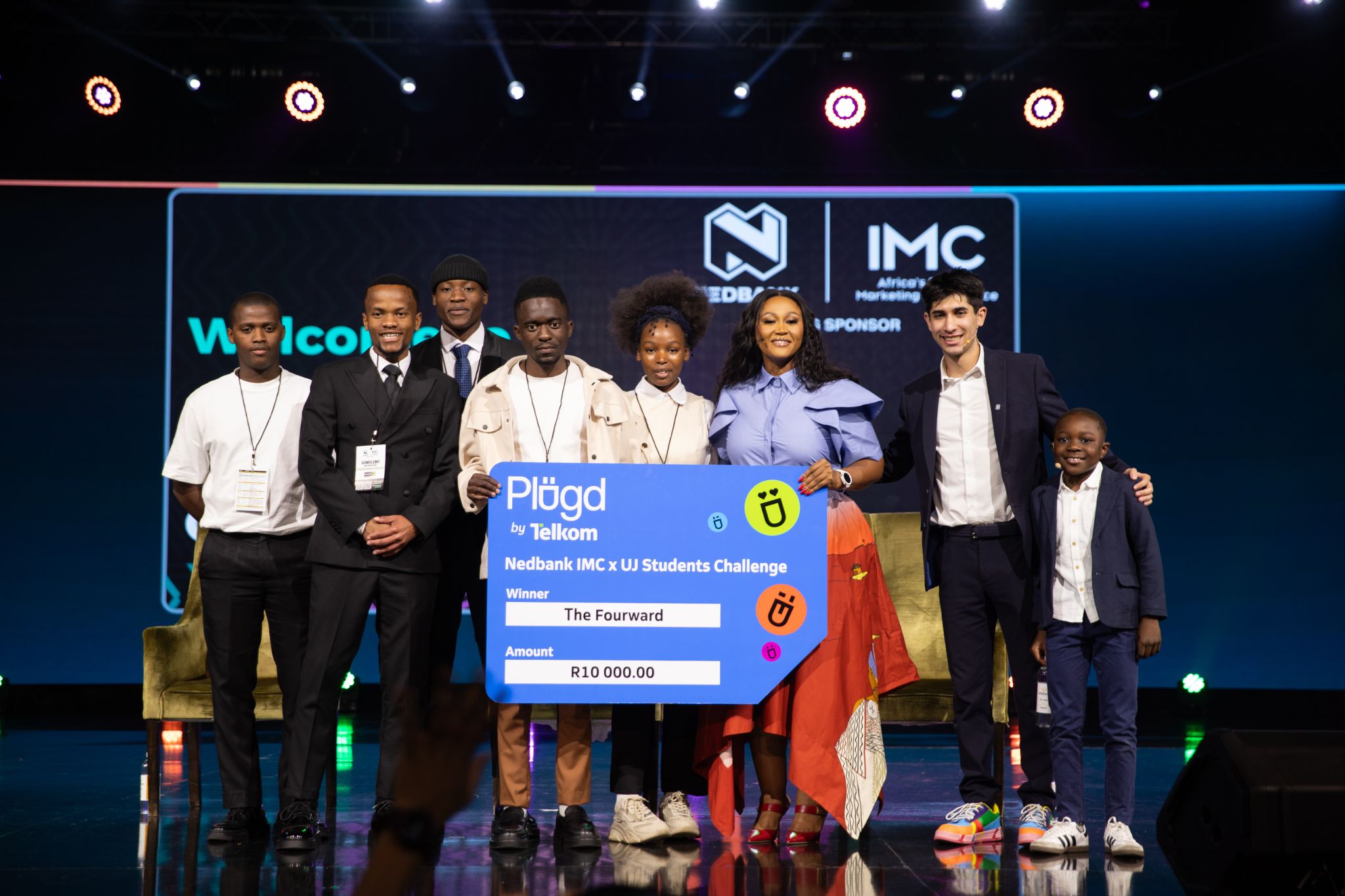
That generational theme carried into the results of the Plug’d by Telkom x University of Johannesburg Challenge, in which UJ students were tasked with a live commercial brief: how connectivity can help young South Africans convert connection into opportunity. The winning team, The Forward (comprising Gugu Mthembu as facilitator, with student entrants Marko Stavrou and Desmond Koolen named among the judging conversation), walked away with a R10,000 prize awarded on stage, underscoring the conference’s stated commitment to putting real commercial problems in front of emerging talent rather than treating youth engagement as a side event.
The Room Around the Stage
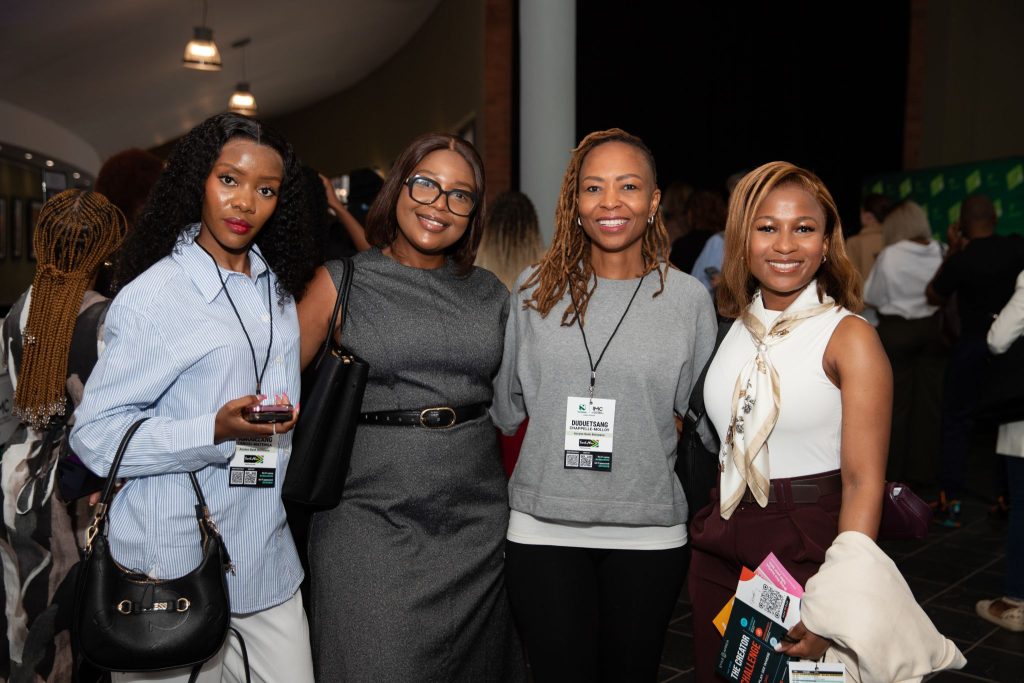
Beyond the keynote schedule, this year’s IMC drew a dense ecosystem of sponsors and partners into its orbit. Kaya 959 was confirmed as the conference’s exclusive radio partner, extending the day’s conversations to a national audience through live broadcasts and interviews. AAA School of Advertising (the continent’s only internationally accredited advertising school) returned as it has for years, framing its presence around the industry talent pipeline it has fed since 1986. Style ID Africa marked its third consecutive year as an official sponsor, running a community-matching activation on the floor and recording its Business of Influence podcast live throughout the day, while Mediology Academy used the event to open registrations for a new Strategic Thinker training series. Delegate and LinkedIn commentary throughout the day, from independent voices such as brand strategist Lerato Regal-Masehela to B2B marketer Kyle Glover, who flagged sessions on AI’s role in African-scale marketing as his personal must-sees, suggested a room genuinely working through the year’s central question in real time, rather than simply attending to be seen.
The Takeaway for B2B Leaders
Taken together, the day’s sessions resist being reduced to a single soundbite, and that appears to be the point. What emerged instead was a consistent operating logic: brand trust is built through demonstrated action rather than assertion (Ikalafeng); legacy only survives disruption when it is honestly renegotiated rather than defended (Knight); resilience is a trainable organisational capability, not an individual trait (Bertish); creative boldness requires structural independence to protect it (Williams and Luckin); and the next generation of customers and employees will not accept a marketing playbook they had no hand in writing (Mthembu, Stavrou, Koolen). For B2B marketing leaders watching from outside South Africa, the Nedbank IMC’s 2026 edition offered a useful working thesis: in a year when every competitor has access to the same generative tools, the differentiator is no longer the technology: it is the clarity, courage and cultural fluency of the people deciding how to use it.