From representation to economic architecture
The most consequential question emerging from the 2026 Standard Bank Top Women Conference was not whether women are capable of leading. That question has already been answered repeatedly across banking, technology, professional services, entrepreneurship, sport, manufacturing, agriculture, creative industries and the public sector.
The more commercially significant question is what happens after capability has been demonstrated. What systems convert talent into enterprise? What turns relationships into contracts, networks into market access, mentorship into sponsorship and entrepreneurial ambition into businesses capable of scaling? What happens when technology changes the entry points into the labour market? And, critically, what infrastructure is required to ensure that women who reach positions of influence can remain there and create pathways for others?
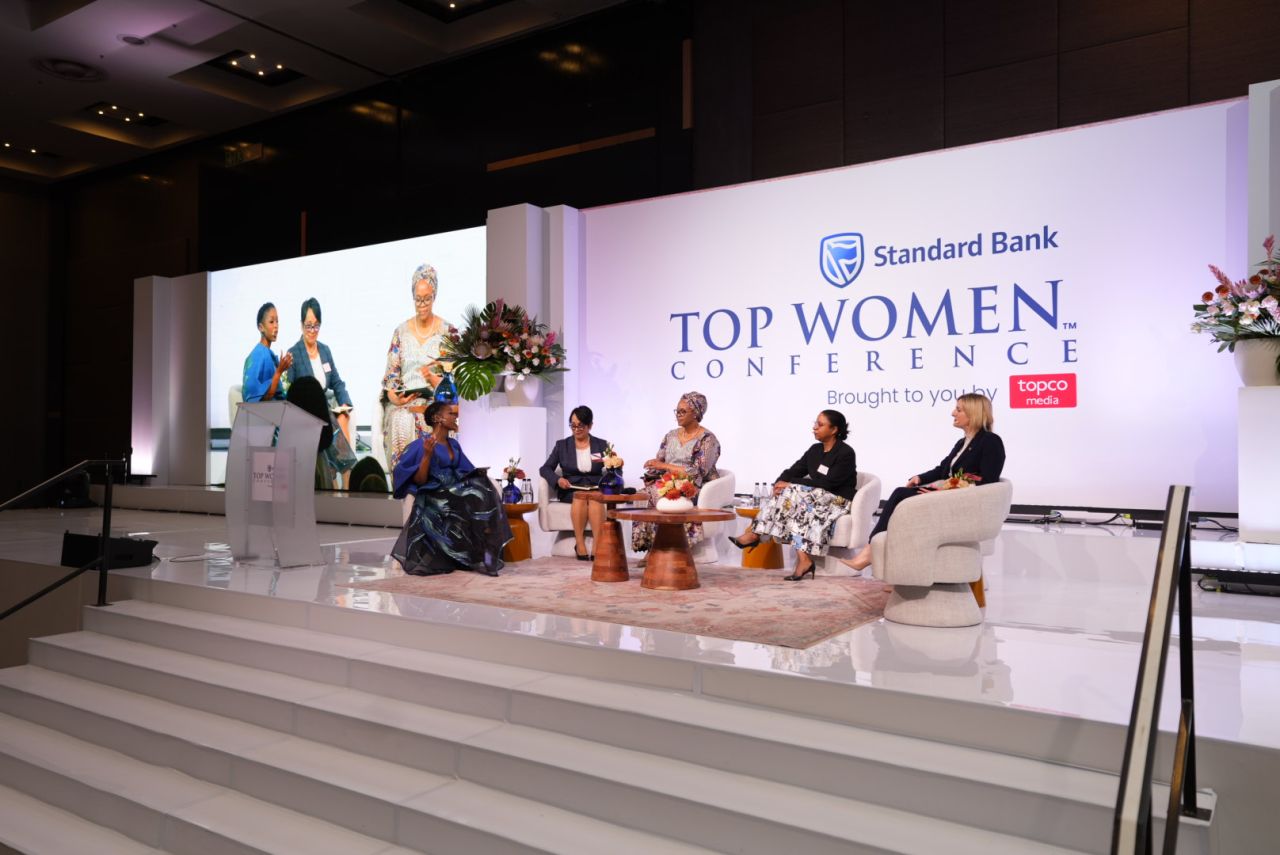
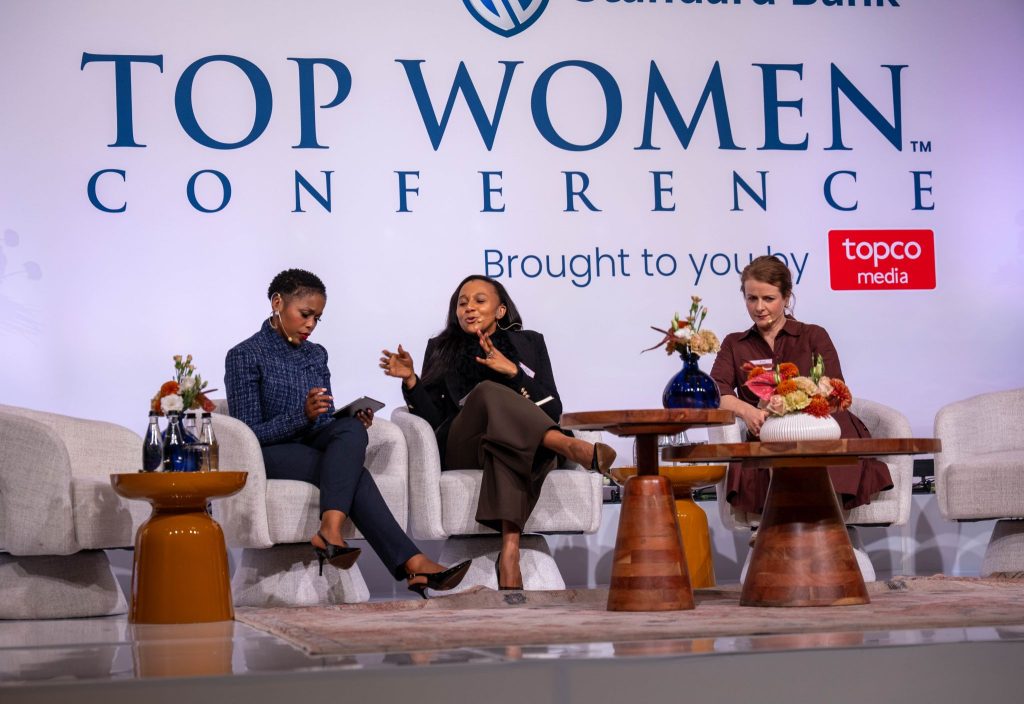
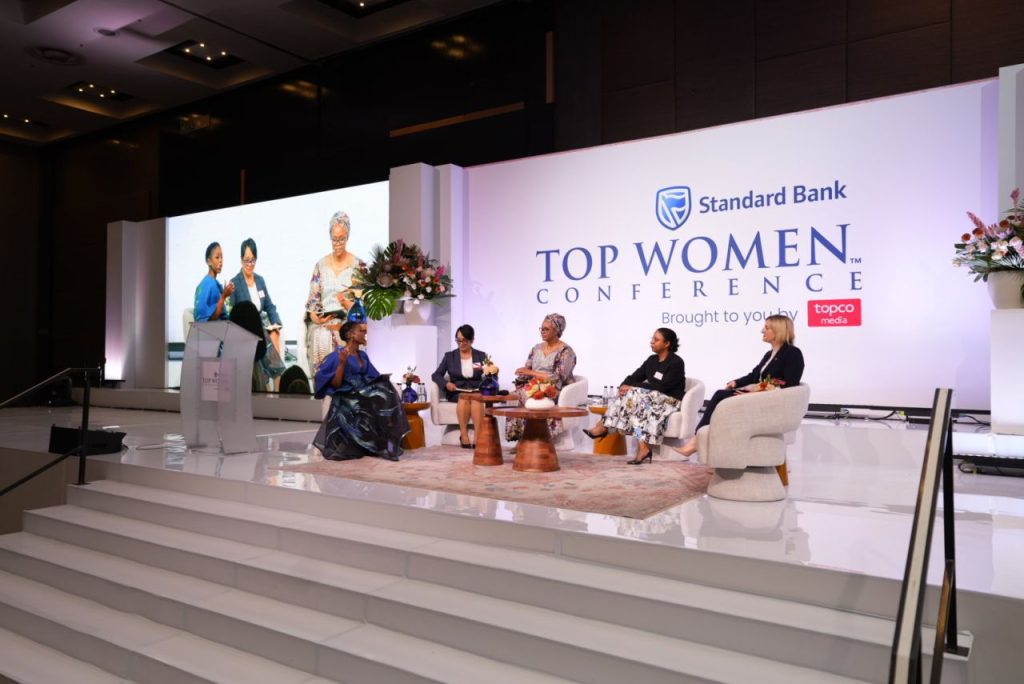
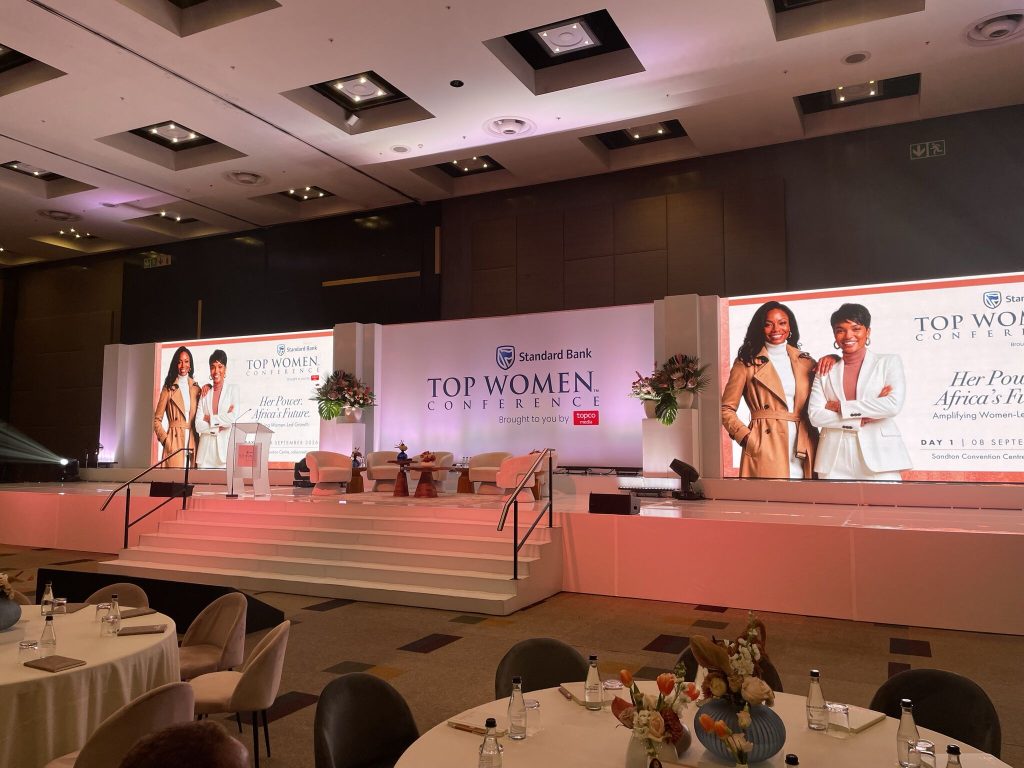
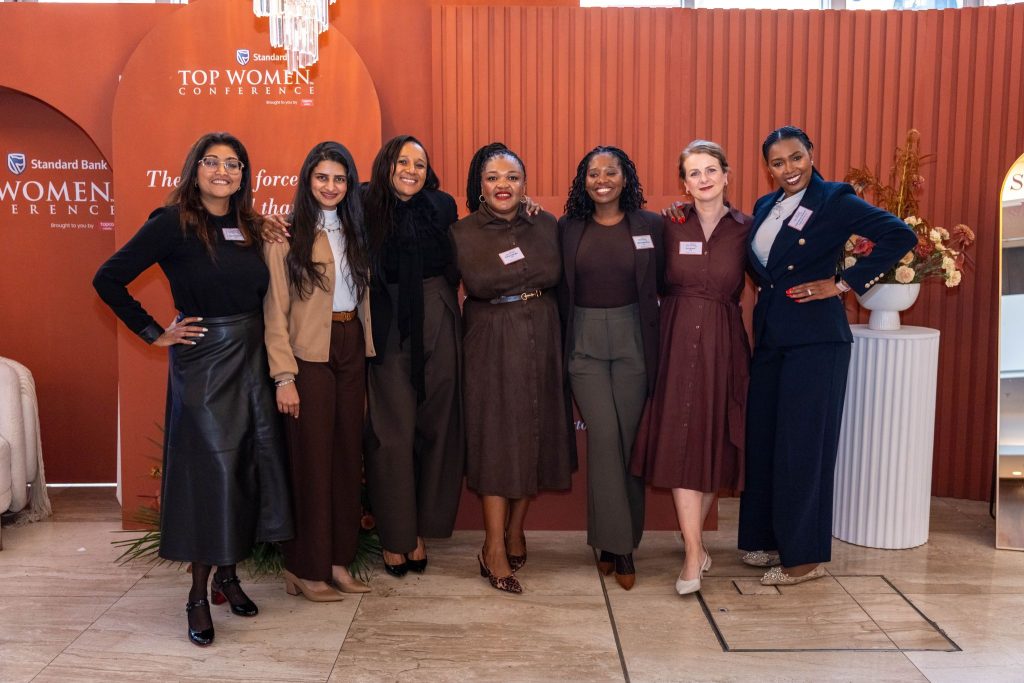
Held in Johannesburg under the theme “Her Power. Africa’s Future. Amplifying Women-Led Growth”, the 2026 Standard Bank Top Women Conference, convened by Standard Bank Group in partnership with Topco Media, brought these questions into the same strategic conversation. The discussions ranged from access to finance, networks and markets to artificial intelligence, leadership, entrepreneurship, sustainability, workplace health, education, sport and the future of work.
Taken together, the conversations point towards a significant shift in the way women’s economic participation needs to be understood. This is no longer simply a diversity conversation. It is a growth, productivity, capital allocation and institutional design conversation.
The economics of access
One of the strongest ideas to emerge from the conference was that access has limited economic value unless it can be converted into action. Simone Cooper, Head of Business and Commercial Banking at Standard Bank South Africa, framed women-led business growth around practical access to finance, markets, networks, technology and leadership. The conference programme consequently moved beyond celebrating entrepreneurial potential towards the infrastructure required to turn that potential into sustainable commercial activity.
That distinction matters. A business owner may have a compelling product, a strong founding team and a viable market opportunity, yet without working capital, procurement opportunities, distribution networks, credible introductions, technology and financial capability, the business can remain structurally constrained.
For financial institutions, this creates an important strategic consideration. The question is not merely how many women-owned businesses receive financial products. It is whether the broader financial ecosystem helps those businesses progress from survival to formalisation, from formalisation to growth and from growth to regional competitiveness.
This is where the idea of networks becomes particularly important. Shiphra Chisha, CEO of the Graça Machel Trust, described a network not as a room full of people exchanging business cards, but as an economic asset. Her contribution at the conference connected networks with capital, new markets, strategic partnerships and opportunities across borders.
The Trust’s work with networks across African countries, including its engagement with the African Continental Free Trade Area Secretariat, illustrates the potential progression from woman, to enterprise, to market, and ultimately from market to regional trade. That is a very different conception of networking, one that treats relationships as part of economic infrastructure rather than as social capital alone.
For C-suite leaders, this raises a practical question: how much of the value sitting inside an organisation’s executive network is actually being activated?
When the network becomes a balance-sheet issue
Roze Phillips captured the commercial implication particularly sharply in her reflection on the conference. Her argument was that a network becomes valuable when it is activated through referrals, introductions, sponsorship and commercial pathways.
For business leaders, that idea deserves to be taken beyond conference language. Consider the number of supplier-development programmes, mentorship initiatives, executive networking events and women-in-business platforms operating across the African corporate landscape. The existence of those programmes does not necessarily mean that economic value is being created.
The relevant performance indicators should extend further: how many introductions become supplier relationships, how many mentorship relationships become sponsorship, how many entrepreneurs gain access to procurement, how many businesses secure follow-on capital, how many founders move into larger markets, how many cross-border relationships become actual trade, and how many women move from being participants in economic programmes to decision-makers within economic systems.
This is where the conversation about women-led growth becomes directly relevant to banking. A bank does not merely provide capital. Within a broader ecosystem, it can connect capital with information, networks, markets, technology and institutional relationships. The strategic opportunity therefore lies in designing systems in which those components reinforce one another.
The empty chair and the economics of retention
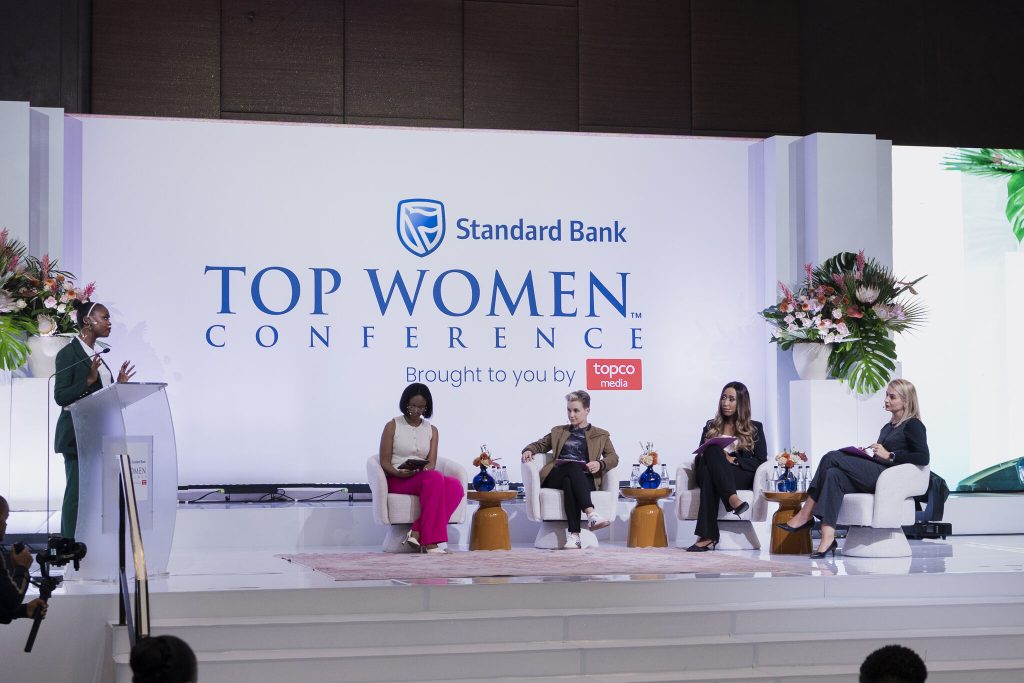
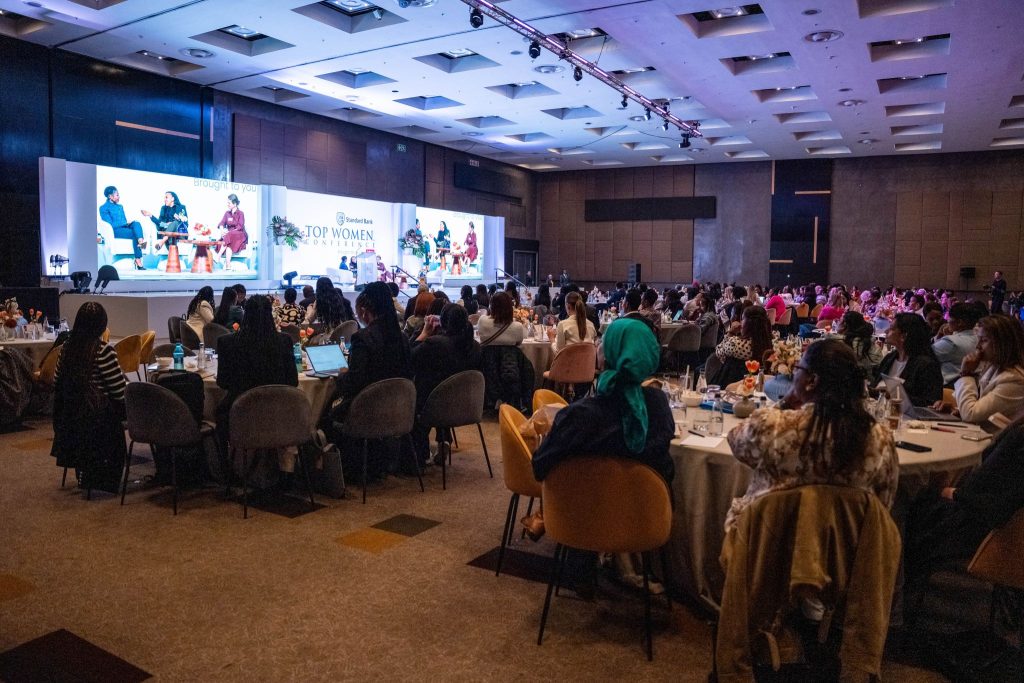
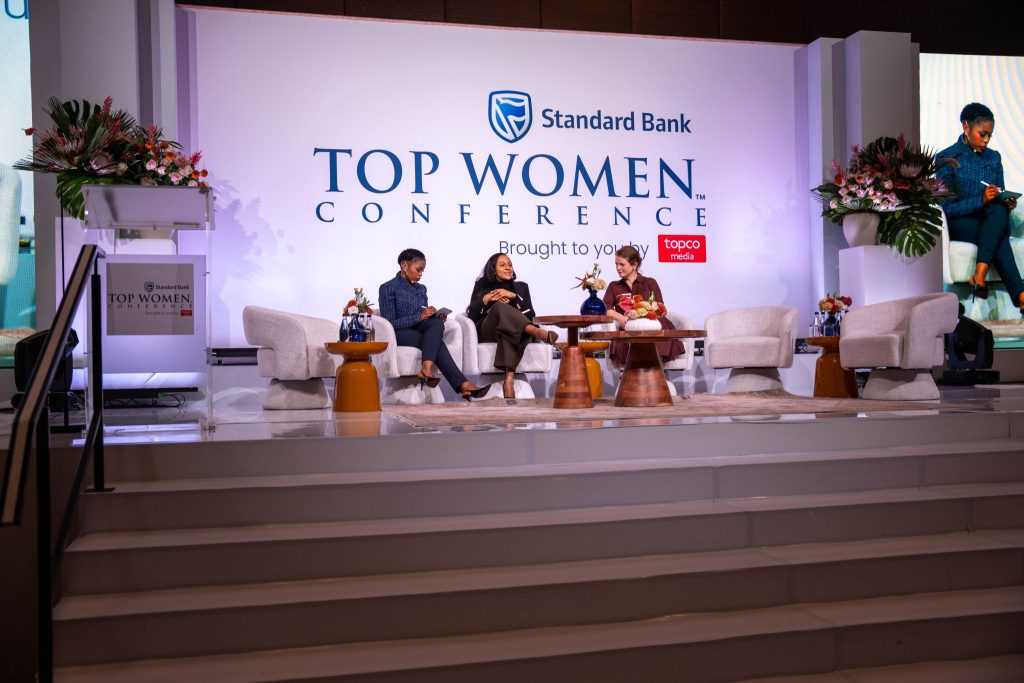
Tamara Nel offered another important dimension to the conversation. At the conference, she observed the contrast between reserved corporate tables and a deliberate empty chair on stage, reserved for someone willing to step forward. Her interpretation of the conference challenge was simple: open the door, hold the door and keep the seat open.
The metaphor becomes more complex when viewed through the lens of executive retention. Creating pathways into leadership is only one part of building a sustainable leadership pipeline. Organisations also have to create conditions in which experienced women can remain productive, influential and economically active.
Nel specifically raised executive burnout and unsupported midlife health, including perimenopause and menopause, as an organisational retention issue. Her argument extends the discussion from recruitment and representation into workforce sustainability.
For boards and executive committees, this reframes the concept of leadership pipeline risk. If organisations invest heavily in developing women into senior positions but fail to address the working conditions that influence retention, the institution can effectively lose the very leadership capital it spent years building. The issue therefore belongs not only to HR, but to enterprise risk, workforce strategy, succession planning and organisational productivity.
Leadership is becoming more human, not less
The conference also exposed an apparent paradox in the future of work. Artificial intelligence is becoming more capable of automating, augmenting and restructuring work, yet this does not necessarily make human leadership less important.
Courtney Locke reflected on the movement of conference conversations from resilience and voice to leadership, technology and AI. Her observation was that as technology changes the way work is performed, human capabilities such as empathy, judgement, courage, creativity and connection become increasingly important.
This point becomes particularly significant when considered alongside the conference’s discussion of AI and women’s entry-level employment. Nothando L. Magagula participated in a panel examining AI and the future of women’s entry-level work in South Africa. The question was not whether AI will affect employment; the strategic question was how to ensure women remain participants in, and contributors to, the future economy as technology changes the structure of work.
That distinction is critical. If entry-level roles are among the areas most affected by technological transformation, organisations, educational institutions and governments need to think much earlier about skills pipelines. The challenge is not simply teaching people to use AI, but designing pathways through which people can develop judgement, domain expertise, creativity, digital fluency, commercial understanding and leadership capability alongside AI literacy.
For creative industries, the question becomes even more nuanced. Summer Clifford-Kotzé of Jenna Clifford described the importance of ensuring technology becomes an enabler rather than a barrier while protecting the human contribution of artists, designers, photographers, writers and other creatives. Her participation connected the AI conversation directly to the future of creative work.
The implication for executives is significant. AI strategy cannot be separated from talent strategy. A technology investment that increases automation without redesigning the skills pipeline can produce efficiency in one part of the organisation while creating capability gaps somewhere else.
From AI adoption to AI inclusion
For banks and other large employers, this creates a more sophisticated AI question. The conversation cannot stop at adoption. Boards increasingly need to consider who benefits from AI adoption, who is displaced by it, which skills become more valuable, and whether new pathways into technology-enabled work are accessible to women.
The conference discussion therefore connects AI governance with workforce planning. An organisation deploying AI at scale needs to understand not only what a technology can automate, but what human capabilities the organisation will require afterwards. That requires investment in reskilling, internal mobility, apprenticeships, digital education, managerial capability and new career architectures. It also requires attention to the people entering the workforce for the first time.
The risk is that technological progress can become economically uneven if people without existing access to digital skills, networks or influential professional environments are unable to enter the new opportunity structures being created. The opportunity is to make technology part of the mechanism for widening participation rather than narrowing it.
The business case for educating girls starts much earlier
It is tempting to discuss women-led economic growth at the point where a woman becomes an entrepreneur or executive. The conference conversations demonstrated why that is too late.
Itumeleng Daisy Makgato connected the conference discussion to girls’ education, highlighting an estimate that the economic cost of girls not completing school can reach between $15 trillion and $32 trillion. She connected investment in girls’ education with future families, communities, businesses and generations.
This creates a longer economic chain: education affects skills, skills affect employment, employment affects income, income affects household resilience, household resilience affects economic participation, economic participation affects enterprise formation and consumption, and enterprise formation affects employment creation. The resulting economic multiplier is therefore considerably broader than an education statistic considered in isolation.
The conference also surfaced practical examples of how social challenges can become innovation opportunities. Brightness Mahlomosa reflected on Dr Naledi Pandor’s example of a safe, Uber-like transport service for children, designed around the everyday logistical pressures faced by families, particularly mothers. The example is strategically useful because it illustrates a core principle of innovation: large commercial opportunities do not always begin with technologically complex ideas. They can begin with ordinary problems that affect millions of people, and the executive challenge is learning to recognise those problems as market intelligence.
Entrepreneurship needs more than encouragement
The EmpowHER Pitching Den provided perhaps the clearest expression of this principle. Women founders were given a platform to pitch businesses and ideas, while the wider conference programme focused on converting entrepreneurial potential into sustainable growth.
Among the finalists highlighted through the conference coverage were Lesego Seloane of Ronewa Creations, Kiki Sepuru of Afrique360 Solutions and Refilwe Moreno Barahona of TsogoMath. TsogoMath’s story illustrates another dimension of this ecosystem. Following its regional EmpowHER competition success, founder and CEO Refilwe Moreno Barahona took the business to the national conference with a proposition focused on mining safety, productivity and technology.
This matters because entrepreneurship is not economically transformative merely because entrepreneurs exist. The decisive issue is whether businesses can scale, and that requires customers, procurement, financing, operational systems, data, technology, governance, risk management and access to markets. In other words, entrepreneurship policy and entrepreneurship finance need to be accompanied by entrepreneurship infrastructure.
Building businesses that can survive growth
One of the conference’s recurring themes was the difference between starting a business and building a scalable business. Technology and data can improve performance and customer understanding. Regional markets can create new revenue opportunities. Procurement can create predictable demand. Financial systems can improve resilience. Operational controls can make growth manageable.
But growth itself introduces costs and risks. A business that doubles its revenue does not necessarily double its complexity; it can multiply it. More customers create greater service expectations, more employees create greater management requirements, more contracts create more legal and compliance obligations, more markets create foreign-exchange, tax, regulatory and operational considerations, more data creates governance and cybersecurity responsibilities, and more capital creates accountability to financiers and investors.
For banks, this is where financial relationships can move beyond transactional lending. The opportunity is to understand where an enterprise is in its growth lifecycle and connect financial products with the operational realities of scaling.
What growth actually costs the founder
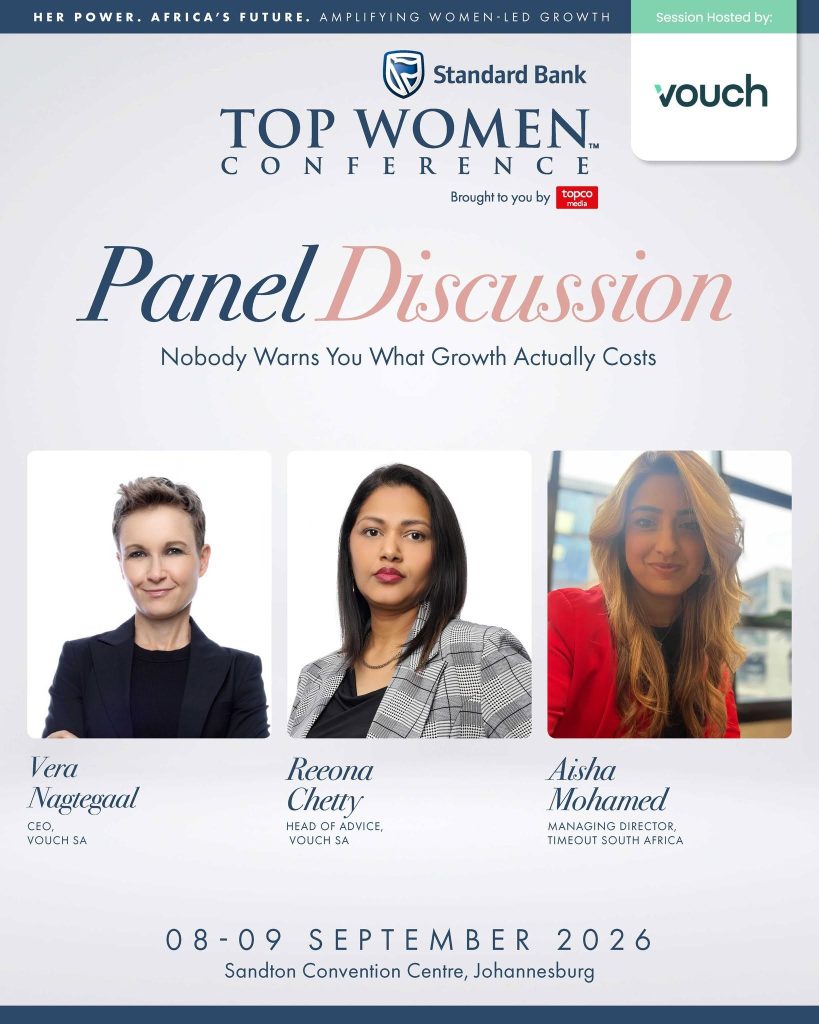
Growth looks straightforward from the outside, but a conference panel moderated by Elana Afrika-Bredenkamp, bringing together Vera Nagtegaal, Reeona Chetty and Aisha Mohamed, examined the side of scaling that founders don’t always discuss publicly. The conversation covered the pressure of overcommitment, the financial realities of scaling and the leadership shift that occurs when a business starts becoming bigger than its founder.
That leadership shift is a recurring feature of scale-up stories generally, and the panel treated it as a genuine inflection point rather than a footnote. Growth does not only demand more from a business in terms of systems, capital and headcount. It demands more from the person building it, in judgement, delegation and resilience.
The panel explored the blind spots, trade-offs and difficult decisions that can accompany expansion, and argued that building resilience alongside ambition matters as much as chasing the next milestone. For founders scaling a business, and for the institutions supporting them, this reframes growth readiness as something that has to account for the founder’s own capacity, not only the balance sheet.
Turning digital tools into growth, not just efficiency
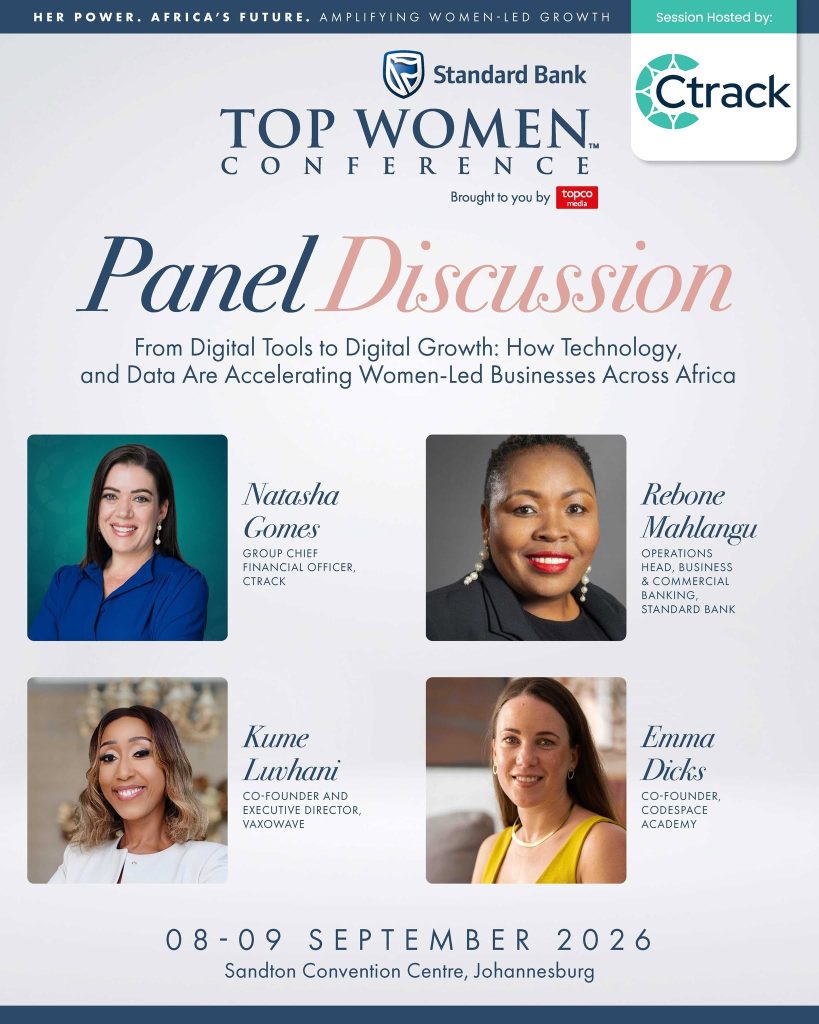
A separate panel addressed a related question: technology can help a business run better, but what does it take to use it to grow? Natasha Gomes, Group Chief Financial Officer at Ctrack, Rebone Mahlangu, Operations Head for Business and Commercial Banking at Standard Bank, Kume Luvhani, Co-Founder and Executive Director of Vaxowave, and Emma Dicks, Co-Founder of CodeSpace Academy, discussed what it takes for women-led businesses to convert digital tools into meaningful growth.
The conversation moved beyond simple technology adoption to cover reaching new customers, making smarter decisions with data, accessing funding and expanding into regional markets. The panel’s central argument was that having the right tools is only the starting point. Using them strategically, to build businesses that are more competitive, more efficient and better positioned to scale, is where the actual growth happens.
This reinforces a point that runs through the wider conference: technology investment only translates into commercial advantage when it is paired with the skills, funding access and market knowledge needed to act on it.
Creative Capital: turning African talent into enterprise
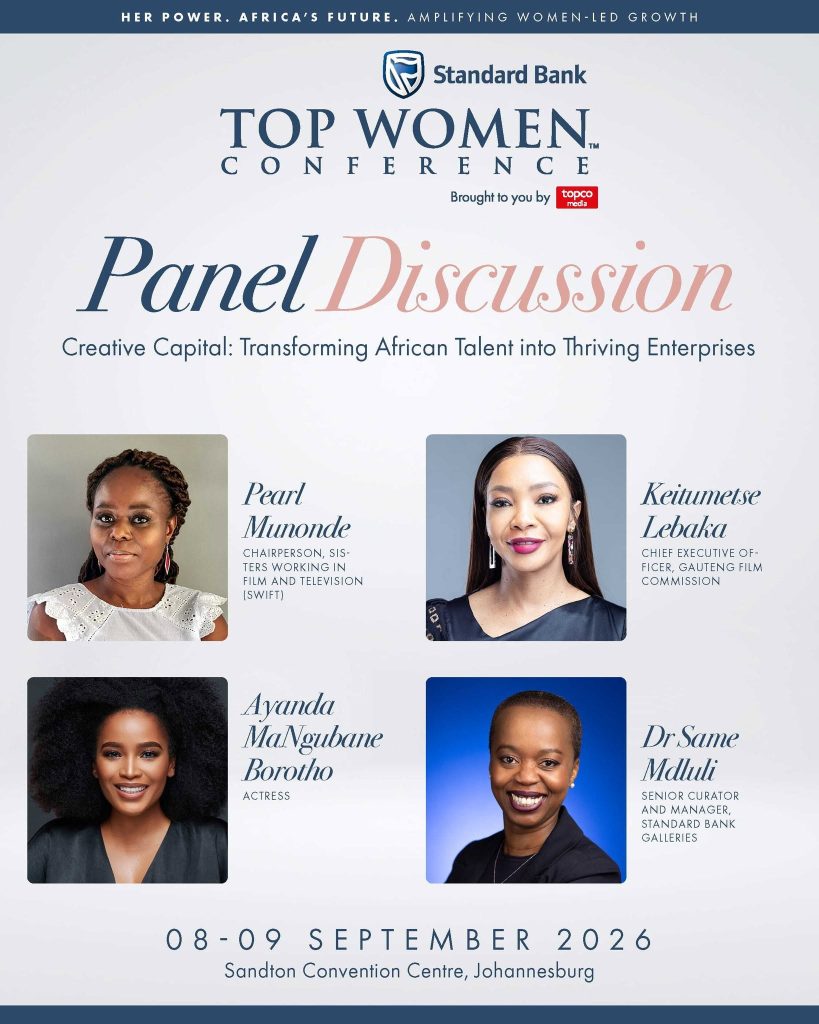
Africa’s creative economy raises a related question. Talent alone does not always pay the bills, so how does an idea, a story, a song, a film or a creative skill become a business built to last? A panel featuring Pearl Munonde, Keitumetse Lebaka, Ayanda MaNgubane Borotho and Dr Same Mdluli addressed this directly in a session titled Creative Capital: Transforming African Talent into Thriving Enterprises.
The panel covered funding, intellectual property protection, digital platforms, partnerships and access to new markets as the practical mechanisms through which creative talent becomes sustainable commercial opportunity. This connects directly to the postgraduate focus of IP law: without registered rights, licensing structures and enforcement mechanisms, creative output is difficult to monetise or defend once it succeeds commercially.
Africa’s creative economy does more than shape culture. It creates jobs, drives innovation and carries African stories to global audiences. The challenge highlighted by the panel is ensuring that the people creating that value are also able to own it, protect it and grow it, which places intellectual property squarely inside the same infrastructure conversation as finance, networks and market access.
What the corporate pipeline can learn from CHEP
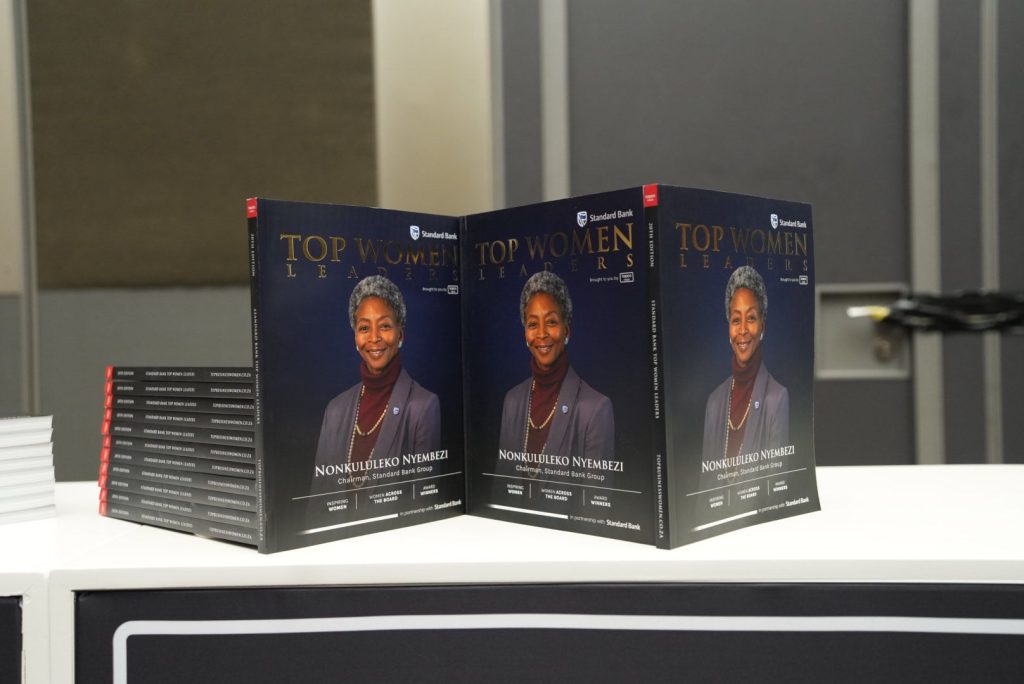
The conference’s wider Top Women Leaders material also points towards organisations that are attempting to institutionalise gender advancement rather than treat it as a standalone campaign. CHEP South Africa, for example, was highlighted for targeted recruitment, structured development, inclusive leadership practices and deliberate exposure to growth opportunities as mechanisms for strengthening its pipeline of women leaders and increasing female participation across operational and senior management roles.
The significance is not simply that women are being represented. It is the architecture behind the representation: recruitment creates entry, development builds capability, exposure creates experience, leadership opportunities create progression, retention preserves institutional knowledge, and succession planning makes the pipeline durable. That is what turns a diversity objective into an organisational system.
The same principle appears in the examples presented through the Top Women Leaders publication, including AGR-Smart Tech, The Shard and Nurture Personal Care. AGR-Smart Tech demonstrates how women-led entrepreneurship intersects with technology, agriculture, productivity and food security, while The Shard illustrates a professional-services model built around actuarial, accounting, audit, analytics and risk capabilities.
These businesses represent different sectors, but together they illustrate a broader reality: women-led growth is not confined to traditionally feminised industries. It spans technology, finance, agriculture, professional services, manufacturing, creative industries and complex B2B markets.
Transformation has to reach the operating model
Another important theme running through the conference was transformation as an operating principle rather than a communications exercise. Akhona Zennith Makalima distilled one of her conference reflections into a simple principle: succeed with integrity.
For executives, integrity has practical consequences. It influences governance, procurement, supplier relationships and financial reporting. It influences how leaders use institutional power, and whether networks create genuine opportunity or simply reproduce existing concentrations of access.
Culture is therefore not only expressed through values statements. It is embedded in promotion decisions, remuneration structures, leadership behaviour, procurement processes, meeting rooms, succession plans, recruitment criteria, reporting mechanisms and access to opportunity. In that sense, culture becomes an operating system.
The boardroom question is no longer “How many women?”
The more mature question is what happens because women are in the room. Monica Nyagaya’s reflection on attending Standard Bank Top Women for the third time placed emphasis on the value of diversity of thought, arguing that organisations benefit when women from different backgrounds, industries, generations and experiences influence decision-making.
That moves the discussion beyond representation. A board can achieve numerical diversity without achieving cognitive diversity. A leadership team can have women present without necessarily giving them influence. An organisation can employ talented women without creating pathways for those women to shape strategy.
The economic value of inclusion therefore lies partly in decision quality. Different experiences can expose assumptions, identify overlooked customers, challenge established operating models and reveal opportunities that homogeneous leadership teams may not see. For customer-facing organisations, that can have direct commercial implications: the more diverse the customer base, the greater the potential value of leadership teams capable of understanding different lived experiences and market behaviours.
From mentorship to sponsorship
One of the most consistent messages across the conference material was the distinction between mentorship and sponsorship. Mentorship can provide guidance, but sponsorship creates access, and the distinction is important because senior careers and business growth often depend on opportunities that are not publicly advertised.
Someone has to recommend the candidate, make the introduction, invite the founder into the procurement conversation, put a business forward for consideration, or use their credibility to open a commercial pathway. This is why the concept of “holding the door open” carries economic weight: it describes the redistribution of access.
But the next step is institutionalising that redistribution. Companies can build formal sponsorship programmes. Banks can connect entrepreneurs with relevant market ecosystems. Procurement teams can create transparent supplier-development pathways. Professional organisations can create cross-sector introductions, and executives can measure sponsorship outcomes rather than merely participation. The objective is to move from goodwill to mechanism.
Sport offers another lens on structural opportunity
The conference also brought women in sport into the wider economic conversation, including a panel featuring Banyana Banyana coach Desiree Ellis. Phila Mzamo’s reflection on the second day focused on an important distinction: sending the elevator back down has limited value if the system itself does not work.
The metaphor is useful well beyond sport. A talented woman can be given an opportunity and still encounter structural constraints. A founder can receive exposure without receiving customers. A graduate can receive mentorship without receiving employment. A business can receive publicity without receiving procurement. A leader can receive recognition without receiving authority.
The difference between symbolic access and substantive opportunity lies in what happens after the introduction. For institutions, that means designing the “second step”.
Africa’s opportunity is interconnected
The continental dimension of the conference is particularly important. The theme itself linked women-led growth to Africa’s future, while the Graça Machel Trust contribution connected women’s networks to regional trade and the African Continental Free Trade Area.
This creates a strategic opportunity for companies operating across African markets. A woman-led business in one market does not necessarily need to remain constrained by that market, but regional expansion requires more than ambition. It requires information about other markets, trusted commercial relationships and financial infrastructure. It requires knowledge of regulatory requirements, the kind of cross-border legal and regulatory advisory capability offered by firms such as ENS. It also requires logistics, digital infrastructure, appropriate payment mechanisms, confidence in counterparties and networks capable of crossing national boundaries.
This is precisely why a network can become an economic asset: its value increases when it reduces the friction involved in entering another market. For financial institutions operating across the continent, the opportunity is therefore not simply to finance individual enterprises, but to help reduce some of the transaction costs associated with regional expansion.
The future of women-led growth is a systems question
Across two days, a remarkably consistent pattern emerged. Girls’ education connects to workforce participation, which connects to skills, which connects to AI readiness, which connects to the future of entry-level work. Employment connects to entrepreneurship, entrepreneurship connects to capital, capital connects to markets, and markets connect to networks. Networks connect to regional trade, leadership connects to sponsorship, sponsorship connects to progression, and progression connects to retention, which in turn connects to institutional memory and succession.
The individual themes are therefore not separate. They form an economic system. That is perhaps the most useful lens through which to understand the 2026 Standard Bank Top Women Conference. It was not simply a gathering about women; it was a conversation about the infrastructure required for economic participation to become economic power.
What this means for the C-suite
For CEOs, CFOs, CHROs, CIOs, chief procurement officers and business-unit leaders, the implications are practical.
The first is to measure conversion rather than participation. A networking programme should be assessed not only by attendance, but by relationships that progress into commercial opportunities. A mentorship programme should be assessed not only by participation, but by sponsorship and advancement. A supplier-development initiative should be assessed not only by the number of businesses onboarded, but by procurement outcomes and business sustainability. An AI programme should be assessed not only by productivity gains, but by its effect on skills, mobility and access to future roles. A leadership programme should be assessed not only by the number of women trained, but by progression, retention and succession.
The second is to treat women’s economic participation as part of growth strategy. Women are customers, employees, entrepreneurs, suppliers, investors, executives and creators of intellectual and commercial capital. These roles intersect, and a company that understands only one dimension may miss opportunities created by the others.
The third is to recognise that access is only the beginning. The conference repeatedly returned to the question of what happens after the door opens. That is where institutions distinguish visibility from value creation.
From conference conversation to corporate operating principle
The most enduring message from Standard Bank Top Women 2026 may therefore be less about occupying the right room and more about what organisations do with the access available to them. Roze Phillips argued that women should focus on producing work worth seeing, while those who gain access should hold the door open for others. Nothando Magagula’s reflections pointed towards the importance of ensuring women are positioned within the future of work rather than simply observing technological change from the sidelines.
Tamara Nel’s empty-chair metaphor raised the question of whether women can remain in leadership once they reach it. Shiphra Chisha’s network thesis demonstrated why relationships should be treated as economic infrastructure rather than social accessories. And the conference’s entrepreneurship discussions demonstrated that potential only becomes economic growth when businesses gain the mechanisms required to scale.
These ideas converge around one principle: access creates possibility, infrastructure creates continuity, capital creates capacity, networks create reach, leadership creates direction, and systems determine whether the opportunity survives long enough to produce economic value.
For Africa’s corporate sector, that is the strategic conversation worth carrying beyond the conference room. The question is no longer simply whether women have a seat. It is whether the organisation, market and economy around that seat are designed to allow her to create value, build enterprise, influence decisions and make the next seat easier to reach.