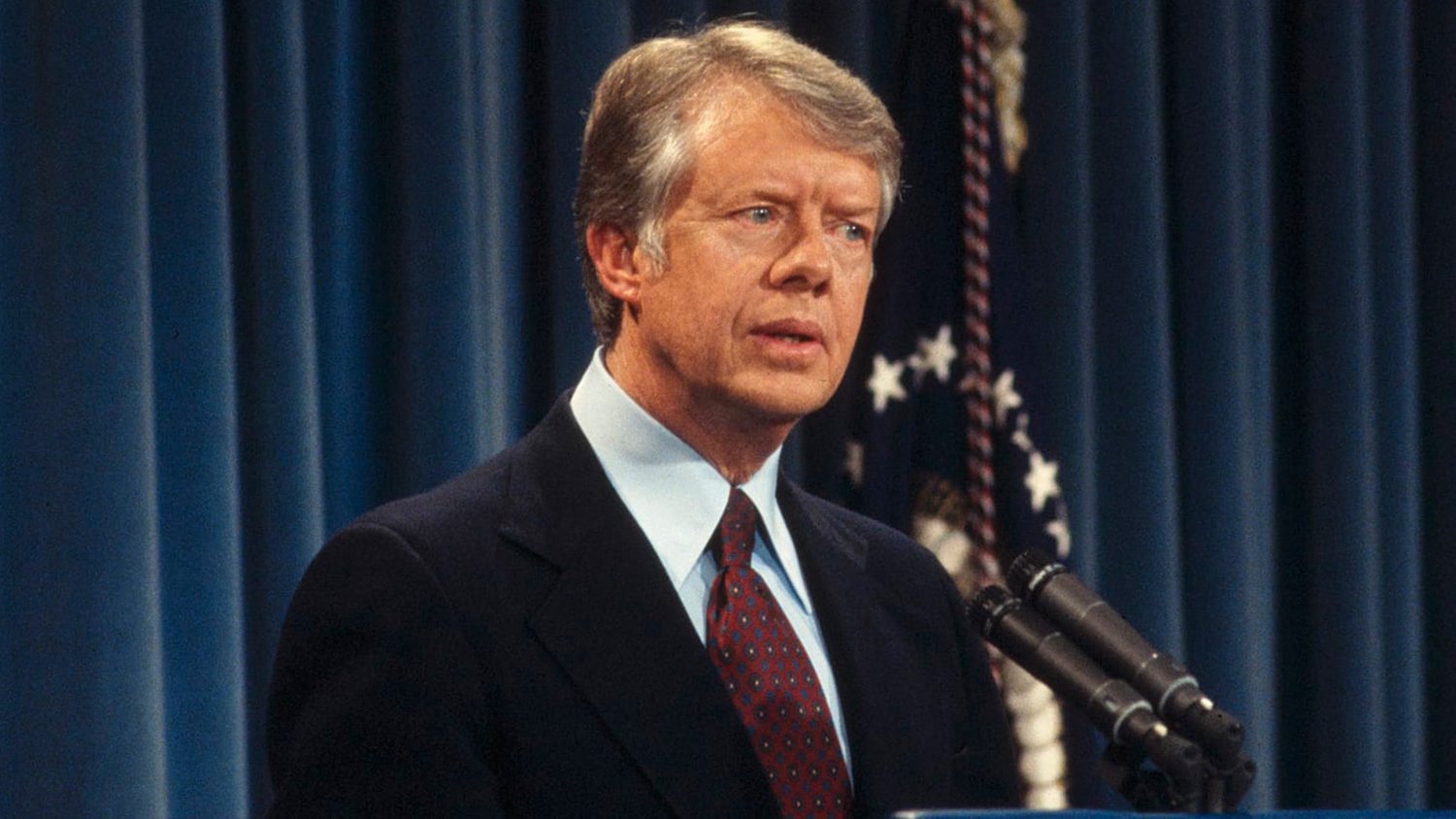
The world has bid farewell to Jimmy Carter, the 39th President of the United States, whose life was a masterclass in humility, service, and, perhaps most notably, reinvention. Carter, who passed away on December 29, 2024, at the remarkable age of 100, defied the usual political gravity that pulls many former presidents into obscurity. Instead, he soared into the annals of history, not just as a politician, but as a humanitarian, proving that sometimes the most profound chapters of life are written after the spotlight dims. And let’s be honest, clocking out at 100 after leading the free world? That’s the coolest way to go out.
Born in the modest town of Plains, Georgia, in 1924, Carter embodied the spirit of small-town America. A peanut farmer turned naval officer turned statesman, his path to the presidency was as unconventional as it was inspiring. Elected in 1976, Carter’s time in the White House was marked by bold aspirations and sobering challenges. His administration championed human rights, environmental stewardship, and energy conservation but also faced the Iranian hostage crisis and economic turbulence. While his single term as president may have been a mixed bag in the eyes of historians, Carter’s post-presidential career has been universally lauded as unparalleled.
The Reluctant Celebrity
Unlike some of his contemporaries who basked in the glory of post-presidential life, Carter chose a quieter, more purposeful existence. He traded the grandeur of the White House for the humble environs of Plains, where he returned not as a statesman seeking adulation, but as a citizen eager to roll up his sleeves. The founding of The Carter Center in 1982 marked the beginning of a new chapter—one where diplomacy was wielded not as a weapon of power, but as a tool of compassion.
Through The Carter Center, he tackled some of the world’s most intractable problems: eradicating diseases like Guinea worm, mediating conflicts in far-flung corners of the globe, and monitoring elections to ensure the sanctity of democracy. This wasn’t the glamorous work that lands you a spot on Mount Rushmore, but it was the kind of work that changes lives—an unassuming revolution of moral clarity.
An Architect of Peace
Carter’s Nobel Peace Prize in 2002 was a fitting acknowledgment of his relentless commitment to peace and human dignity. He was, in many ways, a president ahead of his time, championing causes that resonate even more profoundly today. His brokering of the Camp David Accords between Egypt and Israel remains a towering achievement in American diplomacy. It was an act of audacious optimism—a belief that even the most entrenched enemies could find common ground. Can we just say: Uncle Sam is proud.
Wit in the Shadows
For all his earnestness, Carter was not without wit. When asked about his perceived shortcomings as a president, he famously quipped, “I’m just a peanut farmer from Georgia. What did you expect?” This self-deprecating humor was a hallmark of his character—a recognition that greatness is often forged in the fires of imperfection. Plus, it made him pretty fun at dinner parties.
A President for the Future
Carter’s environmental advocacy, once dismissed by some as overly idealistic during his presidency, now feels downright prophetic. His push for renewable energy and conservation—symbolized by the solar panels he installed on the White House—was a clarion call for a planet teetering on the edge of climate catastrophe. Decades later, his vision remains a beacon for those seeking sustainable solutions. Turns out, the guy wasn’t just ahead of his time; he was thetime.
Lessons in Leadership
Jimmy Carter’s life was a rebuke to the cynicism that often pervades politics. He showed that leadership is not about power, but about purpose; not about ambition, but about action. In an era where public service often feels like an oxymoron, Carter was a reminder that it is possible—and indeed necessary—to serve with integrity. And let’s face it, being a successful leader of the free world and then casually clocking off at 100? That’s pretty much the ultimate mic drop.
As the nation reflects on his legacy, it’s tempting to define Jimmy Carter by the bookends of his life: the presidency and his post-presidential renaissance. But to do so would be to miss the essence of the man. Carter’s greatness was not confined to any title or office. It was, instead, a testament to the idea that a life well-lived is one of service, humility, and an unwavering commitment to the betterment of others.
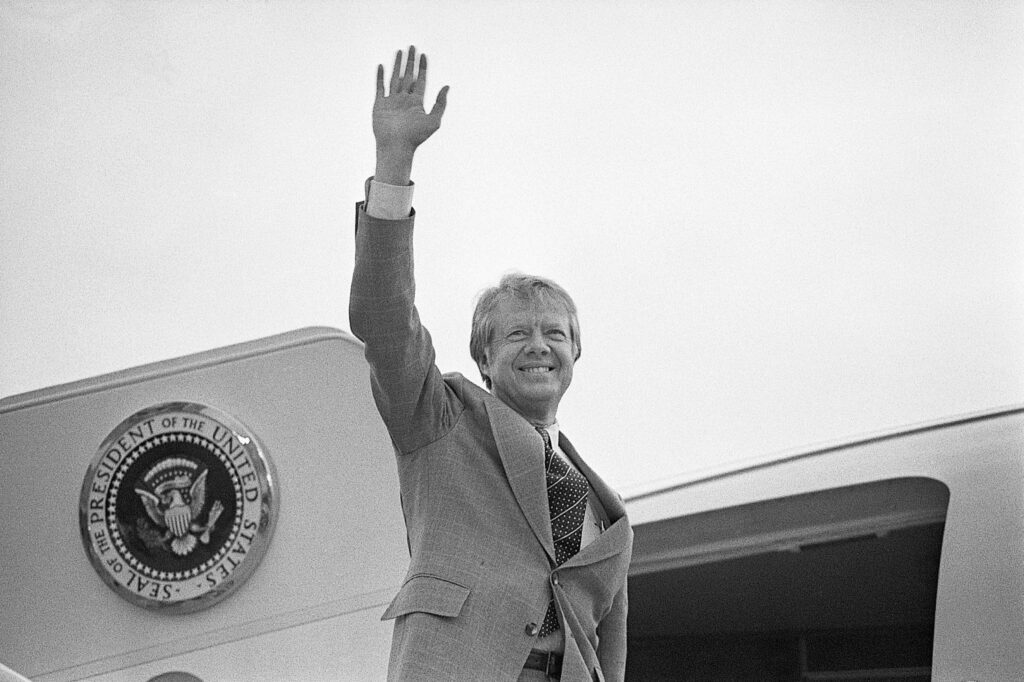
Jimmy Carter may have left the stage, but his lessons endure. In a world desperate for leaders who lead with their hearts, Carter’s example shines as brightly as ever. A peanut farmer from Georgia, yes. But also a giant among us.