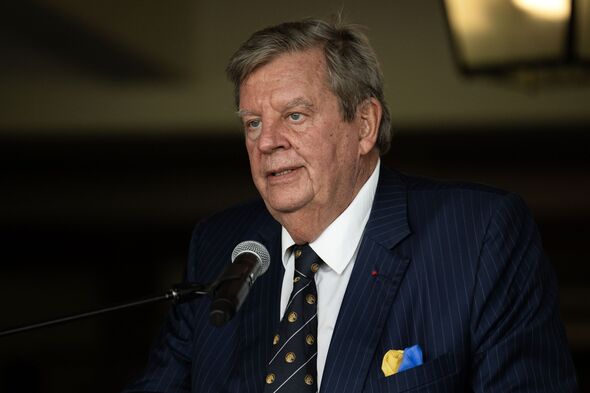
It was Johann Rupert, the billionaire chairman of Richemont, not an ambassador nor a diplomat, who reportedly unlatched the padlock on a frosty corridor between Washington and Pretoria. Sources close to Capitol Hill say it was Rupert who placed the first call to Donald Trump after his November re-election, whispering into the former president’s ear that there were no violent land seizures in South Africa. Not exactly Henry Kissinger, but in a geopolitical landscape increasingly dictated by wealth and influence, perhaps the most effective negotiator is simply the richest one in the room.
“Rupert is a true patriot,” one Capitol source noted. “There were others, like The Big Easy [Ernie Els], but it was Rupert who repeatedly told Trump to stop the nonsense and talk to Ramaphosa.”
And now, with Rupert reportedly in Washington ahead of President Cyril Ramaphosa’s official visit, we may be witnessing a diplomatic makeover choreographed not by foreign ministries but by golf buddies and luxury brand moguls. A surreal but perfectly modern ballet of interests.
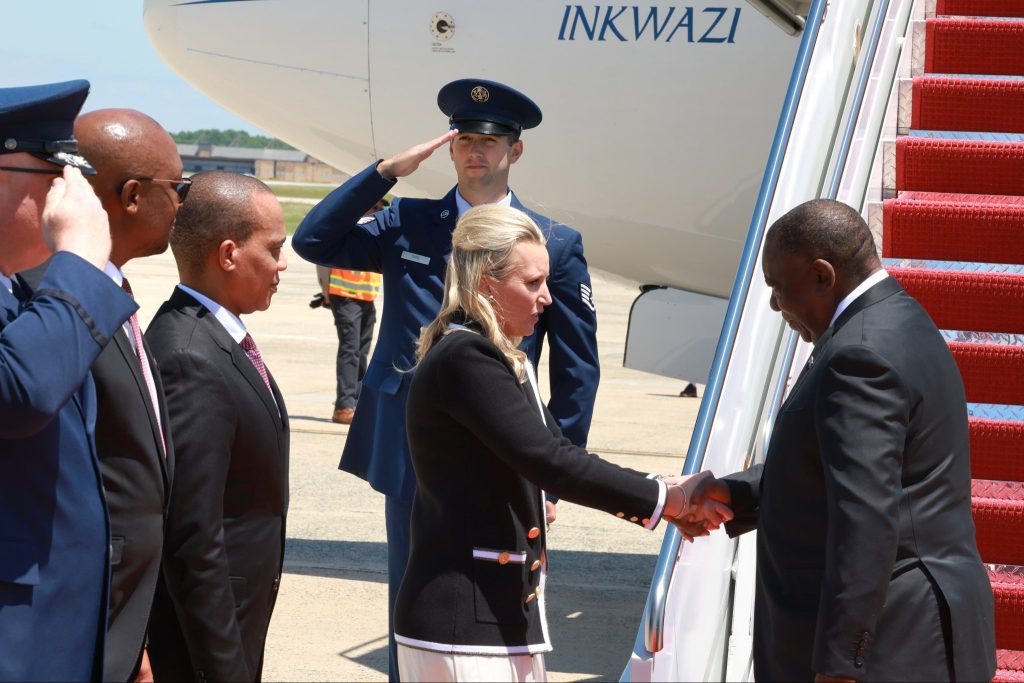
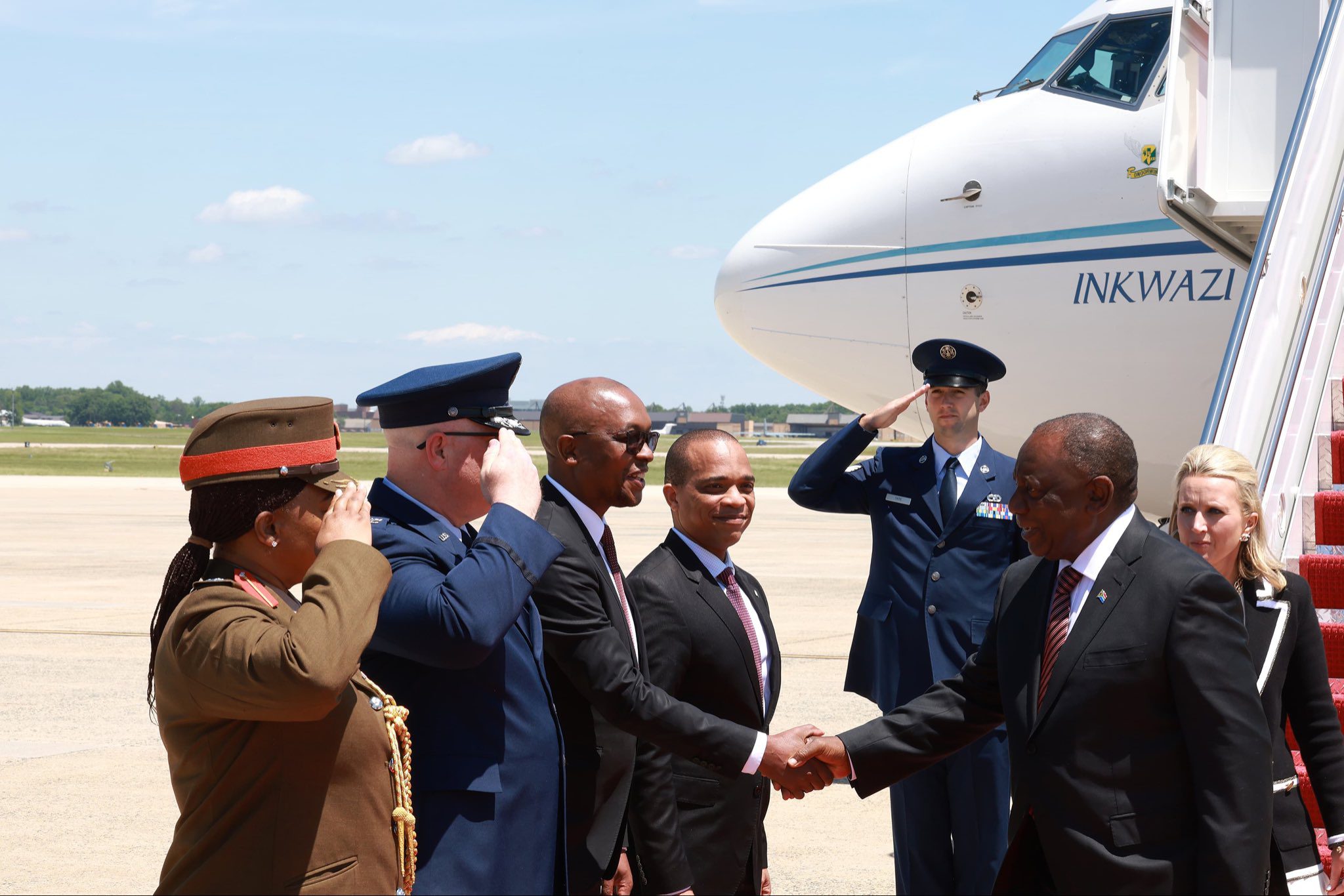
This afternoon, The Presidency confirmed Ramaphosa’s arrival in Washington, posting:
“📸 [IN PICTURES]: His Excellency President @CyrilRamaphosa has this afternoon arrived in Washington DC for his working visit.
President Ramaphosa will meet with President Donald Trump at the White House on Wednesday, 21 May 2025.
#SAinUSA 🇿🇦🇺🇸 #BetterAfricaBetterWorld 🌍”
— @PresidencyZA
In tandem, Minister in the Presidency Khumbudzo Ntshavheni gave further insight into the visit’s strategic intent:
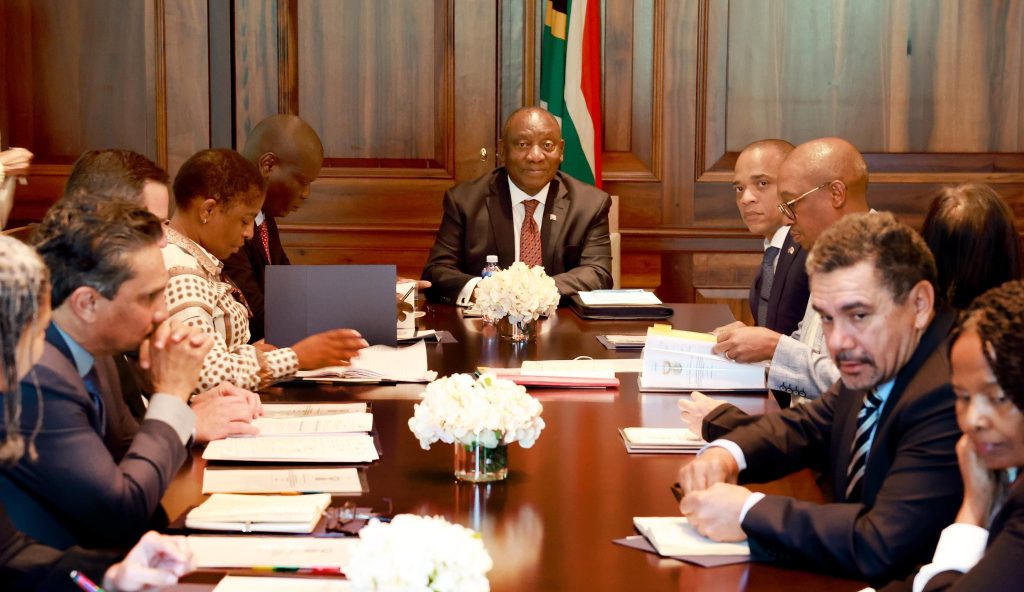
“As part of the Working Visit to the United States led by President Ramaphosa, we are in session at the South African embassy in Washington for the strategic meeting ahead of the meeting with President Trump.
The purpose of the working visit is to uphold and strengthen bilateral relations between South Africa and the United States.”
— @Khu_Ntshavheni
The Starlink Stand-Off: A Red Herring Wrapped in a Satellitescape
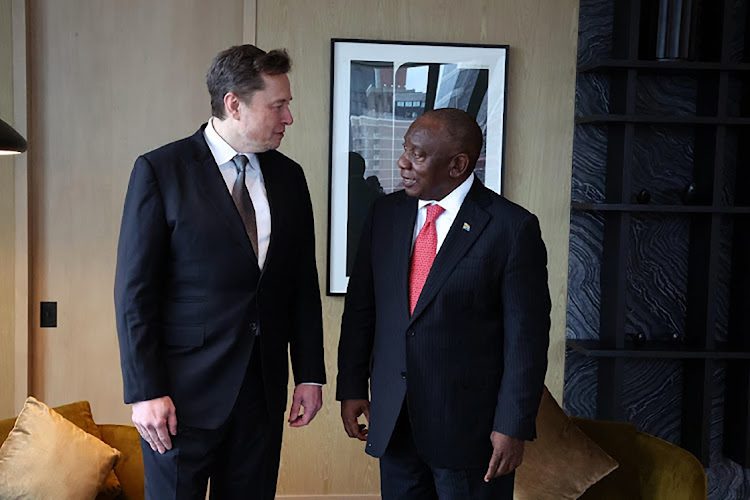
Elon Musk, now more libertarian prophet than inventor, wants Starlink, his satellite internet venture, to operate in South Africa without complying with regulations requiring 30% ownership by historically disadvantaged groups. The tech echo chamber, in its trademark hyperbole, claims that South Africa wants Musk to “give away” a third of his company.
But the truth is more nuanced—and far less cinematic.
The Independent Communications Authority of South Africa (ICASA) has proposed equity-equivalent measures that would allow Starlink to operate without equity handovers, including initiatives like:
- Building satellite training centers for rural youth
- Venture capital investments in underserved communities
- Equipping schools with high-speed terminals
These are not Marxist land grabs; they are innovation-driven compliance structures aimed at broad-based empowerment. Similar obligations exist in India (where local partnerships are required), France (where protests raised environmental concerns), and Indonesia (where satellite regulation laws reign supreme). Starlink’s global regulatory challenges are hardly unique to South Africa.
Ironically, in the United States—the supposed land of free enterprise—the Protecting Americans from Foreign Adversary Controlled Applications Act demands ByteDance divest from TikTok or face a full ban. In short: the U.S. enforces its laws too.
A Transactional Trump and the Platinum Temptation
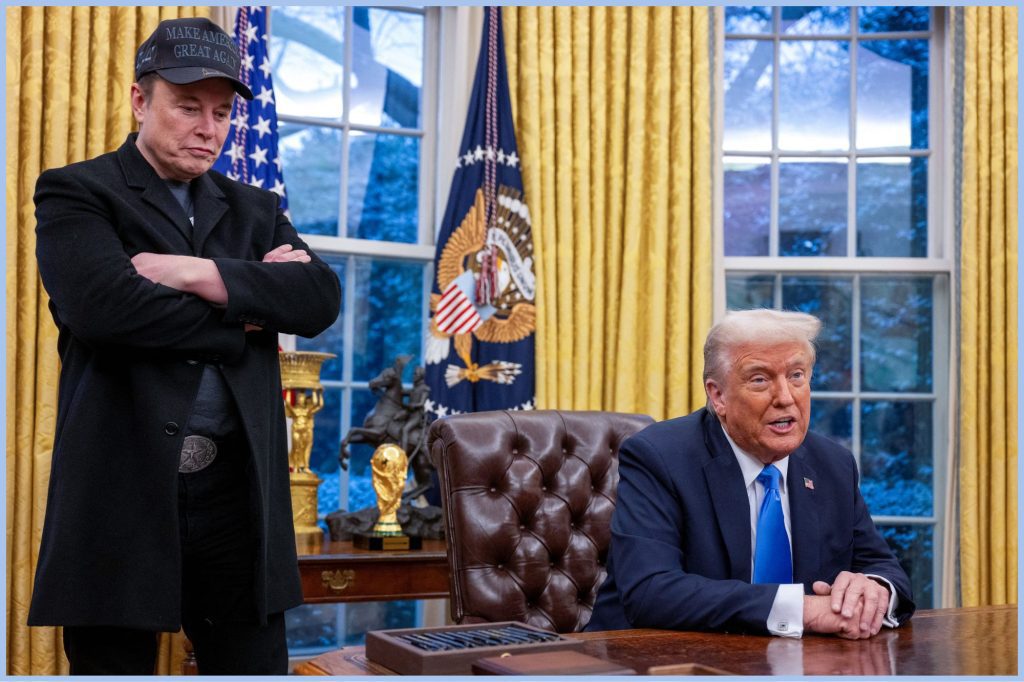
Trump is not driven by doctrine, but by deals. As Jeune Afrique reports, the U.S. State Department under his administration leans heavily into commercial diplomacy—”commerce, migration, peace” being the new pillars of African policy.
South Africa, home to over 75% of the world’s platinum reserves, is ripe for a transactional reimagining of its relationship with Washington.
There’s talk of:
- Special Economic Zones for U.S. companies
- Fast-tracked permits
- Tax incentives and equity stakes
- Clean energy ventures and advanced logistics
Citrus, wine, grapes—already exported under the African Growth and Opportunity Act (AGOA), which generated $2.7 billion in trade revenue in 2023—could form the soft agricultural underbelly of a new framework.
Yet AGOA’s fate hangs in the balance. With renewal discussions imminent, Pretoria faces exclusion unless political tensions cool. If AGOA sinks, Ramaphosa’s team is prepared to propose a new bilateral trade architecture, focused on mutual gain, not aid.
“In the absence of AGOA continuation, we are ready to engage with the Trump administration over a new trade relationship framework,” said Vincent Magwenya, Ramaphosa’s spokesperson, to the BBC.
Ramaphosa’s Diplomatic Gamble: Between Canaan and Chaos
Tensions between the two administrations escalated earlier this year after Ramaphosa signed into law a bill permitting land expropriation without compensation, in cases deemed just and in the public interest. Trump and his team seized on this to revive their longstanding narrative of a “white genocide” in South Africa—a claim roundly debunked but consistently weaponised.
The situation worsened with South Africa’s genocide case against Israel at the International Court of Justice, sparking fury in Washington. In February, Trump suspended U.S. aid to South Africa and offered refugee resettlement to Afrikaner farmers, citing “persecution.”
And then came the expulsion of South Africa’s ambassador to the U.S., Ebrahim Rasool, following accusations that Trump was “mobilising supremacism” and projecting “white victimhood” as a dog whistle.
“Rasool is a race-baiting politician,” said Secretary of State Marco Rubio, “and is no longer welcome in our great country.”
As the first group of Afrikaner families arrived in Texas, Trump doubled down on the genocide narrative, while Elon Musk amplified it to his 180 million X followers, prompting concerns of orchestrated disinformation.
But Ramaphosa remains undeterred.
“We want to come out of the United States with a really good trade deal,” he said in Washington this week, reaffirming his intentions to shift the tone. “We want to strengthen those relations and consolidate our ties.”
Will the Oval Office Lead to Eden?
This visit, arranged at the eleventh hour, is being described as a “high-risk strategy” by political analyst Anthoni van Nieuwkerk, who argues that Ramaphosa is betting his administration’s economic future on one unpredictable conversation. The entourage includes four senior ministers, with no formal programme—just the singular aim of crafting a deal.
“South Africa must lead a greedy Trump to Canaan,” a friendly U.S. senator told Redi Tlhabi, “or at least to the Garden of Eden.”
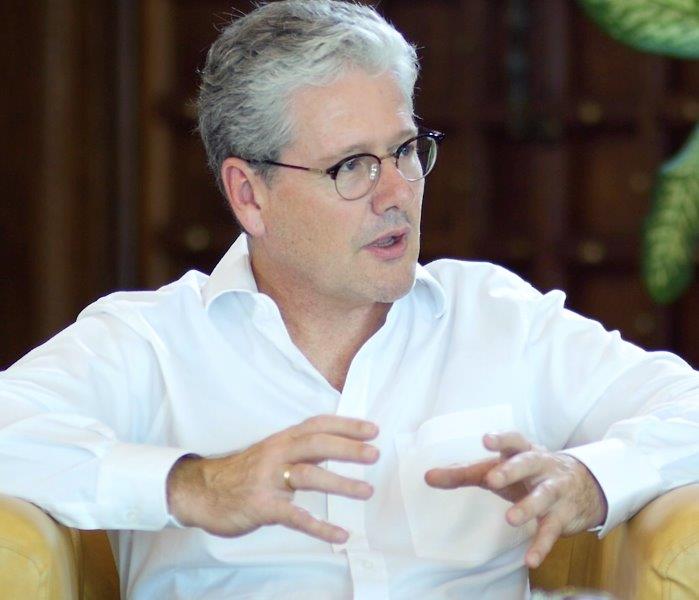
Aid is off the table. Respect is transactional. The battlefield is economic. And the negotiator? An embattled president from Johannesburg, backed by a billionaire from Stellenbosch, attempting to rewrite South Africa’s place in the geopolitical pecking order.
One thing is certain: the stakes are too high for polite diplomacy. This is a moment for boldness, charm, and perhaps a whispered intervention or two from Rupert, the ultimate Afrikaner case study—safe, successful, and perhaps, just persuasive enough.