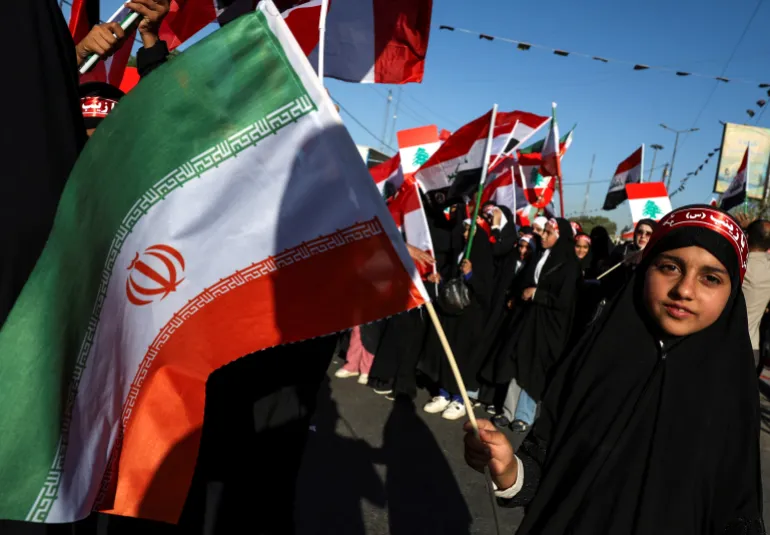
The United States, under former President Donald Trump’s administration, has dramatically shifted from its previous isolationist stance by conducting targeted airstrikes on Iran’s critical nuclear facilities, igniting a volatile new phase in Middle Eastern geopolitics as detailed by Al Jazeera’s ongoing coverage of the crisis.
Iran’s leadership responded swiftly and unequivocally. President Masoud Pezeshkian warned France’s Emmanuel Macron that “The Americans must receive a response to their aggression,” signaling a potential military reprisal that risks drawing the United States deeper into regional hostilities. Meanwhile, Iran’s foreign minister Abbas Araghchi departed for Moscow to meet Russian President Vladimir Putin, a move reported by Reuters as Tehran seeking diplomatic support amid mounting tensions.
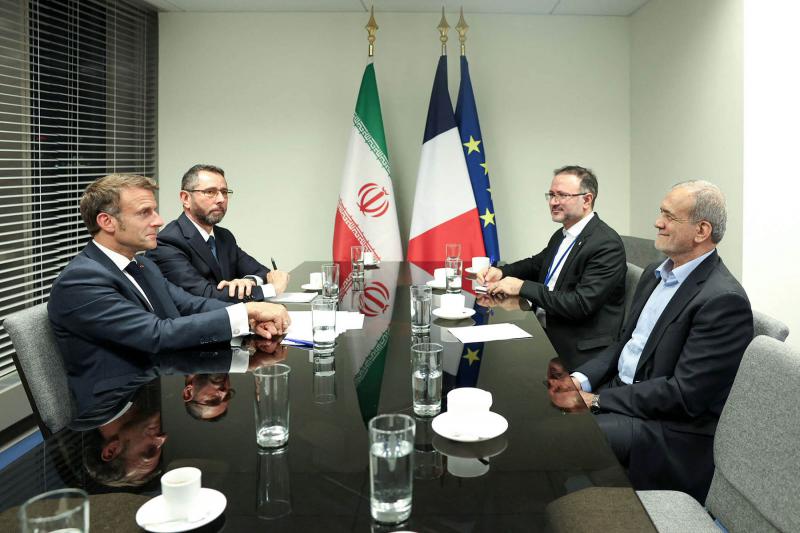
Iran’s leadership responded swiftly and unequivocally. President Masoud Pezeshkian warned France’s Emmanuel Macron that “The Americans must receive a response to their aggression,” signaling a potential military reprisal that risks drawing the United States deeper into regional hostilities. Meanwhile, Iran’s foreign minister Abbas Araghchi departed for Moscow to meet Russian President Vladimir Putin, a move reported by Reuters as Tehran seeking diplomatic support amid mounting tensions.
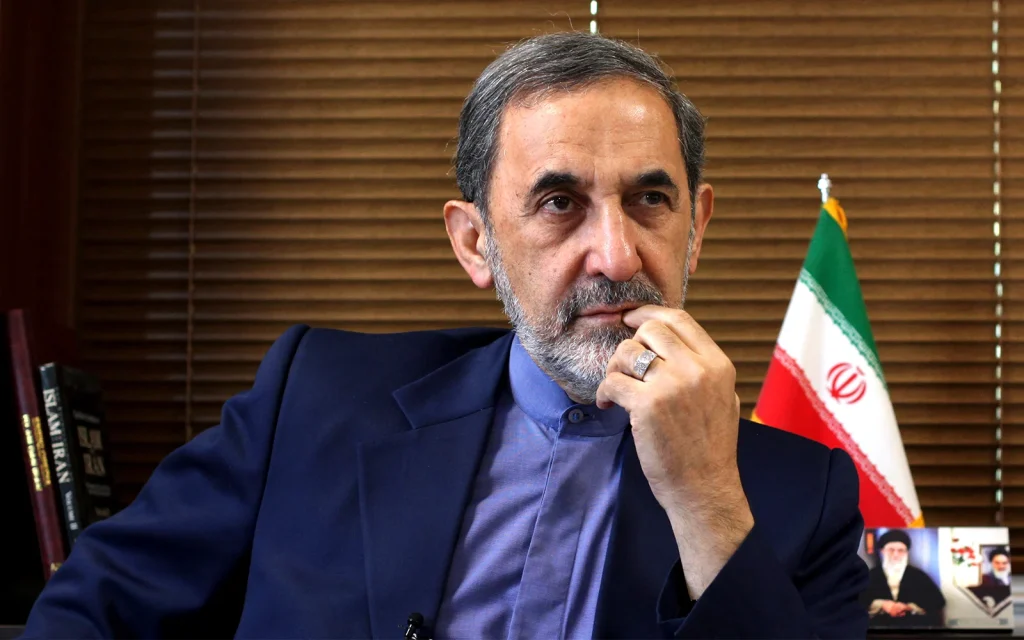
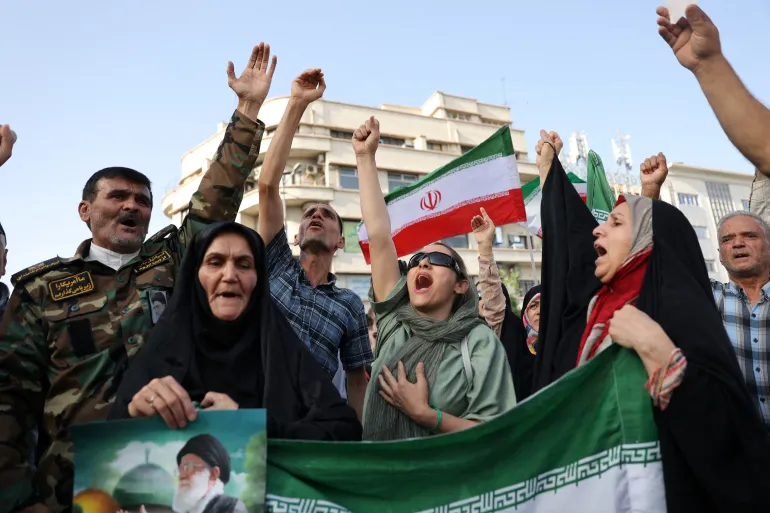
Senior Iranian officials underscored the gravity of the situation. Ali Akbar Velayati, adviser to Supreme Leader Ayatollah Ali Khamenei, declared any country used by the US as a launching pad for strikes would become a “legitimate target” for Iranian forces, according to Iran’s state news agency IRNA. Iranian military spokesperson Abdolrahim Mousavi framed the US airstrikes as a direct violation of Iranian sovereignty, asserting that Washington had “entered the war clearly and directly.” Iranian retaliatory strikes have already commenced, including missile and drone attacks on Israeli territory, with live updates provided by CNN.
At the United Nations Security Council emergency session convened by Iran, acting US ambassador Dorothy Shea defended the strikes as necessary to prevent Iran’s nuclear advancement after years of obfuscation and stalled negotiations, as reflected in the official UN transcripts. She warned that any Iranian attack—direct or indirect—against American personnel or bases would trigger “devastating retaliation.” Iran’s UN ambassador Amir Saeid Iravani condemned the strikes as a breach of international law and accused Israel of manipulating the US into “doing the West’s dirty work,” statements preserved in the UN press office records.
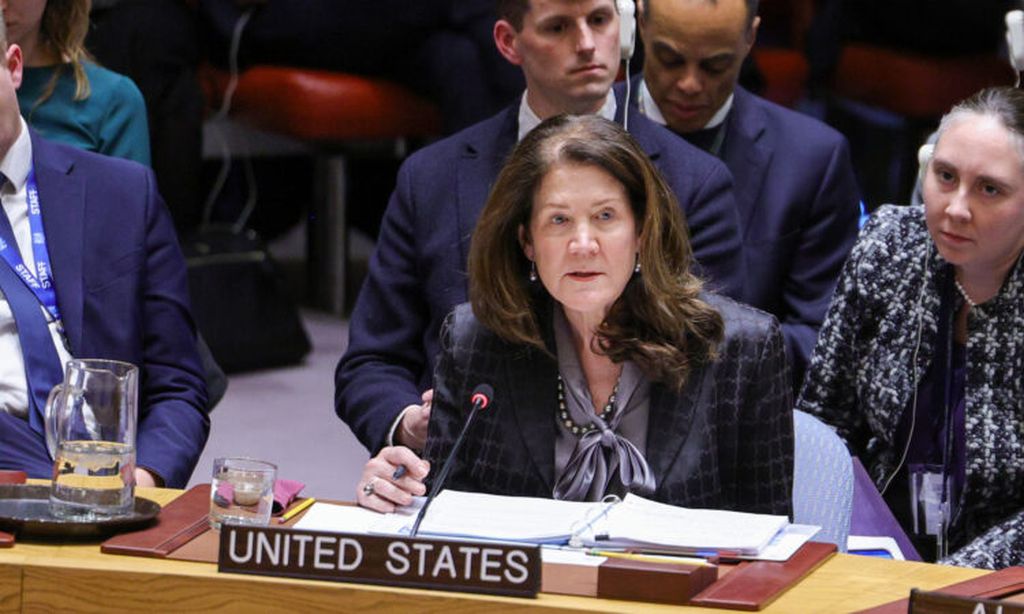
Russia’s UN ambassador Vassily Nebenzia condemned the US action as “opening a Pandora’s box,” emphasizing the unpredictable consequences that could follow, as documented in the Security Council’s official statements. This fracture within the international community has drawn attention from foreign policy experts, with analysis published in Foreign Affairs highlighting the global diplomatic crisis provoked by the strikes.
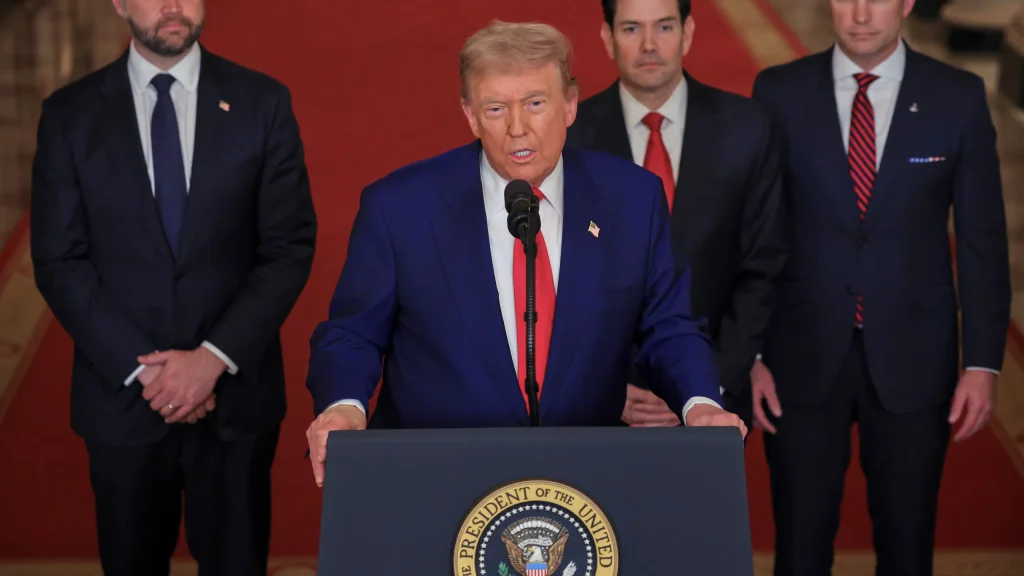
The US military described the operation, dubbed “Midnight Hammer,” involving seven B-2 stealth bombers flying an 18-hour mission to deploy GBU-57 Massive Ordnance Penetrators against Iran’s fortified nuclear sites, as detailed in Pentagon briefings. While President Trump claimed the facilities were “completely and totally obliterated,” assessments remain cautious about the extent of damage and Iran’s residual nuclear capabilities. Satellite imagery from Maxar Technologies confirmed fresh impact craters at the Fordow site, but Iranian sources maintain their nuclear program’s survival, asserting that key materials had been relocated in advance, a claim under ongoing investigation.
Trump’s messaging has oscillated between positioning the strikes as a limited intervention to curb nuclear ambitions and suggesting, albeit cautiously, that regime change in Tehran could become a policy outcome, as CNN political analysts have documented. Vice-President JD Vance sought to assuage fears of an all-out war by clarifying that the US was targeting Iran’s nuclear program, not the regime itself.
Israeli Prime Minister Benjamin Netanyahu confirmed ongoing air operations targeting Iran’s nuclear and ballistic missile infrastructure, asserting Israeli forces were “very, very close” to achieving their goals. The Israeli Defense Forces announced multiple strikes on Iranian airports and military sites, damaging runways, aircraft, and underground bunkers, according to official IDF releases.
In retaliation, Iran launched renewed missile and drone attacks against Israeli cities, with the Supreme Leader reiterating calls to “punish” Israel. Iranian-aligned militias in Yemen, including the Houthis, have threatened to resume maritime attacks if US involvement escalates, a development tracked extensively by Al Jazeera’s regional correspondents.
The strategic Strait of Hormuz, a vital corridor for global energy supplies, remains a potential flashpoint. Iranian officials have suggested disruption of maritime traffic as a retaliatory option, raising global energy security concerns discussed in the Energy Policy Journal. Domestically, Iranian lawmakers have signaled willingness to withdraw from the nuclear Non-Proliferation Treaty and suspend cooperation with the International Atomic Energy Agency, further complicating diplomatic efforts, as noted in recent IAEA briefings.
The strategic Strait of Hormuz, a vital corridor for global energy supplies, remains a potential flashpoint. Iranian officials have suggested disruption of maritime traffic as a retaliatory option, raising global energy security concerns discussed in the Energy Policy Journal. Domestically, Iranian lawmakers have signaled willingness to withdraw from the nuclear Non-Proliferation Treaty and suspend cooperation with the International Atomic Energy Agency, further complicating diplomatic efforts, as noted in recent IAEA briefings.
Global leaders continue to urge restraint and a return to diplomacy. UN Secretary-General Antonio Guterres has called for an immediate halt to hostilities, while the International Atomic Energy Agency convened an emergency session in response to the attacks. Concurrently, European Union leaders are meeting in Brussels to address the overlapping crises involving Iran and Gaza, signaling coordinated international efforts to prevent escalation, as reflected in EU press releases.
The strikes mark a significant departure from Trump’s earlier promises to avoid “forever wars” in the Middle East. This unfolding crisis exemplifies the complex balance between preventing nuclear proliferation and avoiding entanglement in protracted conflict. The path forward depends on Tehran’s strategic decisions and the international community’s ability to re-engage diplomatically before the situation deteriorates further.