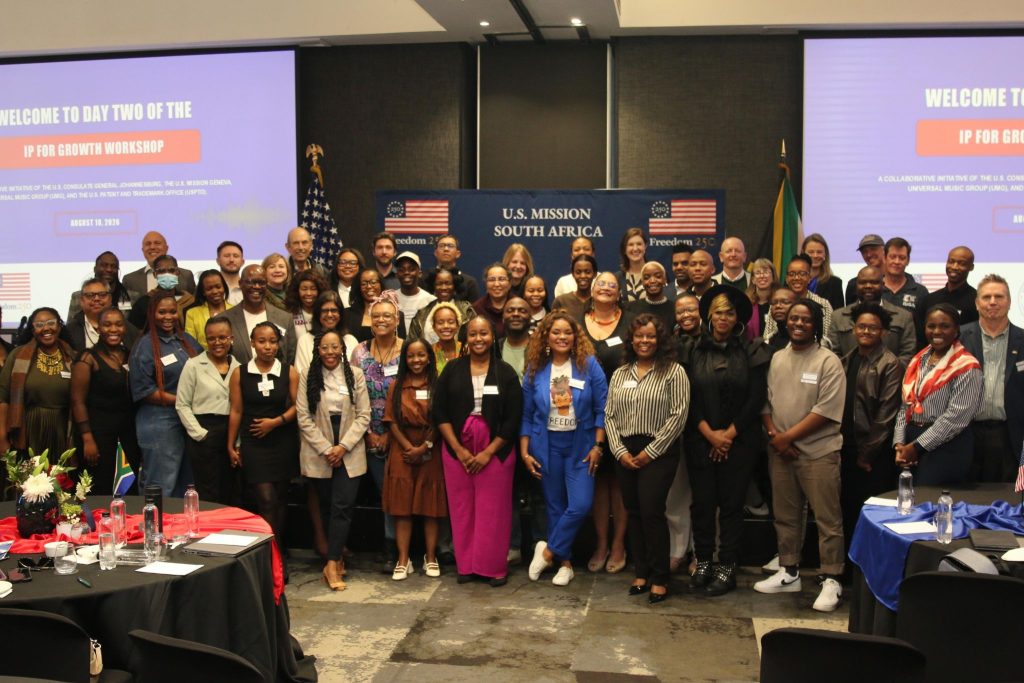
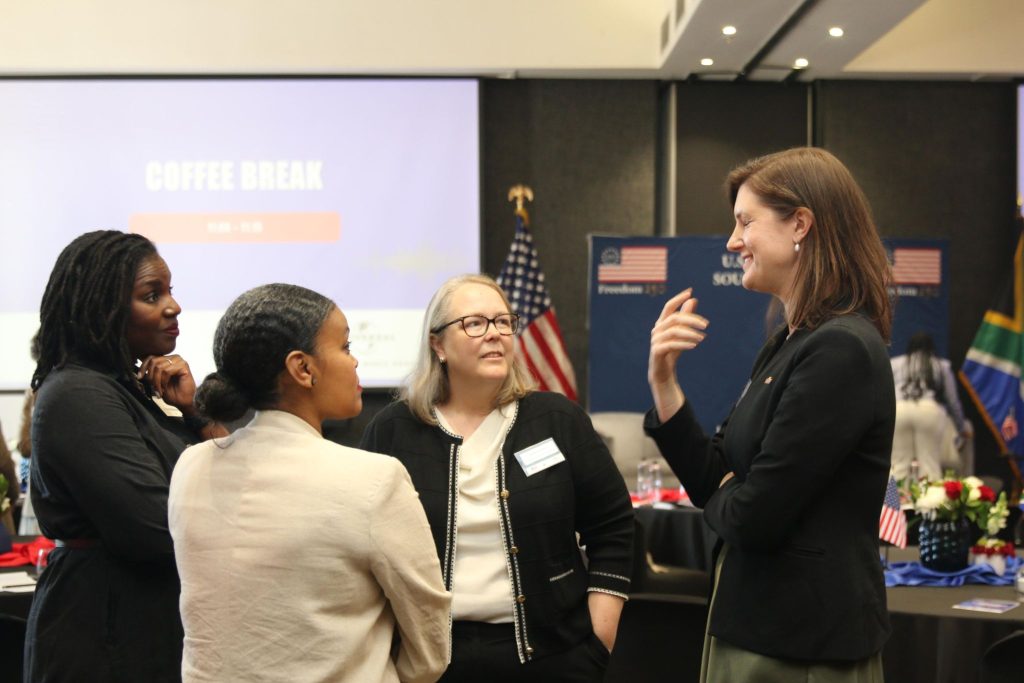
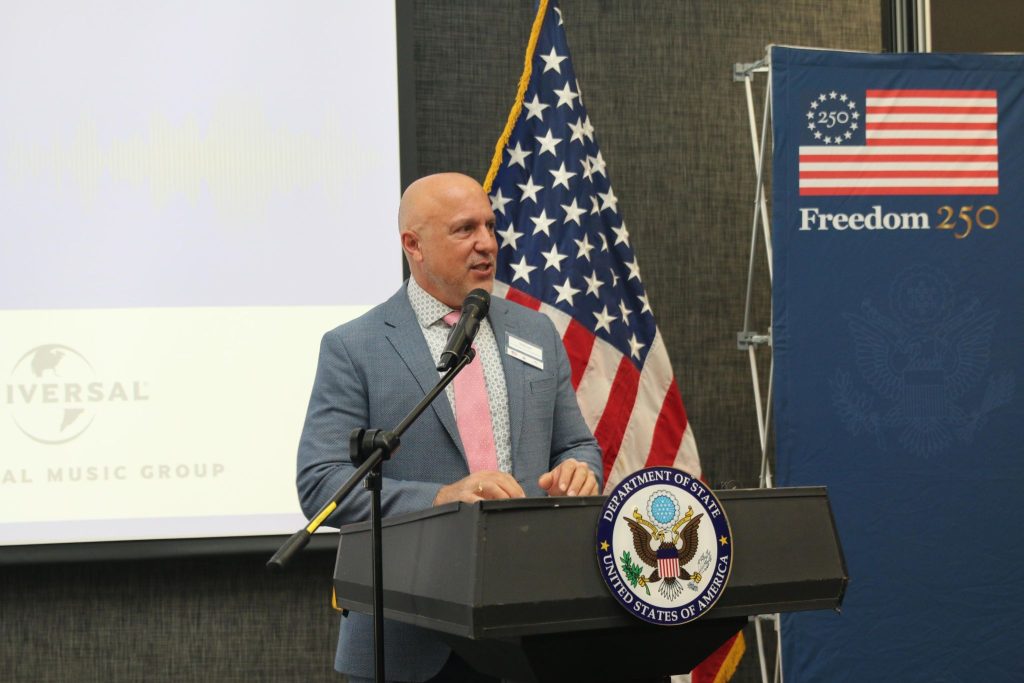
Sandton spent two days last week doing something the music industry rarely does well: talking about paperwork like it’s the main event. The IP for Growth Workshop, hosted by U.S. Embassy South Africa in partnership with U.S. Mission Geneva, the U.S. Patent and Trademark Office and Universal Music Group, pulled together policymakers, entertainment lawyers, collecting societies and a few artists who’ve actually lived the royalty statement horror stories. The pitch was simple. Creativity without protected rights is just content waiting to be scraped.
Day One: Registering Value Before Someone Else Does
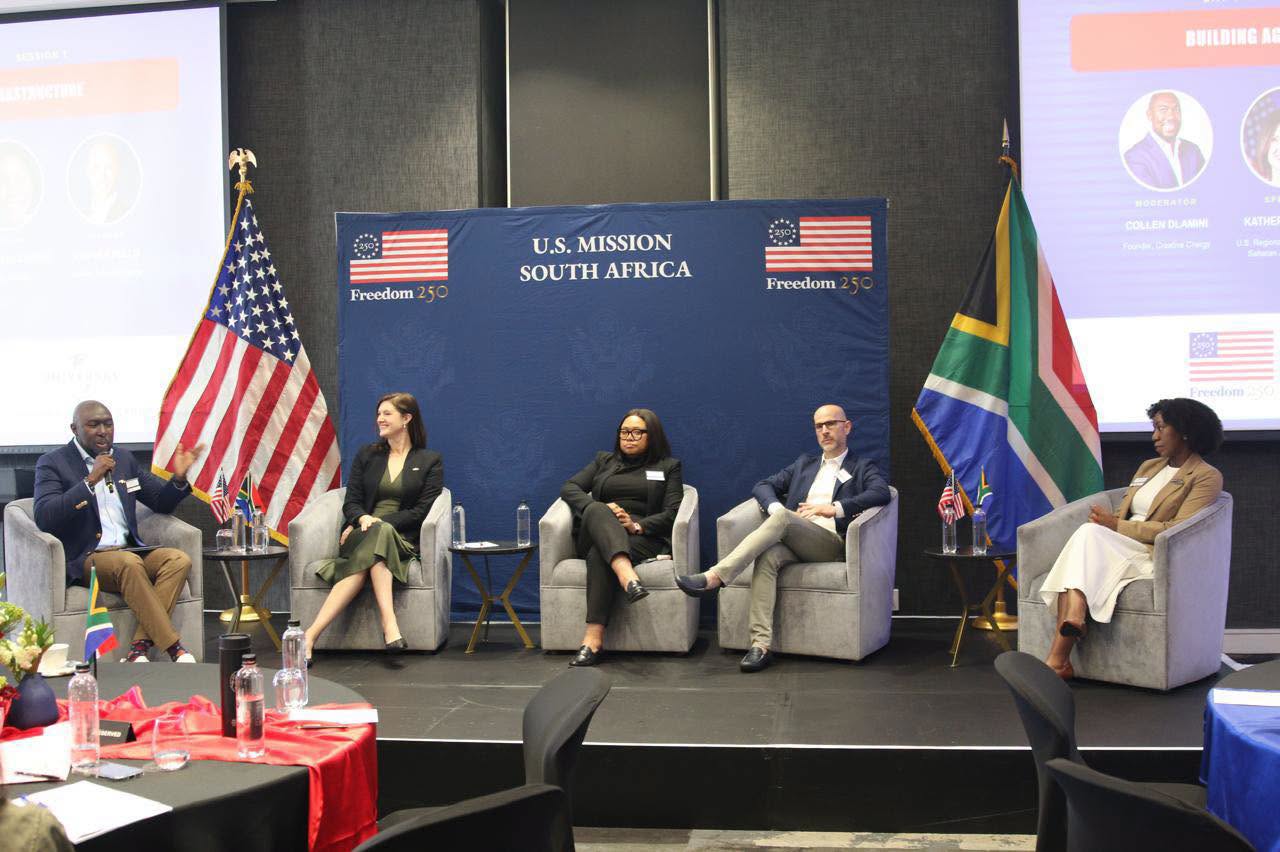
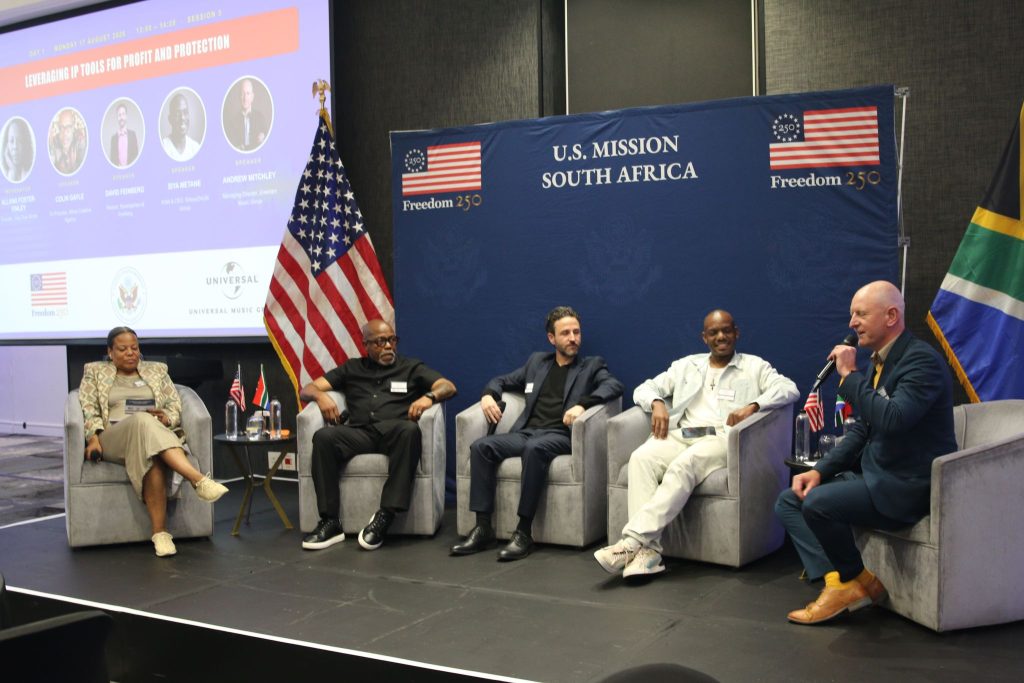
The opening session set the tone with a panel on IP tools and protection featuring Andrew Mitchley of Gresham Music Group, Colin Gayle, David Feinberg of Rosengarten & Feinberg, and Siya Metane of SlikourOnLife Group, moderated by Allana Foster-Finley.
Mitchley’s framing cut through the usual conference fog: a functioning creative economy only works if artists trust that the value of their work will actually be defended. That is not an administrative footnote sitting beside the creative process. It is the infrastructure the creative process stands on.
Then came the part everyone was really there for.
The AI Question
Every panel eventually drifted to artificial intelligence, and Johannesburg’s version of the debate was sharper than the usual doom-versus-hype split. Mitchley put it bluntly: the danger isn’t AI itself, it’s the risk of a “B-grade music economy” built on cheap, disposable, machine-generated content that quietly erodes what human creators are worth.
That’s the tension the whole room was circling. AI tools are genuinely useful for production, discovery and even rights administration, making metadata cleaner and royalty tracking faster than any human back office ever could. But the same models are trained on catalogues nobody explicitly licensed, and the commercial upside for platforms doesn’t automatically flow back to the people whose work built the training data in the first place. Innovation and protection, as Mitchley argued, aren’t opposites. The industry just hasn’t built the plumbing to make both true at once.
Policy Catches Up: The Copyright Amendment Bill Shadow
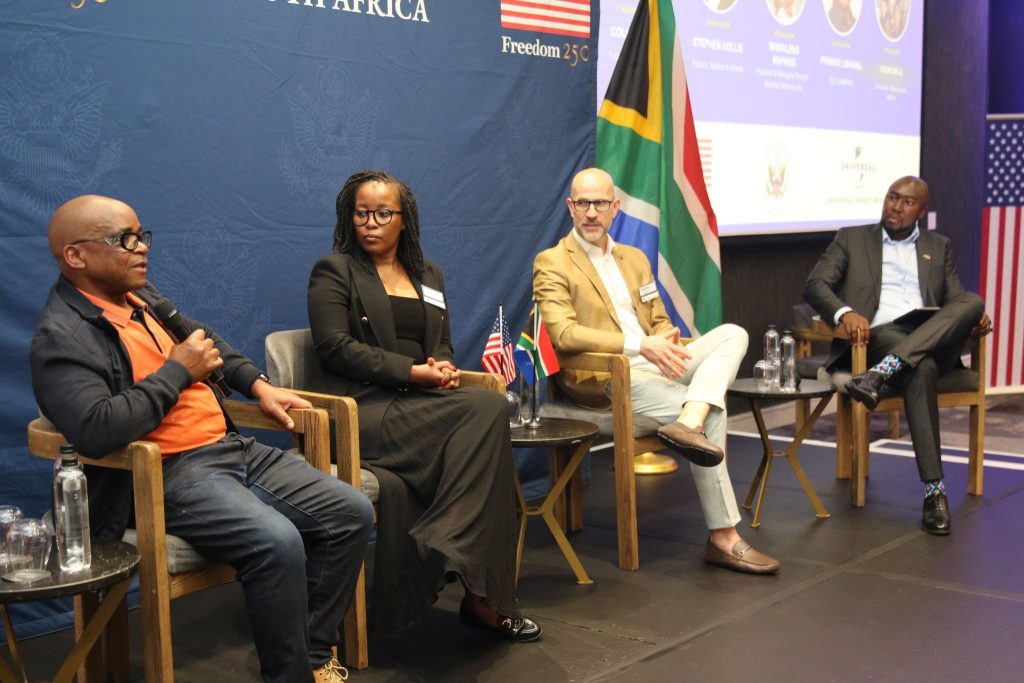
Day two shifted from tools to systems: IP policy structures for emerging markets, anti-piracy enforcement, and what sustained U.S.-South Africa collaboration on this actually looks like going forward. The subtext running underneath it was South Africa’s Constitutional Court ruling on the Copyright Amendment Bill, a live issue that gives the next phase of local copyright reform real teeth and real stakes.
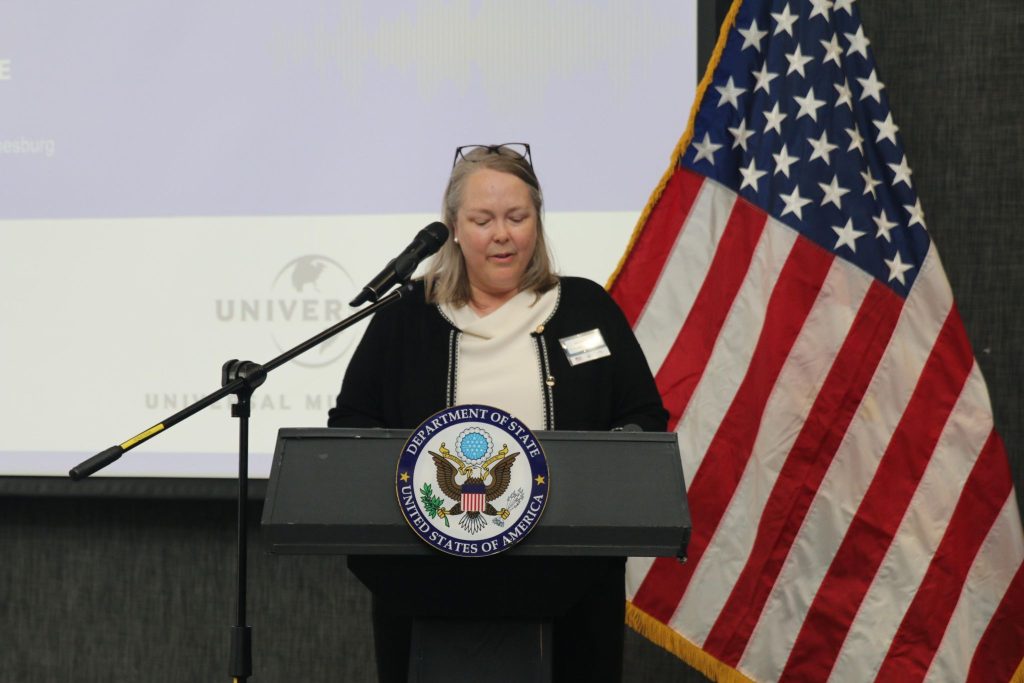
In the room for that conversation were representatives from SAMRO, SAMPRA, MPASA, CAPASSO, Downtown Music Publishing Africa, IFPI, Adams & Adams, and USPTO’s Katherine M. Hiner, the Intellectual Property Attaché for Sub-Saharan Africa who has now run this same conversation in Geneva, Lagos and Johannesburg back to back. That’s not a coincidence. It’s a deliberate signal that Washington sees Africa’s creative economy as investable infrastructure, not a charity case.
Capital Is the Other Half of the Protection Story
Rights mean little without cash flow to match, and that’s where a separate but related development landed the same week: SOL Distro‘s new partnership with royalty-advance platform beatBread. The mechanics are straightforward. Artists with qualifying royalty income can access advances against future earnings, from four figures up to eight, without giving up ownership.
It’s a small but telling data point about where the real bottleneck sits for African independents. Talent was never the shortage. Working capital was. Pair a funding rail like beatBread with the kind of rights infrastructure discussed at IP for Growth, and you start to see the outline of an actual investable pipeline rather than a series of isolated wins.
Strip away the branding and the throughline is consistent across both days: value only survives contact with the market if the legal and financial rails exist to carry it. Registration, licensing clarity, enforceable anti-piracy mechanisms and now AI governance are no longer back-office concerns for African creative industries. They are the product. The artists in Sandton this week weren’t just protecting songs. They were pricing in the next decade of how those songs get made, moved and monetised, algorithms included.
#USinSA #Freedom250 #IP4Growth #IntellectualProperty #CreativeEconomy