JOHANNESBURG. For one day this month, a cross-section of South Africa’s boardrooms, executive suites and rising leadership pipeline converged under a single banner: Impact That Transforms. The occasion was the 2026 Young Leaders Connect (YLC) IDEAL Leadership Summit and Awards, a Standard Bank-backed gathering that has, over its short history, become a barometer of how South Africa’s next generation of executives think about ethics, authenticity, and institutional trust.
The Summit is not a typical corporate conference. It sits at the intersection of mentorship programme, awards ceremonies, and strategy forums, and this year’s proceedings surfaced a set of themes that deserve the attention of any executive committee currently wrestling with succession planning, artificial intelligence strategy, or stakeholder trust: the widening gap between governance frameworks and actual ethical conduct, the risk that AI adoption entrenches rather than narrows inequality, and a citizenship crisis among the country’s youngest voters that has direct implications for policy stability and the operating environment businesses plan around.

A Pipeline Built on Its Own Alumni
The Summit’s structure is itself an instructive case study in leadership development. Community contributor Marygold Vezha, who documented much of the day’s proceedings, offered a window into how the programme compounds over time: she joined YLC IDEAL as a mentee in 2023, was placed on the organisation’s Brand and Reputation subcommittee that same year, and has since risen to Co-Lead of the Summit and Awards team, this year marking her fourth IDEAL Day. It is a trajectory the organisation appears to have engineered deliberately rather than left to chance, and it offers a template that corporate mentorship and talent programmes, often criticised for producing credentials rather than career mobility, could study directly.


That structural intent was echoed by YLC IDEAL Co-Chairs Kagiso Mavuka, CA(SA), who formally opened this year’s Summit, and Katekani Hlaise, who closed it with a line that framed the entire day: the Summit was never designed simply to leave attendees inspired. It was designed to move them into action. For organisations that spend significant budget on leadership offsites and still struggle to translate them into behavioral change, that distinction between inspiration and action is worth sitting with.
The Awards: Recognising Leadership Beyond the Title
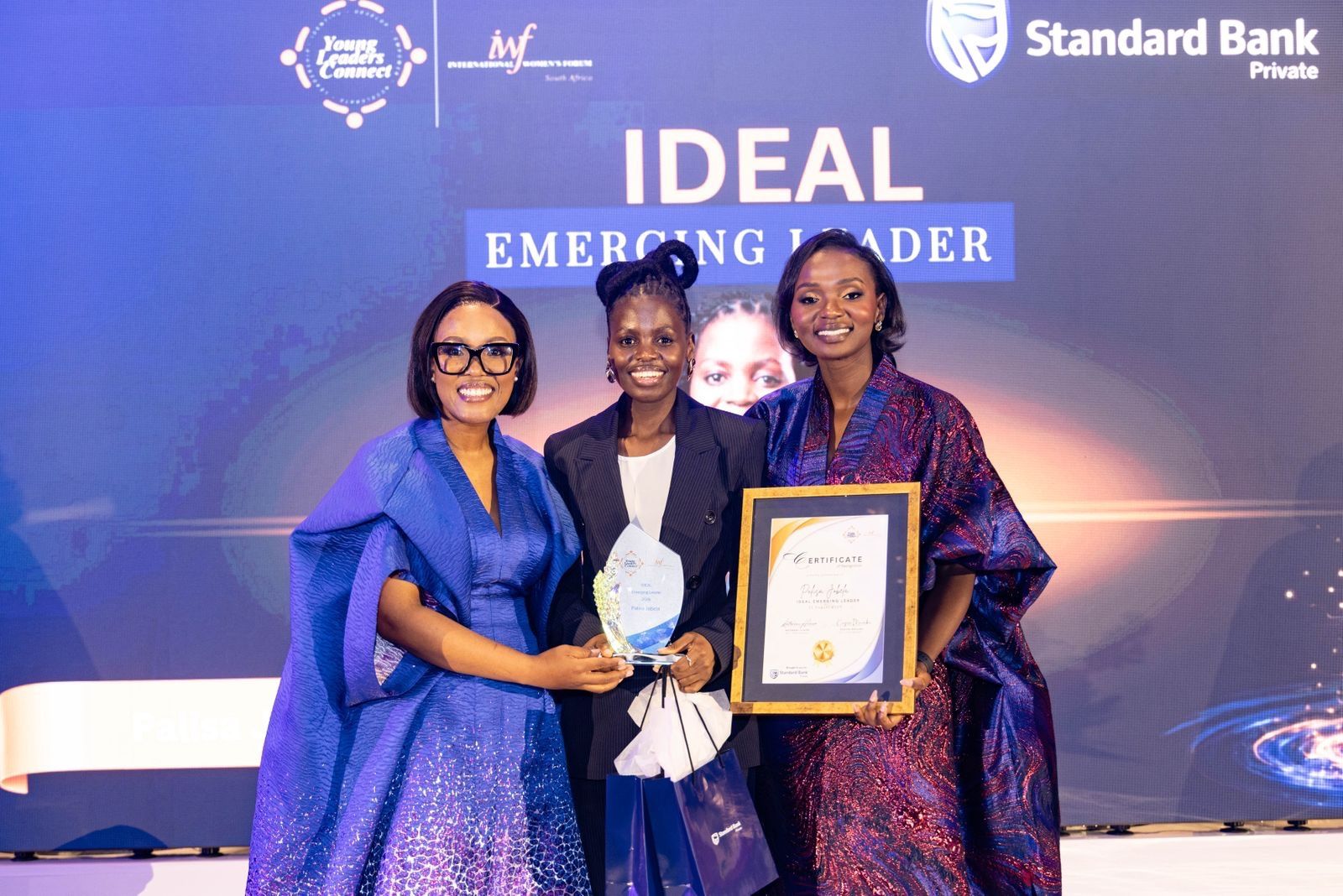
The 2026 IDEAL Awards recognised leaders across categories designed to reward substance over seniority. Thandazani Zulu took the Propeller Award for driving momentum in others. Mahlatse Mamaila collected a rare double, winning both the Positive Impact Award and the Enterprise Architect Award, the latter recognising strategic and visionary leadership. Deborah Mutemwa-Tumbo received the Authentic Leader Award, and Palisa Jobela was named Emerging Leader.
On the business and entrepreneurship side, Duduzile Nyumbeka (née Mkhwanazi) won the Lift Up Leader in Business Award, recognising entrepreneurial leadership with community impact. Charmaine Houvet was honoured as the Senior Authentic Leader, a category that acknowledges leaders whose track record spans a longer arc of career and influence. The organisation also recognised its volunteer Ambassadors, the women who staff YLC’s subcommittees largely outside the public eye, a category choice that signals the organisation values operational contribution as highly as public-facing achievement.


The Keynote: Leadership as Consistency, Not Perfection
The Summit’s keynote fell to Janine Hills, founder and chief executive of Janine Hills Authentic Leadership, whose client roster reportedly spans more than fifty JSE-listed companies across roughly fifteen African countries. Hills, whose earlier career included senior roles at Southern Sun, Vodacom and Primedia and board positions at Kaizer Chiefs and Ster-Kinekor, built her keynote around a proposition that should resonate uncomfortably with any executive team: leadership legacy is not defined by strategy documents but by the specific, often career-risking decisions leaders make when no one is applauding. She illustrated the point with an account of a board member who, on noticing an irregularity in meeting documents, paused proceedings, asked the chief executive to step outside, and disclosed a conflict of interest on the spot. It was not a popular move. It was, in Hills’s framing, the only defensible one.
Her broader thesis, that leaders must know precisely what they stand for, build reputational capital through consistent public thought leadership, and do the underlying research before speaking, mirrors work she has done advising Standard Chartered Bank and other multinationals through reputational crises. For boards currently updating their crisis communications protocols, her core message is a useful gut-check: reputation is not managed at the moment of crisis. It is built, deliberately, in the months and years beforehand.


The AI Panel: A Warning Against Concentration, Not Adoption
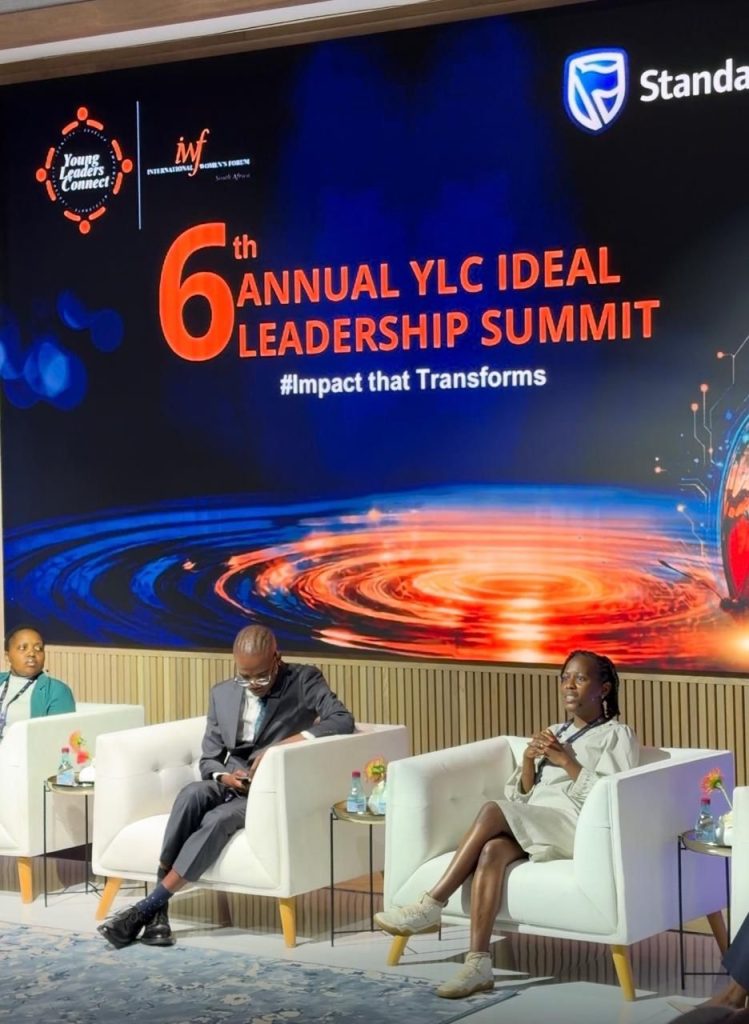
Perhaps the most consequential session for C-suite strategy was the Summit’s debate on artificial intelligence, framed around a single provocation: humanity as a competitive advantage, but an advantage for whom? Panelists cited projections placing Africa’s AI market at $16.5 billion by 2030, alongside a national unemployment rate of 33.6%, and used the tension between those two figures to argue that AI’s business case on the continent cannot be built on technological superiority alone.
The panel’s central argument was that as AI tools become commoditised and universally accessible, execution, not capability, becomes the differentiator, and execution is inherently human. Their sharper warning was directed at boards treating AI deployment as a pure efficiency play: an AI system that performs identically for a Silicon Valley founder and a township-based small business owner is not neutral technology, it is a design choice, and getting that design choice wrong risks concentrating AI’s benefits among those already advantaged while distributing its disruption to those least able to absorb it. For any executive currently signing off on an enterprise AI roadmap, the panel’s framing offers a useful test: who was in the room when the use case was defined, and who was not.
Building the Boring Business: A Founder’s Case Against the Pitch Deck
The Summit’s most pointed business-strategy session came from Abed Tau, CA(SA), the chartered accountant, author and serial entrepreneur who co-founded Thamani Consulting, the tutoring platform Tuta-Me (sold to a JSE-listed group in 2019), and the venture studio Silicon Maboneng. Tau left a corporate role at Deloitte in 2013 to start what became a firm employing hundreds of staff and serving hundreds of clients, a decision his wife independently mirrored by resigning her own position the following day without prior discussion, a detail Tau has cited publicly as evidence that conviction, more than planning, underwrote the venture’s founding.
His argument to the Summit inverted the standard entrepreneurship narrative pitched to young founders: boring businesses, he argued, create millionaires; difficult businesses create billionaires; exciting, headline-grabbing businesses mostly create stress. He pointed to the quietly profitable, un-glamorous operators, a bakery with no social media presence that supplied coffee shops across Gauteng for nearly two decades, unremarkable CBD rental portfolios, accounting practices colleagues dismissed as dull, as the more reliable wealth-building models than the viral, venture-backed pitch. His closing challenge to the room, that businesses should be built around people rather than systems, since systems inevitably follow people rather than the reverse, is a direct rebuke to the org-chart-first restructuring logic many corporates still default to.





Youth Disengagement: A Governance Risk Hiding in Plain Sight
A fireside chat titled Youth, Power and the Ballot surfaced data that ought to concern any executive tracking South Africa’s policy and regulatory trajectory. Analysts on the panel reported that only 45% of 18 to 19 year olds voted in the 2024 general election, down sharply from 80% turnout in that cohort in 2019, while the 70 to 79 age bracket recorded the highest turnout of any group. The panel’s framing was blunt: the people currently governing South Africa were disproportionately chosen by the voters least likely to be affected by the next election cycle.
The panel’s more technical point, that in a proportional representation system a shrinking denominator amplifies the influence of whoever does show up, has direct relevance for corporate government-affairs and regulatory-risk functions. Low youth turnout does not neutralise youth policy preferences; it hands disproportionate weight to older, already-engaged voting blocs, a dynamic with obvious implications for policy continuity, labour market reform and the regulatory environment businesses are planning multi-year investments around.


Ethics Versus Compliance: The Distinction Boards Keep Missing
A panel on ethics and leadership closed the day’s substantive programming with a distinction that deserves to be printed on the inside cover of every board pack in the country: compliance asks what an organisation may do; ethics asks what it should do. Panelists argued that South Africa’s governance failures are rarely a function of weak governance frameworks, the country, they noted, has some of the strongest on paper, but of leaders who treat compliance as the ceiling of ethical obligation rather than its floor. Restoring institutional trust, the panel concluded, requires authenticity and consistent communication sustained over time, not a policy document, because employees calibrate their own conduct against what leadership actually does rather than what it publishes.
Strip away the awards ceremony format and the 2026 YLC IDEAL Summit reads as a coherent set of governance and strategy prompts: reputational capital is built long before it is needed, AI deployment decisions are inherently distributive and demand scrutiny over who is included in the design process, youth political disengagement is a leading indicator worth tracking rather than a demographic curiosity, and the gap between what is compliant and what is ethical is where institutional trust is actually won or lost. For an event built around mentees and emerging leaders, its most direct audience may well have been the executives already in the room.