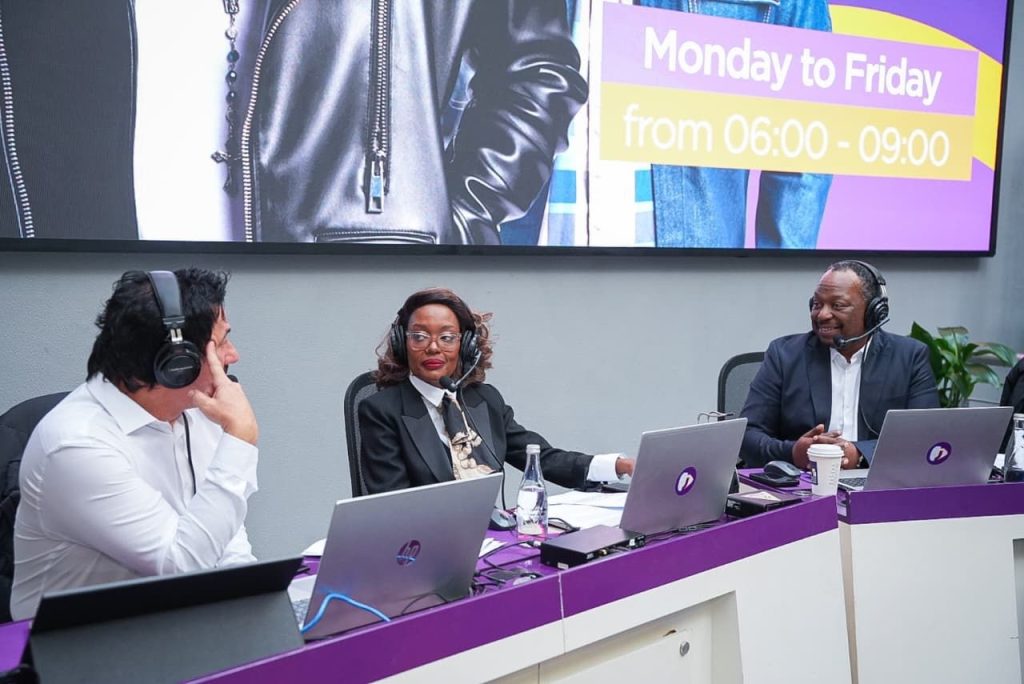
MIDRAND, JOHANNESBURG — The morning began with radio energy yet ended with a much bigger question: what does it take to build something that outlives you?
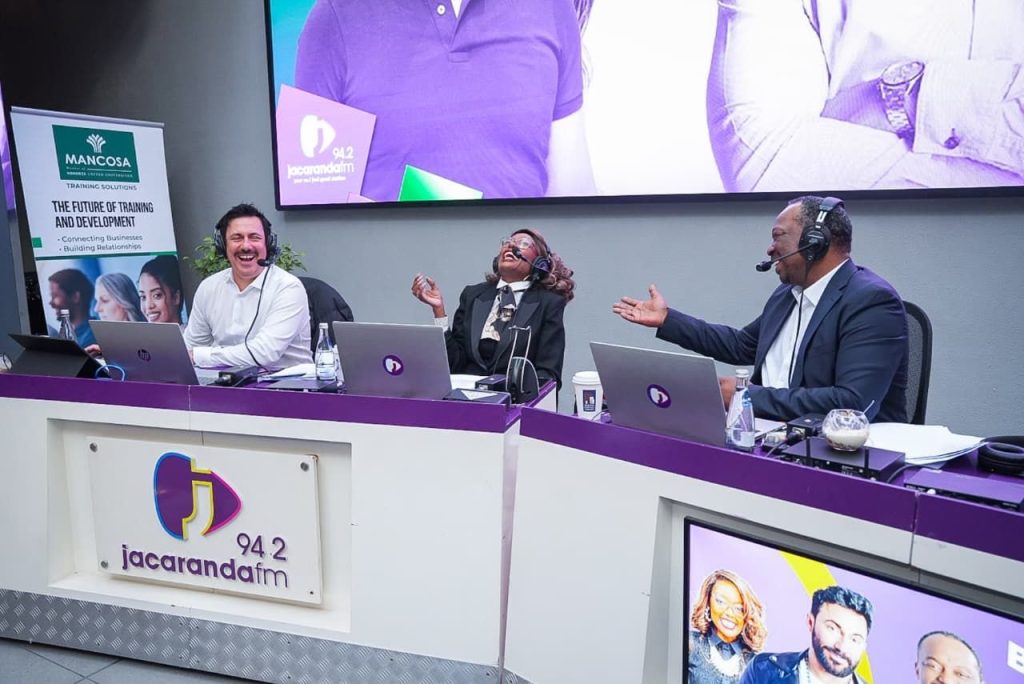
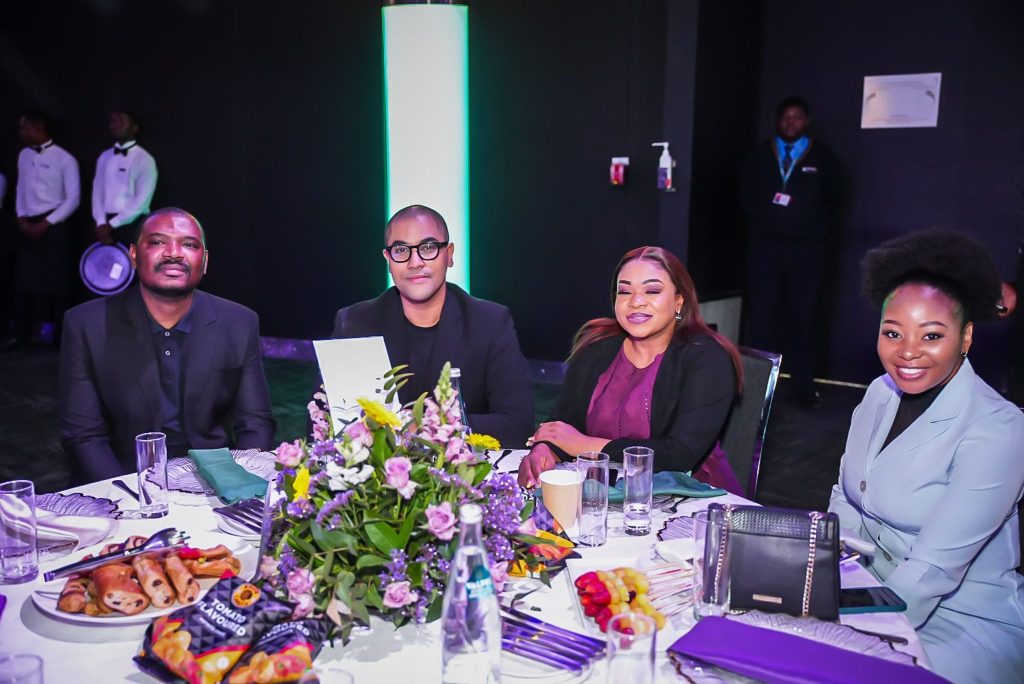
Moreover, that question dominated the fourth annual MANCOSA Jacaranda FM Business Breakfast, held today at Vodacom Dome in Midrand.
With Jacaranda FM broadcasting live from the venue and a room filled with entrepreneurs, business leaders, professionals, and aspiring founders, this year’s theme—“Legacy Speaks”—brought together four distinctly different voices: media personality and businesswoman Basetsana Kumalo, former Springbok great and fintech executive Bryan Habana, business-growth specialist Pavlo Phitidis, and technology entrepreneur Kimberley Taylor.
The event was deliberately broader than a conventional business breakfast. Its four speakers represented four different arenas of achievement—entertainment and personal brand, elite sport and performance, entrepreneurship and business growth, and technology and innovation.
Together, their careers offered a compelling argument that legacy is not built through one defining achievement. It is accumulated through reinvention, discipline, problem-solving, leadership, and the courage to keep building.
From the Miss South Africa crown to a business empire: Basetsana Kumalo
For Basetsana Kumalo, reinvention is not a motivational concept. It is a description of her career.
Kumalo rose to national prominence after being crowned Miss South Africa in 1994, a particularly significant year in the country’s history as South Africa held its first democratic elections. She went on to become first runner-up at the Miss World pageant.
But the crown was only the beginning.
Her career expanded into television, media production, fashion, property, mining, and investment. Jacaranda FM reports that Kumalo started her first media production business at the age of 20 and subsequently built a career that included work as a television producer, media executive, fashion designer, property developer, and mining executive. ([Jacaranda FM][2])
Her business interests have included Tswelopele Productions, while she is also Executive Chairperson and CEO of Basetsana Women Investment Holdings, a South African venture capital company focused on investing in black female-owned businesses.
That breadth is precisely what makes her story relevant to a conversation about legacy.
Kumalo’s journey demonstrates that a personal brand can evolve without being trapped by its origins. The woman who first entered the public imagination as a beauty queen ultimately built a portfolio across industries where the skills required are radically different.
At the Business Breakfast, her conversation centered on influence, reinvention, personal branding, business growth, and creating impact across generations.
Her story asks a deceptively simple question of anyone building a career today: Can your name continue to create value after the title that made you famous has changed?
Follow Kumalo on Instagram, X (Twitter), and Facebook.
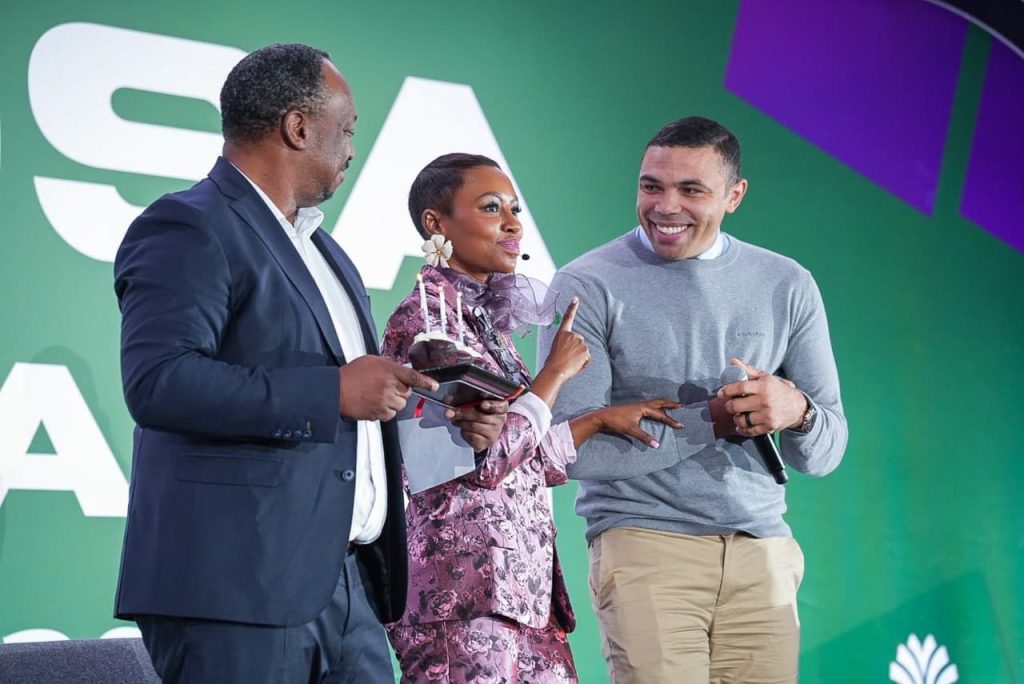
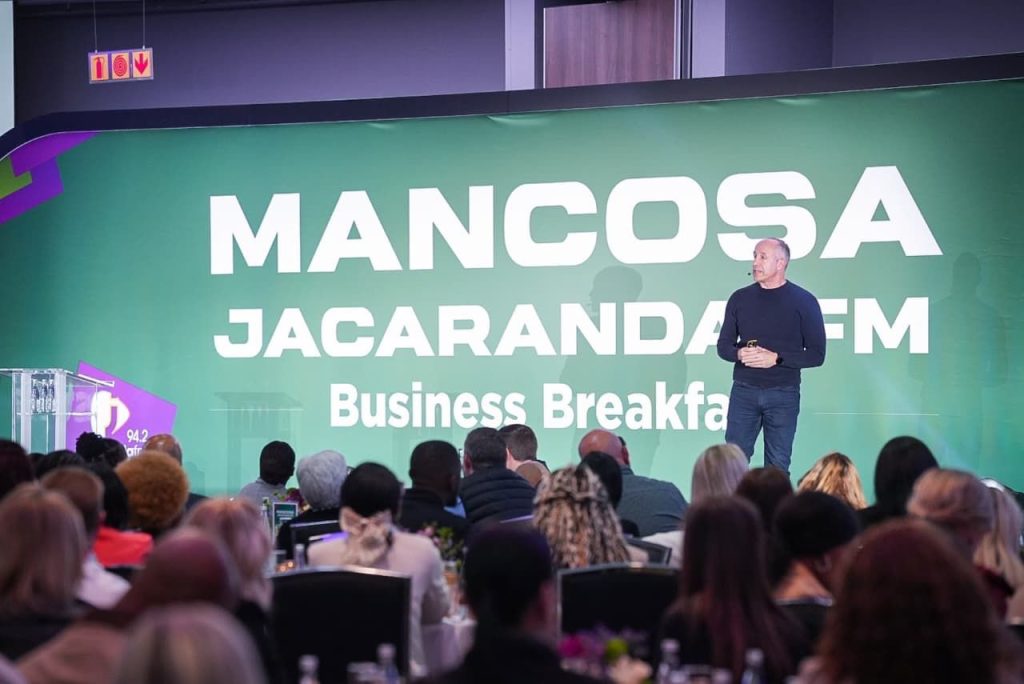
Bryan Habana: from the rugby field to financial inclusion
If Kumalo’s career illustrates reinvention, Bryan Habana‘s story illustrates the transferability of high performance.
One of South Africa’s most celebrated rugby players, Habana was a key member of the Springbok team that won the 2007 Rugby World Cup. He scored eight tries during that tournament, equalling Jonah Lomu’s then-record for tries in a single World Cup. Later that year, he was named IRB Player of the Year. ([bryanhabana.com][5])
His international career also produced another remarkable statistic: at the 2015 Rugby World Cup, Habana reached 15 Rugby World Cup tries across tournaments, matching another of Lomu’s records. He finished his Test career with 67 tries. ([bryanhabana.com][5])
But Habana’s post-rugby career has moved well beyond the world of sport.
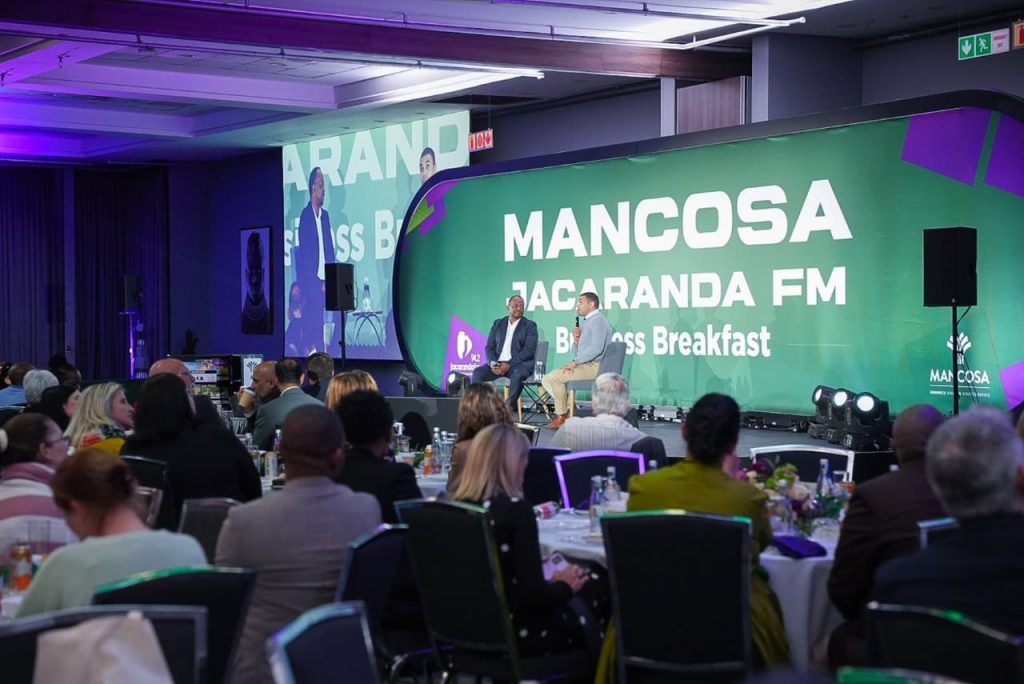
He became a co-founder and Chief Client Officer of Paymenow, a fintech company focused on financial inclusion and earned-wage access. Paymenow’s model enables employees to access money they have already earned rather than relying on traditional short-term borrowing, while the platform also offers financial education and savings tools. ([paymenow.app][6])
It is an intriguing second act for an athlete whose professional life was once measured in meters, tries, and trophies.
At the Business Breakfast, Habana brought lessons from elite sport into the boardroom—examining discipline, resilience, teamwork, leadership, pressure and performance.
The connection is more powerful than it initially appears.
A rugby team cannot depend on one brilliant player. Neither can a company. Elite performance requires preparation before the decisive moment, trust between people, and the ability to remain composed when the pressure rises.
And perhaps that is the real lesson in Habana’s transition: the arena changes, but the principles of performance can travel with you.
Follow Habana on Instagram, X (Twitter), and Facebook.
Pavlo Phitidis: the architecture behind sustainable businesses
Then there is Pavlo Phitidis, whose career has been built around a question many entrepreneurs eventually confront:
How do you turn a business into something that is valuable beyond its founder?
Phitidis is a business builder, investor, keynote speaker, author and founder of Aurik. According to his biography, he has spent more than three decades starting, scaling and exiting businesses and has completed 68 mergers and acquisitions transactions. ([pavlophitidis.com][7])
His entrepreneurial experience includes turnarounds, the scaling and sale of a multi-generational family business, and the creation of businesses with his Aurik co-founder, Carien Engelbrecht. Their experience of starting, building and selling 12 businesses became the foundation for Aurik’s Asset of Value methodology. ([pavlophitidis.com][8])
Phitidis has subsequently worked with thousands of business owners through Aurik, focusing on growth, value creation and the structural challenges that prevent businesses from scaling. ([pavlophitidis.com][7])
His message is consequently less about the glamour of entrepreneurship and more about its architecture.
Ahead of the Business Breakfast, Phitidis spoke about hardship as a training ground for businesses, arguing that sustainable growth requires a vision, a defined purpose, a team and the discipline to keep moving when progress is not immediately visible. ([Jacaranda FM][9])
That perspective fits neatly into the day’s larger conversation.
A business that depends entirely on its founder may be successful. But it is not necessarily sustainable.
The ultimate test of leadership is therefore not simply whether you can build something. It is whether you can build systems, people, culture and value that can continue without you doing everything yourself.
Follow Phitidis on LinkedIn, Instagram, and Facebook.
Kimberley Taylor: when a university assignment becomes a company
The youngest story in the room began with something remarkably ordinary: a university assignment.
Kimberley Taylor, founder and CEO of logistics technology company Loop, was studying chemical engineering at the University of the Witwatersrand when a third-year assignment in 2015 required her to develop a route optimization algorithm.
The problem intrigued her enough to become something much bigger.
Taylor developed the concept into Loop, a technology company focused on logistics and delivery management. Wits records that she graduated with a BSc in Engineering in 2016, while Loop’s own account traces the company’s origins to that 2015 university project.
By 2022, Financial Mail reported that Loop’s technology was being used by major companies, including Nando’s, Servest, and Checkers, with its supply-chain algorithm facilitating approximately one million deliveries a month in South Africa at the time.
Taylor’s career embodies a different kind of entrepreneurial lesson: innovation often begins by noticing an inefficient system and refusing to accept that it has to remain inefficient.
Her appearance at the Business Breakfast focused on innovation, entrepreneurship and building businesses that solve meaningful problems while creating lasting impact.
In a room dominated by conversations about leadership and legacy, her story offered a particularly modern interpretation of both.
Legacy does not always begin with an established company, a large balance sheet, or decades of experience.
Sometimes it begins with a student looking at a problem and thinking, “There has to be a better way.”
Connect with Taylor on LinkedIn, and learn more about Loop on its official site.
Four careers. One question.
What makes the MANCOSA Jacaranda FM Business Breakfast interesting is not simply the caliber of its speakers. It is the contrast between them.
Kumalo built influence across media, entertainment, and investment.
Habana moved from international sporting excellence into fintech and financial inclusion.
Phitidis turned decades of entrepreneurial experience into a framework for helping other businesses grow and create value.
Taylor transformed a university engineering problem into a technology company.
Their paths could hardly look more different.
Yet they converge on the same principle.
Legacy is not the same thing as success.
Success can be measured in championships won, companies founded, money made, audiences reached or problems solved.
Legacy asks a harder question:
What remains when the moment is over?
For Kumalo, it is the businesses, brands and people she has influenced across generations. For Habana, it is the discipline of elite performance carried into a new arena and his work in financial wellness. For Phitidis, it is the businesses and business owners equipped to become more valuable and sustainable. For Taylor, it is technology born from a problem-solving mindset and designed to make complex logistics work better.
And that may have been the most fitting message for a Monday morning in Midrand.
The goal is not merely to build something impressive.
Build something useful. Build something resilient. Build something that can grow beyond you. And, ultimately, build something worth leaving behind.
That is when legacy begins to speak.
The MANCOSA Jacaranda FM Business Breakfast 2026 took place on Monday, 17 August, at the Vodacom Dome, Vodacom World, Midrand. The event ran from 08:00 to 11:30, with registration from 06:30. The four featured speakers were Basetsana Kumalo, Bryan Habana, Pavlo Phitidis and Kimberley Taylor.