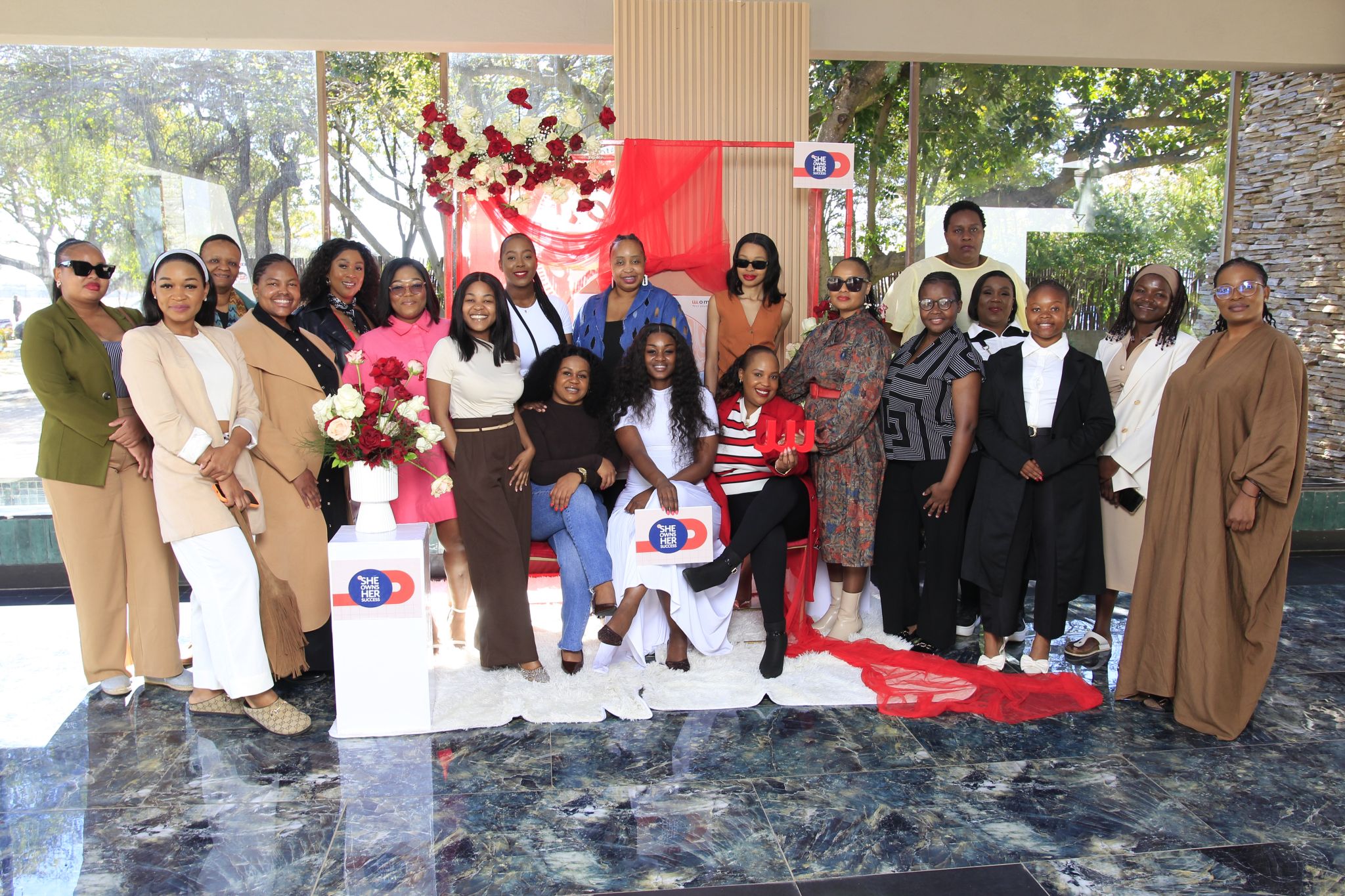
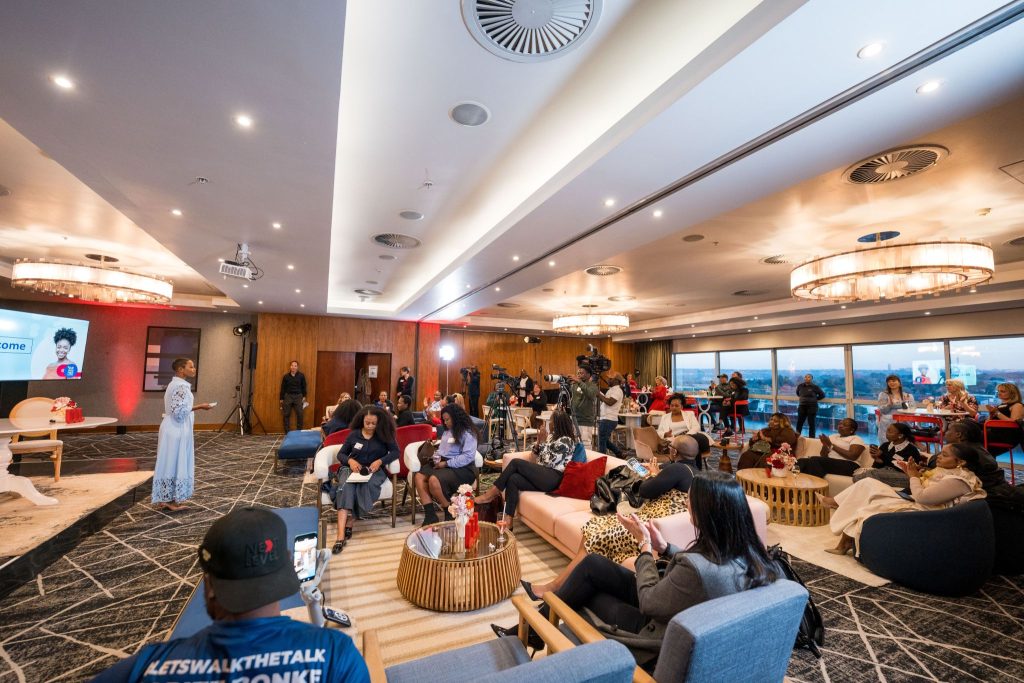
Every large-scale brand experience conceals a second story: the one guests never see. Months of planning, cross-functional teams, competing priorities, and hundreds of operational decisions precede the moment the doors open. That invisible architecture sat behind Momentum’s Season 8 #SheOwnsHerSuccess Workshop, held on 15 August 2026 under a deliberately simple proposition: her success has a number, defined by her, backed by advice.

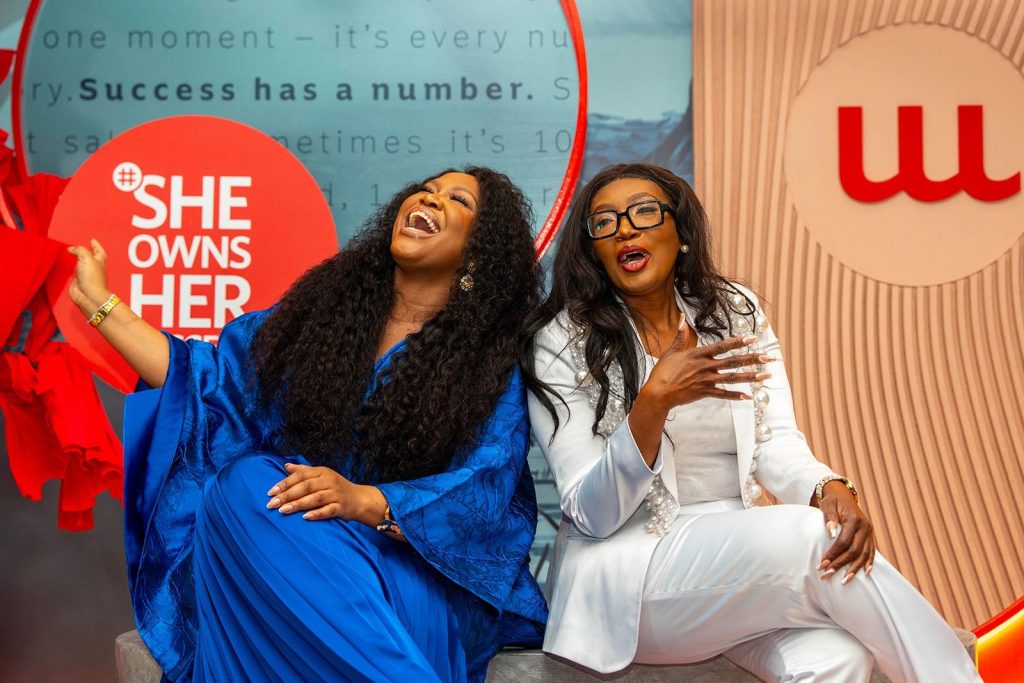
The 2026 campaign centers on helping women articulate the metrics that matter to them—whether wealth, retirement, business capital, family security, or another measure of progress. It is a modest but consequential repositioning: success is no longer framed as a fixed destination but as something that can be defined, interrogated, planned for, and, where necessary, redefined.
The Operation Behind the Experience
Busie Makwela, whose portfolio spans brand experience, events, and marketing, offered a rare account of what the workshop required: six months of planning, six coordinating WhatsApp groups, and close to 100 people across security, cleaning, set construction, hospitality, catering, and technical production, alongside multiple agency partners. Where the guest experiences a single evening, the practitioner sees an ecosystem—one built through the accumulation of small decisions that, together, determine whether an experience reads as ordinary or exceptional. This distinction offers a useful parallel to the campaign’s core thesis: much of women’s labor, like much of event production, remains structurally invisible.
From Ambition to a Defined Metric
Momentum positions Season 8 as an evolution of its long-running women’s platform, structured around a simple sequence: define the number, grow it, protect it, reach it, supported by advice and financial tools. (Momentum) Financial success is rarely singular. For one woman the number is a retirement target; for another, the capital required to launch a business; for another, the threshold for home ownership, family security or intergenerational transfer. Momentum’s broader platform reinforces this framing, treating the number as self-defined rather than externally imposed. (Momentum)
This shifts the operative question from “how successful are you?” to the more useful “what does success actually require, for your life specifically?” — a distinction that matters because social convention has long prescribed a default sequence for women: career, marriage, motherhood, home ownership, financial security, leadership, retirement. Momentum’s earlier #SheOwnsHerSuccess campaigns explicitly challenged that sequencing, encouraging women to set their own timelines rather than inherit one. (Sunday Tribune) Season 8 extends that same philosophy into quantitative terms.

The Baby Balance Sheet: Financial Planning Ahead of Parenthood
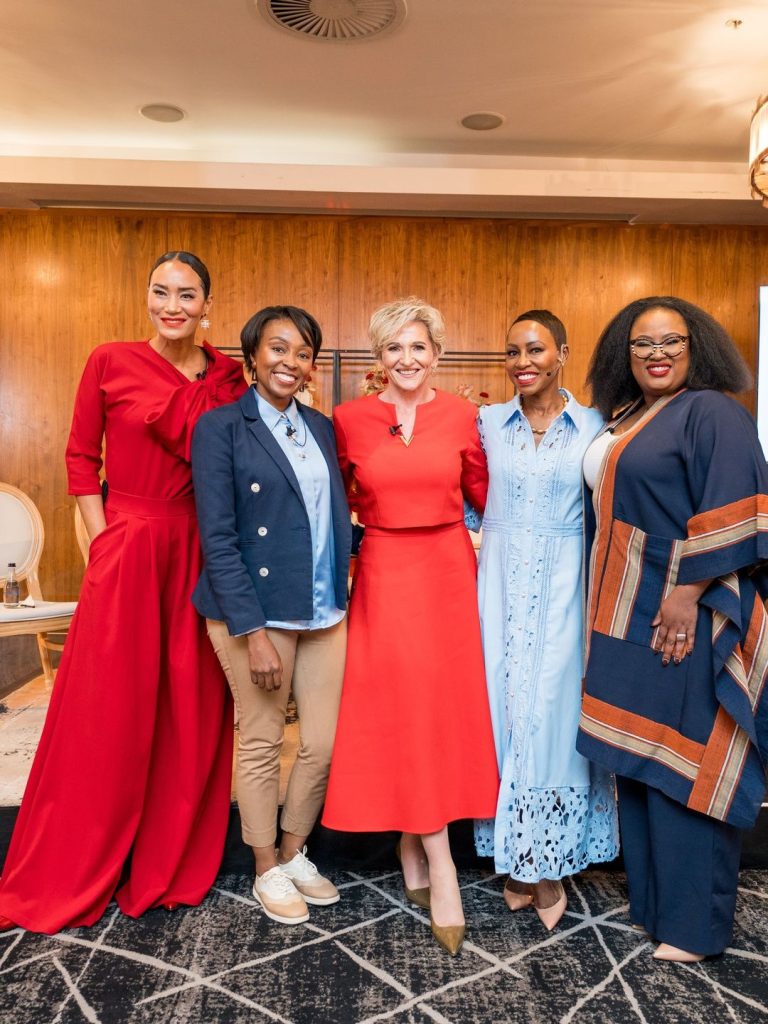
The program’s “Baby Balance Sheet” session—featuring Dr Mpume Zenda, Elana Afrika-Bredenkamp and Anri Beetge, CFP®—addressed a topic typically framed as emotional first and financial second: the decision to have children. Before the practical milestones of parenthood come questions of health, timing, income, and the savings infrastructure required to support a family. The panel’s premise was not that parenthood should be reduced to a spreadsheet but that major life decisions carry financial consequences and that understanding those consequences in advance expands rather than constrains a woman’s agency.
The Advice Gap, and a Necessary Correction
Hannah Sadiki and Therese Havenga of Momentum Savings addressed what they characterized as a persistent advice gap between women and professional financial planning. One workshop account, published on LinkedIn by Michelle Abubaker, cited a statistic that only 4.1% of women use Certified Financial Planners. This figure could not be substantiated against any authoritative South African source and should not be reported as fact.
The 4.1% figure does appear in credible South African research, but in an unrelated context: the 2023/24 Global Entrepreneurship Monitor South Africa report uses it to describe the proportion of women who own established businesses, against 7.9% of men. (LinkedIn) Separately, academic research on the domestic financial-planning profession indicates that women constitute approximately 20% of registered financial planners in South Africa. (International Business Conference) These are distinct statistics describing distinct phenomena and should not be conflated.
The underlying argument nonetheless holds: access to advice is not solely a supply-side question. It also depends on whether women perceive available advice as relevant, comprehensible, trustworthy and reflective of the complexity of their financial lives — a more substantive discussion than any single headline figure can carry.
Leadership and the Cost of Arrival
Professor Mamokgethi Phakeng and Maria Pouroullis Carpenter examined a less comfortable truth: reaching the top does not resolve the struggle that got you there. Titles, corner offices, credentials, and public recognition are frequently romanticised, but achievement also carries responsibility, sacrifice, and, at times, guilt. The more instructive question is therefore not “can I reach the top?” but “Once there, is this still the life I want?”—a question worth revisiting at every career stage, since ambition without periodic reflection risks becoming its own source of pressure.
Network as Financial Infrastructure
Johanna Mukoki and Katie Mohamed explored the relationship between professional networks and net worth. The instinctive, transactional reading—who can offer a job, an introduction, or capital—understates the mechanism. Networks primarily transmit information: they expose individuals to possibilities, challenge assumptions, build confidence, and introduce reference points that reshape what a person believes is achievable. In that sense, social capital functions as a precursor to economic capital, not because relationships should be monetized, but because the people around us shape the decisions we believe ourselves capable of making.
Redefining Success Rather Than Endlessly Expanding It
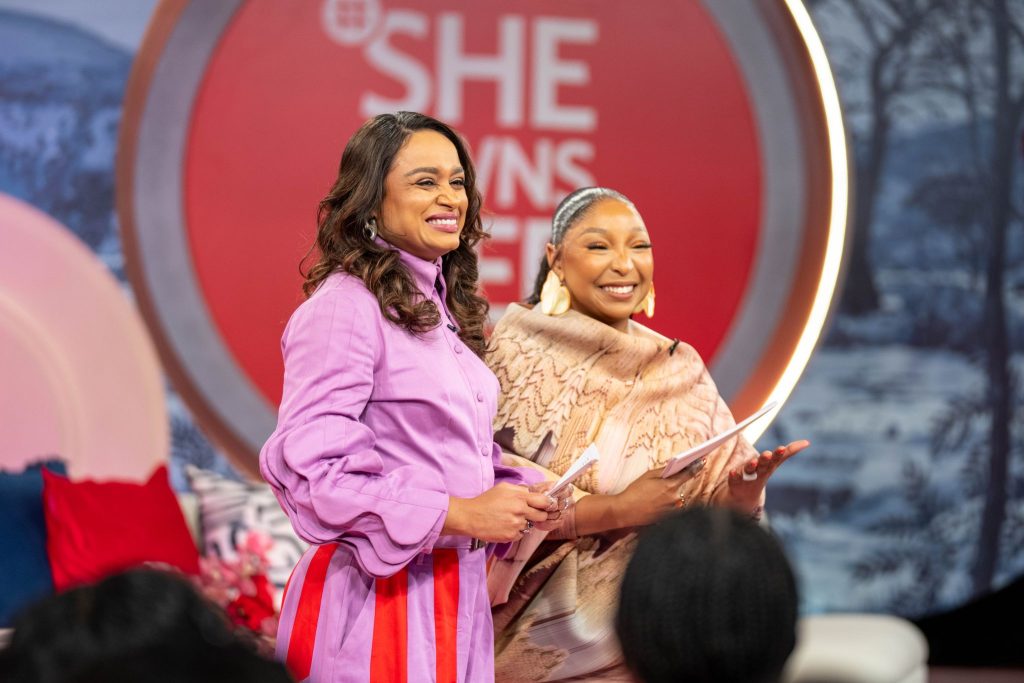
Tiziana Devipursad, the workshop’s MC, offered what may be the campaign’s most durable observation: a crown does not define success—the woman wearing it does. This cuts against a prevailing tendency in success culture to treat achievement as an escalation exercise—more capital, more followers, more credentials, more titles, more property, more visibility — without a corresponding increase in meaning. The more sophisticated skill is not accumulation but discernment: knowing which number matters, recognizing when it changes, and being willing to conclude that a particular number no longer matters at all.
From the Boardroom to the Production Floor
Makwela’s account of nearly 100 people operating behind a single evening illustrates a principle that extends well beyond event production: a woman’s career may carry one name, but her progress is rarely constructed alone. Mentors, managers, colleagues, partners, financial advisers, healthcare professionals and communities form a support structure that is frequently invisible in the final result. “Ownership” of success, in this framing, should not be mistaken for the claim that success is achieved in isolation — it means taking responsibility for defining the destination while recognising the infrastructure that made the journey possible.
A Campaign Built Around a Better Question
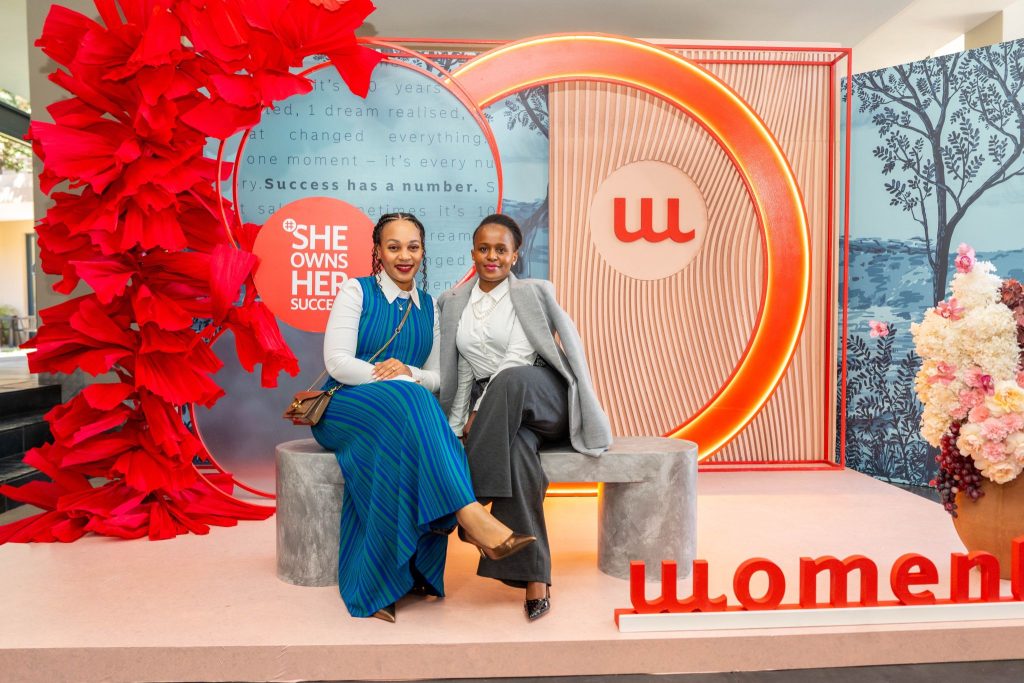
Momentum’s Season 8 campaign lands during Women’s Month with a proposition that is ultimately about agency rather than wealth: “Her success has a number. Defined by her. Backed by advice.” (Momentum) The operative clause is the second one — defined by her — not by a partner, a parent, an employer, a platform, or an inherited cultural sequence. The number belongs to the individual; the work is then to understand what it represents and what resources, decisions and support structures are required to reach it. That is where professional financial advice earns its relevance — not as a prescription, but as a tool for clarifying available options.
The audience sees the stage; the production team sees the six months behind it. The audience sees the milestone; the individual knows the years and decisions that produced it. That is the campaign’s most durable insight: a successful outcome rarely resembles the process that created it. Behind every number is a sequence of choices, relationships, trade-offs and support that the final result does not disclose.
The task, accordingly, is not simply to reach the next number, but to periodically test whether that number still represents the life in question — because a credible measure of success is not one that reads well externally, but one that holds up on internal examination.
Sources and Further Reading
- Momentum — #SheOwnsHerSuccess Season 8 — official campaign information and 15 August 2026 workshop details (Momentum)
- Momentum — Personal Finance & Advice — additional financial-planning and wealth-building resources (Momentum)
- Qhawekazi Mdikane — LinkedIn
- Dr Mpume Zenda — LinkedIn
- Elana Afrika-Bredenkamp — LinkedIn
- Anri Beetge, CFP® — LinkedIn
- Mamokgethi Phakeng — LinkedIn
- Maria Pouroullis Carpenter — LinkedIn
- Johanna Mukoki — LinkedIn
- Katie Mohamed — LinkedIn
- Tiziana Devipursad — LinkedIn
- Busie Makwela — LinkedIn
- Michelle Abubaker — LinkedIn
- Research on the professionalisation of financial planning in South Africa — context on the financial-planning profession (journals.sagepub.com)