The 18th IAB South Africa Bookmark Awards suggest the country’s digital marketing industry has stopped chasing clicks and started chasing meaning — with culture, AI and hard evidence doing the heavy lifting.
South Africa’s digital advertising industry has become very good at making noise. Whether it is getting better at making meaning is the more interesting question, and if the 18th IAB South Africa Bookmark Awards are any indication, the answer is a cautious yes.
Held on 13 August at The Forum, The Campus, in Bryanston under the theme “It All Starts With a Pixel,” the evening was less a parade of websites and clever campaigns than a snapshot of an industry outgrowing the idea that “digital” is a specialist corner of marketing rather than its centre of gravity. IAB South Africa itself has framed the shift that way, restructuring this year’s categories around the role digital plays across the entire customer journey — from foundational brand-building to connection, innovation and measurable impact.
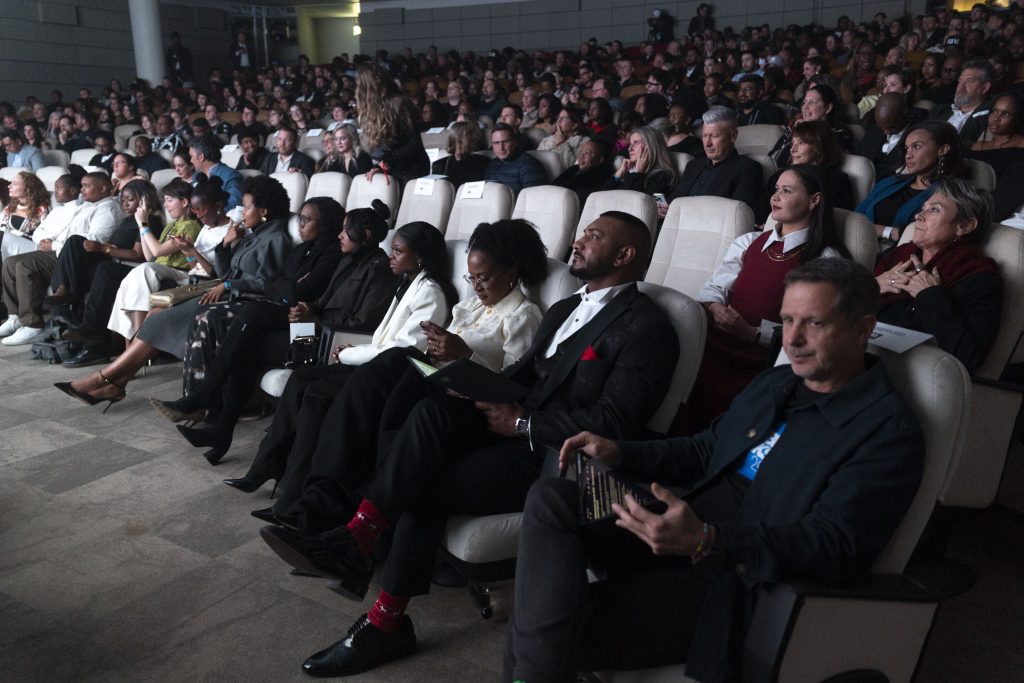

That reframing matters, because the strongest work honoured this year did not simply ask how to win attention online. It asked what digital could actually do.
Two agencies, one title
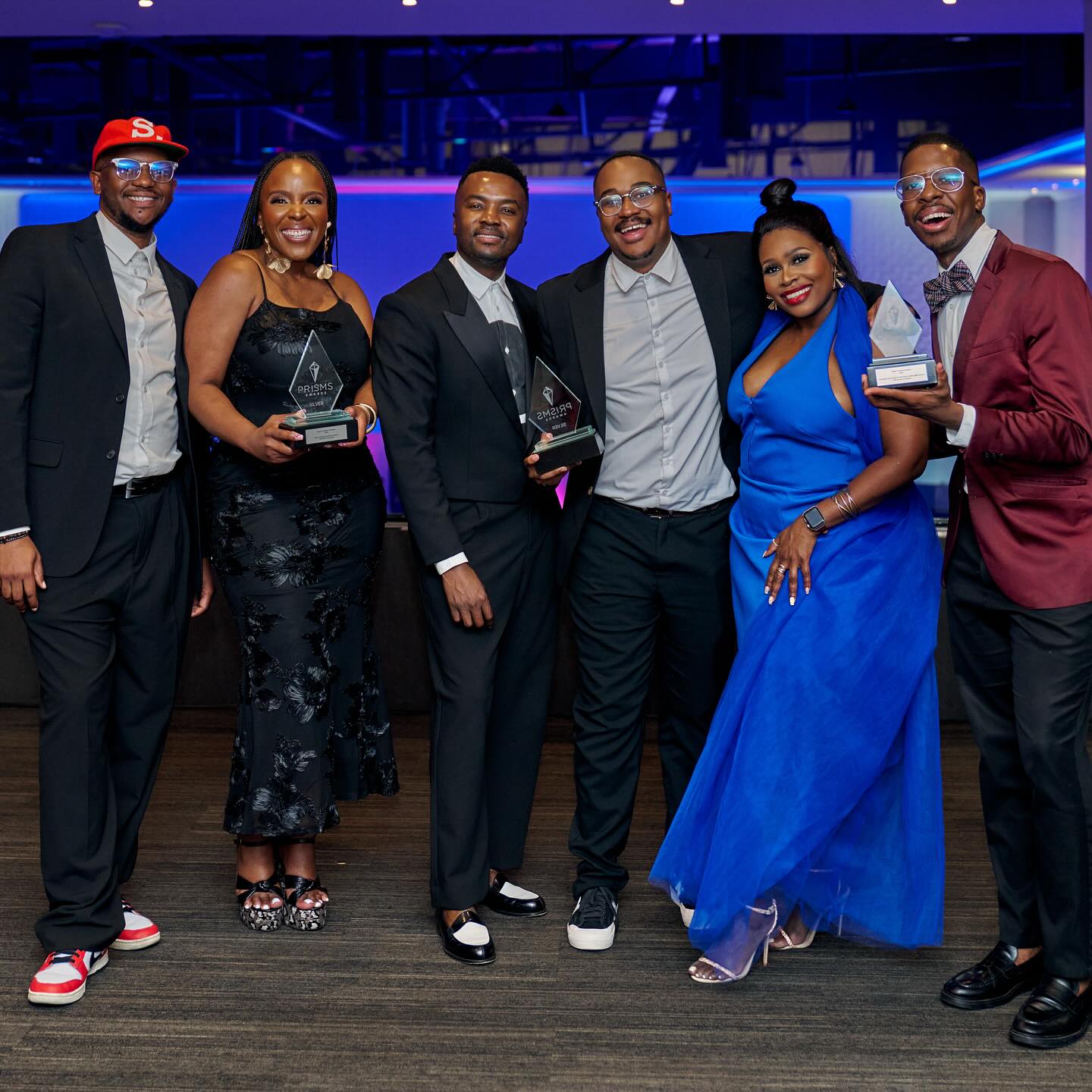
The headline result was an unusual one: Ogilvy South Africa and Accenture Song shared the night’s top honour, Best Digital Agency — a tie that says something about how broad the modern digital agency’s remit has become.
For Ogilvy, it extended a remarkable run. Melissa Carney, Managing Director of Ogilvy One, called it “two in a row,” thanking both her teams and the clients willing to take risks on bold digital work. It is telling language. The digital agency of 2026 is no longer simply an execution partner; it is expected to fold together technology, culture, consumer behaviour, data, experience and business outcomes into a single coherent offer.
Ogilvy’s finalist spread this year was unusually wide, touching campaigns for Volkswagen, KFC, Google, Audi, Mastercard and Unilever across integrated strategy, social, influencer work, AI innovation, UX, digital media and craft. That breadth arguably matters more than any single trophy — it points to an agency model built for range rather than specialisation. Account director Blaine Christopher Roper put the ambition plainly on the night: Ogilvy, he said, is “going for a hattrick” next year.


Forever Golf and the limits of “localisation”
Few campaigns capture the industry’s new direction as clearly as Forever Golf, Ogilvy’s work for Volkswagen Group Africa, which took home the Black Pixel for Localisation and Cultural Relevance — one of eleven wins the carmaker collected on the night from sixteen nominations, alongside a Special Honours Award for the campaign itself.
Neo R Masole, who led PR on the campaign, described the decision to let South Africans tell the story of the Golf rather than prescribe what the icon means to the country. That is a meaningful distinction. For years, brands have treated “localisation” as a matter of swapping in local faces, languages or references. Increasingly, that is not enough. Genuine cultural relevance demands listening — understanding why a product has accumulated meaning across generations and communities, and knowing when a brand should speak and when it should hand over the microphone. It is less about representation now, and more about participation.
The campaign was built with Volkswagen Group Africa, Bonfire Media SA and Ogilvy, and Masole was careful to credit the scale of the team behind it: Bridget Harpur, Thato Lekgetha, Sindi Gwamanda, Pete Case, Vicki Buys, Julian Hendrickse, Zoe Willems, Catherine Day, Alex Goldberg, Nomfundo Myeni, Sibs Zihle, Mandisa Looana, Katlego Malaka, Zenhlanhla Myeni, Christy Nell, Humaira Chohan, Gemma Mae Strohbach, Maxine Carr, Sanaa Mothabisa, Dumisani Mvumvu and Andile Buck, among others. It is a long list, and it makes its own point: award-winning work rarely belongs to whoever’s name sits at the top of the case study.
An industry too complex to work alone
Modern campaigns increasingly require strategists, creatives, developers, UX specialists, media planners, data analysts, PR practitioners and clients moving in near lockstep. Tristan Vogt, Head of Innovation, captured that reality neatly after picking up Gold in SEO for Google’s “If the ___ fits, circle it” and Silver in Mobile Sites for KFC’s “KAIIA.” There were, he wrote, “more people behind these wins than LinkedIn has room for tags.” It reads as a throwaway line, but it carries a real implication: the industry’s fixation on the lone creative genius sits increasingly at odds with how award-winning digital work actually gets made.
AI stops being a novelty
Artificial intelligence featured prominently, but the more telling shift is that it is now treated as a working capability rather than a talking point. A dedicated Artificial Intelligence Innovation category recognized work, including KFC’s “KAIIA,” and Accenture Song’s finalist slate showed technology, experience, and purpose increasingly fused together.
BrandRadar brought a related conversation to the sidelines of the evening, focused on AI search—a reminder that consumer discovery itself is shifting. The old funnel of search, click, visit, and convert is becoming considerably less linear, and marketers can no longer measure visibility through rankings or traffic alone. Understanding how brands are surfaced, interpreted, and recommended by increasingly intelligent interfaces is fast becoming a brand problem, not merely an SEO one.


Evidence still counts
The Bookmarks also continued to reward the less glamorous end of the discipline: proof. Categories including Best Use of Data in a Campaign, Digital Campaign Strategy, and Mobile Campaign Strategy remain firmly on the roster, a reminder that “data-driven” marketing has to mean something more than a slogan. Data can explain what happened and help sharpen targeting; it cannot, on its own, produce an idea worth remembering. The strongest work at this year’s awards sat at the intersection of human insight, technological execution, and hard evidence—increasingly the industry’s real competitive edge.
The Black Pixels: purpose, talent and memory
The Black Pixel Awards, the evening’s highest honors, pushed the conversation beyond individual campaigns. The Philipstown WireCar Foundation was named Digital Brand of the Year, adding to Black Pixels for Pixel for Purpose and Best Marketer. Pete Case of Ogilvy was named Best Creative, and Gold Pixels went to standout work spanning Khula and Nedbank’s “Hardworking Professionals,” #VaselineVerified, “Show Ghana Love,” and “TikTok Test Drive.”
Rising talent was recognized too: Arielle Marinakis and Chad Gaddie of Vega School at Emeris and Accenture Song’s Gregory Leigh Booysen each received Black Pixels. And there was a quieter, more reflective moment in the posthumous recognition of Haydn Townsend, honored with the Black Pixel for Outstanding Individual Impact in Digital—a reminder that an industry is measured not only by its campaigns but by the people who build its institutions and mentor those who follow.
“Every year our industry finds another gear, and last night proved it again,” said Chris Borain, executive director of IAB South Africa, on the night. “The work did not just meet the standard; it reset it.”
Bringing the next generation into the room
One of the quieter but more consequential developments sits behind the scenes: the jury for 2026 brought together more than 80 senior practitioners alongside a Learner Jury designed to give younger digital minds direct exposure to how award-winning decisions actually get made. It is an investment worth watching. The industry does not lack people who can operate platforms; it needs people who understand why those platforms matter in the first place. Judgement, unlike technical skill, is hard to teach from a manual.
That is part of what makes the IAB Front Row program worth tracking. Cordelia Moyo, who moved from 2025 Front Row Delegate to Johannesburg Delegate Lead for 2026/27, called the transition a “full-circle moment,” crediting Chris Borain, Su Little, Deborah Whitlock, and Kyle Oosthuizen for the opportunity. It is a useful model for an industry that often talks about developing young talent while giving it very little proximity to the rooms where decisions actually get made.
Elsewhere on the judging front, Dineo Mashiane described joining the 17-strong Special Honours jury panel as a moment she “didn’t fully believe” she was part of, while creative director Fu’aad Kasu brought what he called “big judge energy” to the Youth Action Panel, and strategist Amy Moloko Raophala singled out Round 2 judging as a chance to learn from “some of the best minds in the industry today.”


The people who decided what “good” means
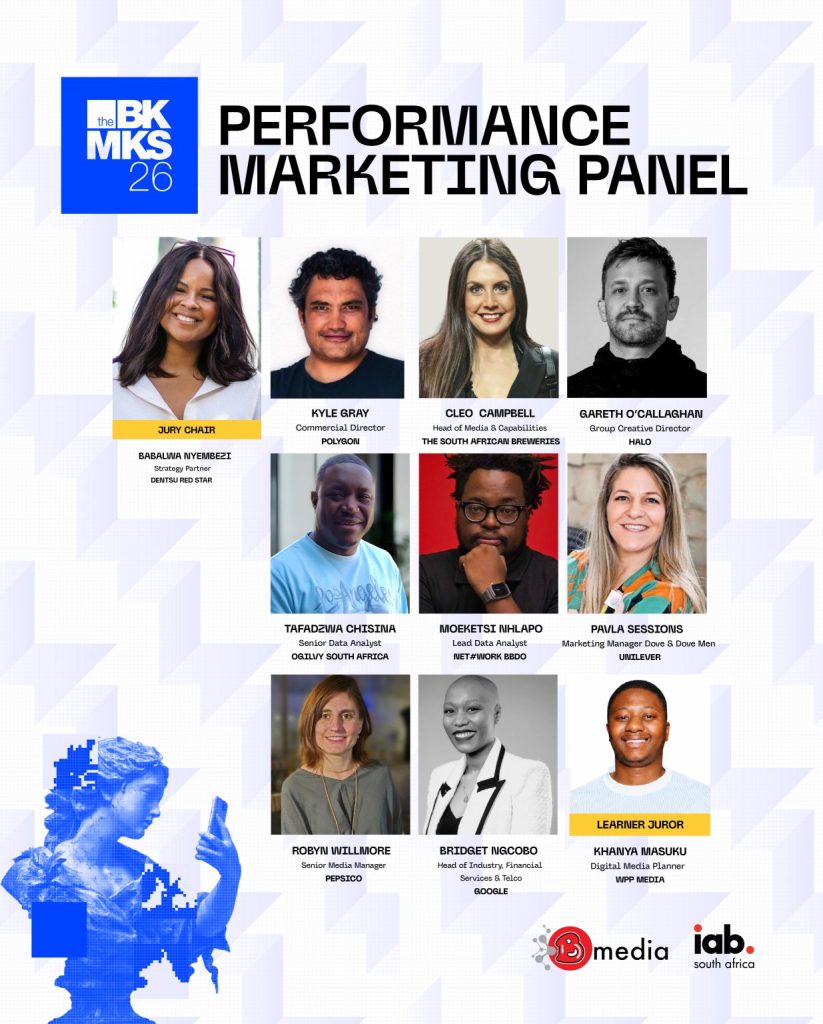
Judging itself deserves more attention than it usually gets. This year’s jury drew senior practitioners from across marketing, publishing, media, strategy and creative, with Elizabeth Mokwena serving as Jury President and figures including Babalwa Nyembezi, Diane Macpherson, Neo Mashigo and Jake Bester contributing across different panels. Neo Mashigo, Group Chief Creative Officer, chaired the Marketers panel, while M+C Saatchi Abel‘s Jake Bester judged Craft.
For Diane Macpherson, who sat on the Publishers panel, the process moved from independent evaluation to in-person debate—and, by her account, the entries this year were marked by unusually strong ideas, careful craft and clear results. Babalwa Nyembezi chaired discussions in the second round of judging, working alongside what she described as some of the industry’s most capable minds.
That distinction between independent scoring and collective debate is not incidental. Awards matter because somebody has to decide what “excellent” actually means, and that definition is never entirely neutral—it is shaped by an industry’s evolving understanding of creativity, effectiveness, culture, and commercial value. Ahead of the ceremony, MTN Ads partnered with IAB South Africa to host the Judges’ Dinner, bringing together 88 practitioners to debate, in advance, where the bar for 2026 ought to sit.
The Bookmarks, in that sense, function as more than an awards show. They are a yearly referendum on what the South African digital industry currently believes good work looks like.
Five signals for marketers
Taken together, this year’s results point to a handful of shifts worth acting on:
Digital has stopped being a channel. It now runs across the entire customer journey, from discovery through to loyalty and advocacy—infrastructure, not add-on.
Cultural intelligence is a competitive advantage. Forever Golf shows what happens when a brand accepts that cultural meaning cannot be manufactured in a boardroom; it has to be earned and, often, handed over.
Good technology increasingly disappears. The strongest technical work this year did not shout about what the technology could do—it simply made something possible that wasn’t before.
AI is reshaping the operating environment, not just the content mix. Search, discovery, personalization, and customer experience are all being restructured by it, whether marketers are ready or not.
Measurement is non-negotiable. Creative ambition without evidence behind it is getting harder to defend in front of a client, let alone a jury.


After the applause
Awards nights carry an obvious risk: the industry gathers, winners are announced, LinkedIn fills with photographs and careful acknowledgements, and then everyone goes back to work. The real test of the Bookmarks is not the number of trophies carried home but whether the work changes what agencies, publishers, and brands believe is possible next.
This year’s results suggest South African digital marketing is edging towards a more integrated definition of excellence — one in which creativity has to understand technology, technology has to understand people, and both have to produce something that actually matters. That is a considerably higher bar than simply going viral.
The Bookmarks have spent 18 years rewarding high-impact digital work. The next 18 may be less about defining what digital marketing is, and more about determining what it becomes.
Primary keywords: IAB South Africa Bookmark Awards 2026, Bookmark Awards 2026, South African digital marketing, Ogilvy South Africa, Accenture Song, digital agency of the year, Forever Golf, AI marketing South Africa
Secondary keywords: digital agency awards South Africa, Black Pixel awards, AI search marketing, cultural relevance marketing, digital transformation South Africa, Bookmark Awards winners 2026