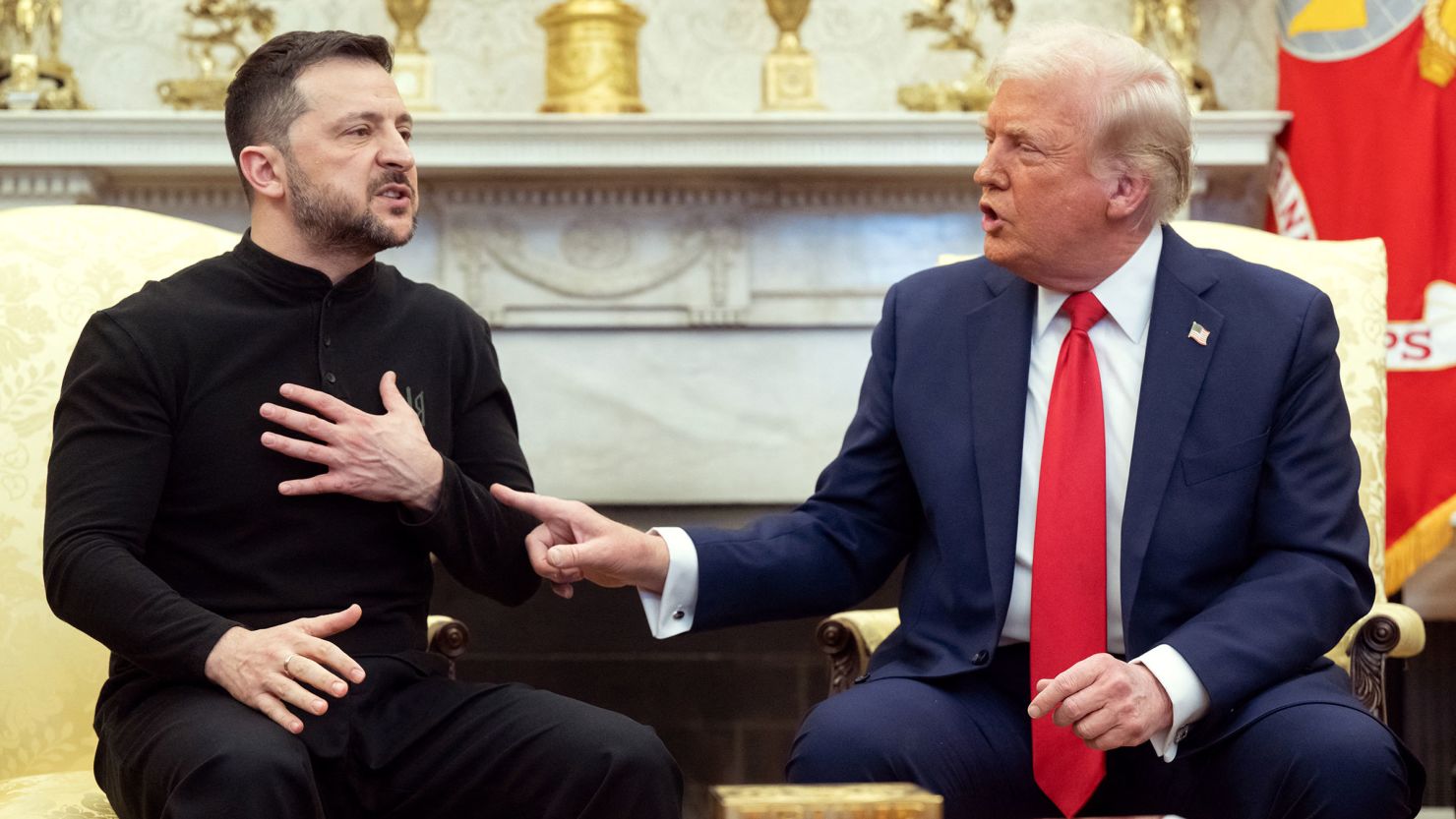
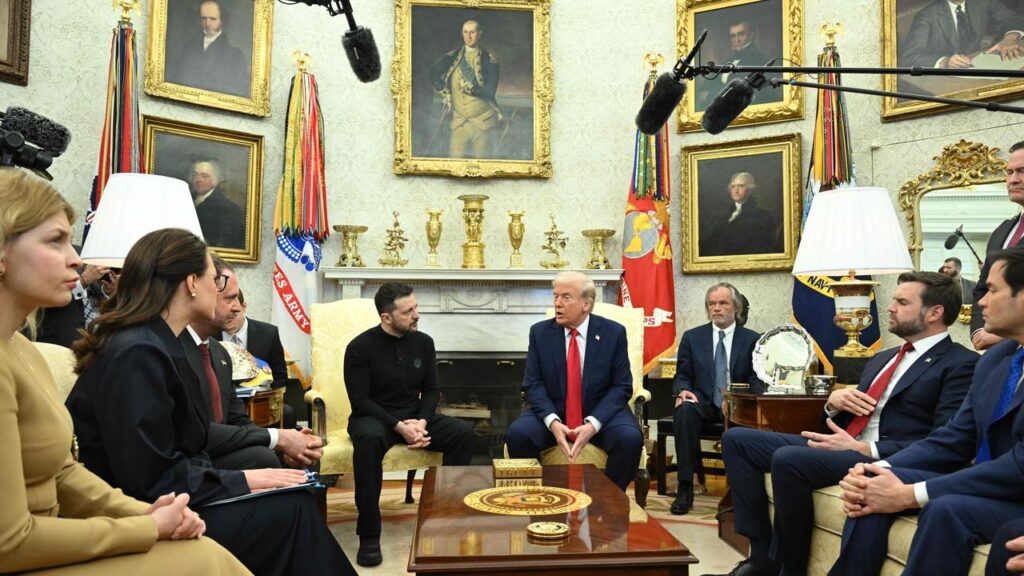
President Donald Trump’s recent decision to pause U.S. military aid to Ukraine seems to be a far cry from the spirit of John Quincy Adams’ famous doctrine. Rather than seeking to eliminate global threats, Trump’s move centers on pressuring Ukrainian President Volodymyr Zelensky to commit to peace talks with Russia. The decision followed a heated meeting between the two leaders in the Oval Office and has now become a central point in the debate over America’s involvement in the war.
The Trump administration claims the pause is part of an effort to encourage Ukraine to prioritize peace negotiations. “We need our partners to be committed to that goal as well,” a White House official explained. The hope is that by halting further military shipments, the U.S. can push Zelensky towards a settlement. However, many argue that this gambit could do more harm than good, potentially weakening Ukraine’s ability to defend itself against Russian advances and even strengthening Putin’s hand. For a deeper understanding of John Quincy Adams’ Monroe Doctrine, which shaped U.S. foreign policy, see this historical background.
The consequences of this decision could be severe. U.S. military aid has been a lifeline for Ukraine, providing everything from sophisticated weapons like ATACMS missiles to vital artillery. Without these critical supplies, Ukraine’s war effort could be severely compromised, leaving the front lines vulnerable. While European nations may step in with their own supplies, they cannot replicate the advanced capabilities the U.S. provides. Mark Cancian, a senior advisor with the Center for Strategic and International Studies (CSIS), warns that the impact of a prolonged aid pause would be “crippling” for Ukraine, potentially leading to a forced peace settlement on unfavorable terms. For more information on Europe’s potential role, see this article on Europe’s involvement in the Ukraine conflict.
However, this pause isn’t just about military strategy — it’s also part of a diplomatic poker game. The White House is reportedly demanding a public acknowledgment from Zelensky, potentially in the form of an apology, for the fallout of their recent meeting. This pressure tactic reveals just how strained relations have become between the two nations, and how much the U.S. is willing to leverage its military aid as a tool for diplomacy. For details on the official White House briefing, see this source.
Republicans in Congress are divided on the issue. Some, like Sen. Markwayne Mullin, argue that the U.S. has already done enough and should stop funding what they see as an endless war. Others, like Sen. Susan Collins, stress the importance of continued support for Ukraine, fearing that abandoning the country could embolden Russia and destabilize the region further. “Putin is not going to stop there,” Collins stated, highlighting the potential global consequences of a U.S. retreat. For a look into Senator Collins’ comments on Putin’s expansionist agenda, check out this CNBC article.
Trump’s decision to pause aid to Ukraine is a bold move in a complex geopolitical landscape. While it may align with his broader strategy to minimize U.S. involvement in foreign conflicts, it risks weakening Ukraine’s military and potentially exacerbating the crisis. The outcome of this standoff could shape the future of U.S. foreign policy — and perhaps even the course of the war itself. To explore the potential consequences of a U.S. withdrawal, consider reading this Foreign Affairs article.