A look at how the African Women Chartered Accountants forum used August 2026 to honour its past leaders while investing in its next generation.
Every August, South Africa’s Women’s Month becomes a moment for organisations to reflect publicly on gender transformation. For the African Women Chartered Accountants forum (AWCA), this year’s observance was less a single event than a month long campaign, spanning a flagship gala, a national conference, campus outreach in three provinces, a radio feature on funding inequality, and an internal awards ceremony for the volunteers who keep the organisation running.
Taken together, the initiatives reveal an organisation trying to do two things at once: celebrate the women who have already broken into the profession’s upper ranks, and widen the pipeline of Black women coming up behind them.
Who AWCA Is, and Why the Numbers Matter
AWCA was founded in 2002 as a non profit forum to support Black women who had qualified, or were working toward qualifying, as chartered accountants in South Africa. Its stated strategy rests on three pillars: identifying talented girls early, nurturing aspiring Black female CAs through their studies and articles, and developing the leadership capacity of those who qualify.
The organisation’s own tracking illustrates why that mission has stayed urgent for more than two decades. In 2002, there were just 407 Black, Coloured and Indian female chartered accountants in South Africa. By May 2022, that number had grown to 8,588, a substantial increase, but one that still leaves Black women a small fraction of the profession. According to the South African Institute of Chartered Accountants (SAICA), Black women make up roughly 3% of chartered accountants nationally, a gap AWCA has cited repeatedly as the rationale for its bursary and mentorship work. Since its founding, AWCA has funded 135 bursary students.
Sindi Mabaso Koyana, the organisation’s founder, has previously described the motivation in personal terms: having grown up without guidance on which subjects would open doors to a professional career, she wanted AWCA to give younger women in townships and rural areas both role models and practical financial support.
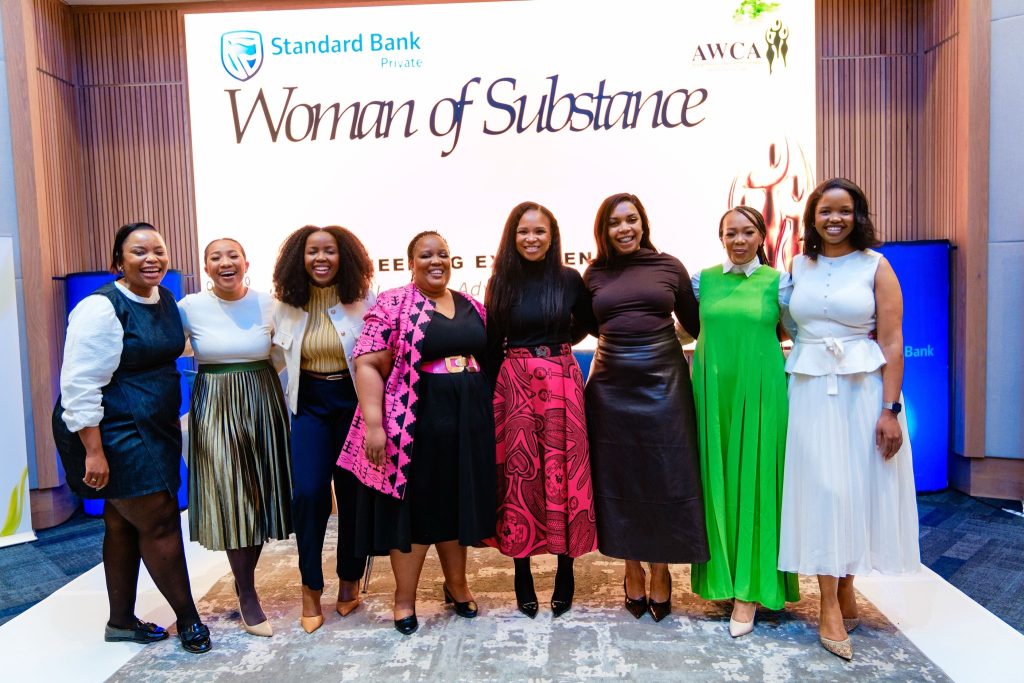
The Woman of Substance Conference and Gala
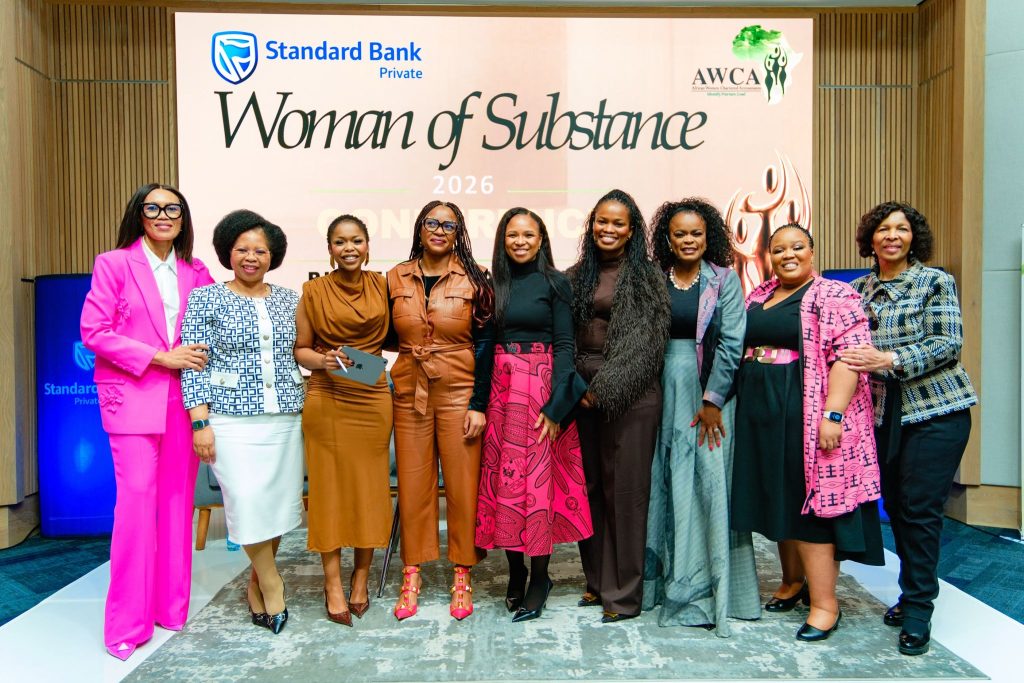
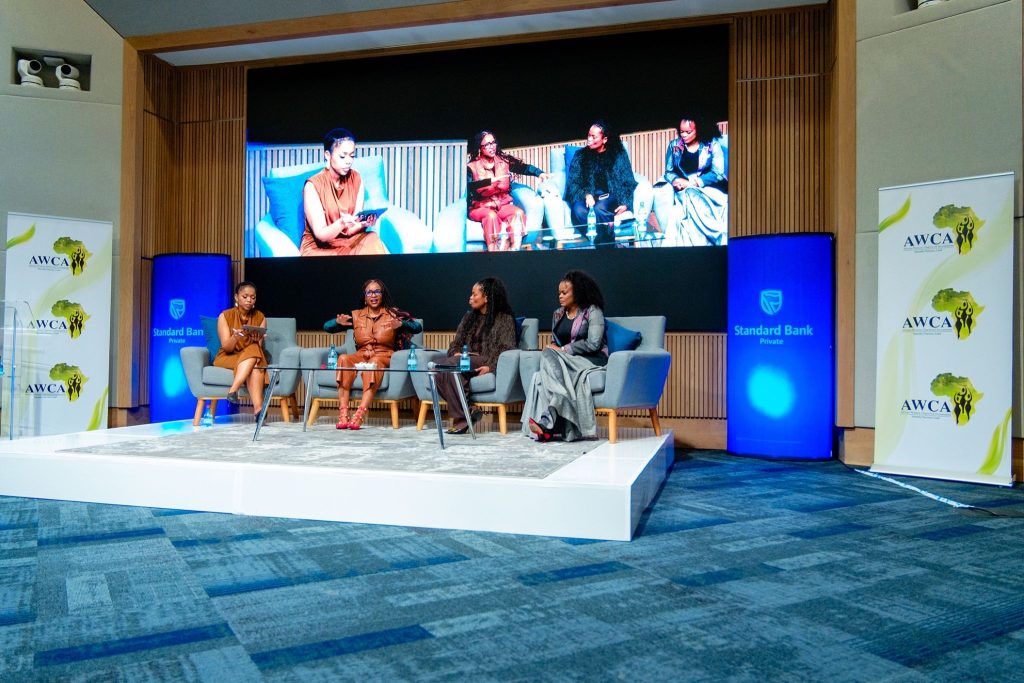
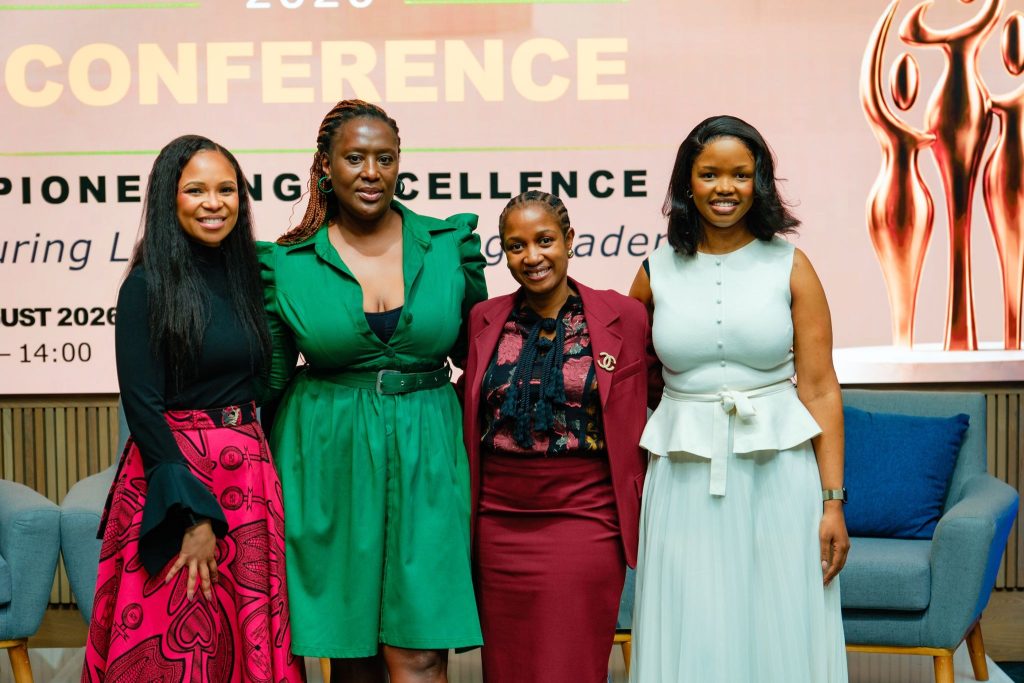
The centrepiece of this year’s calendar was the 2026 AWCA Woman of Substance Conference, held on 6 August under the theme “Pioneering Excellence: Honouring Legacy, Advancing Leadership.” Facilitated for a second consecutive year by conversation strategist Nozipho Tshabalala, the conference brought together AWCA’s leadership, advisory council, past presidents, members and industry stakeholders for a day built around legacy, institution building and what the organisation has called “the work that still lies ahead.”
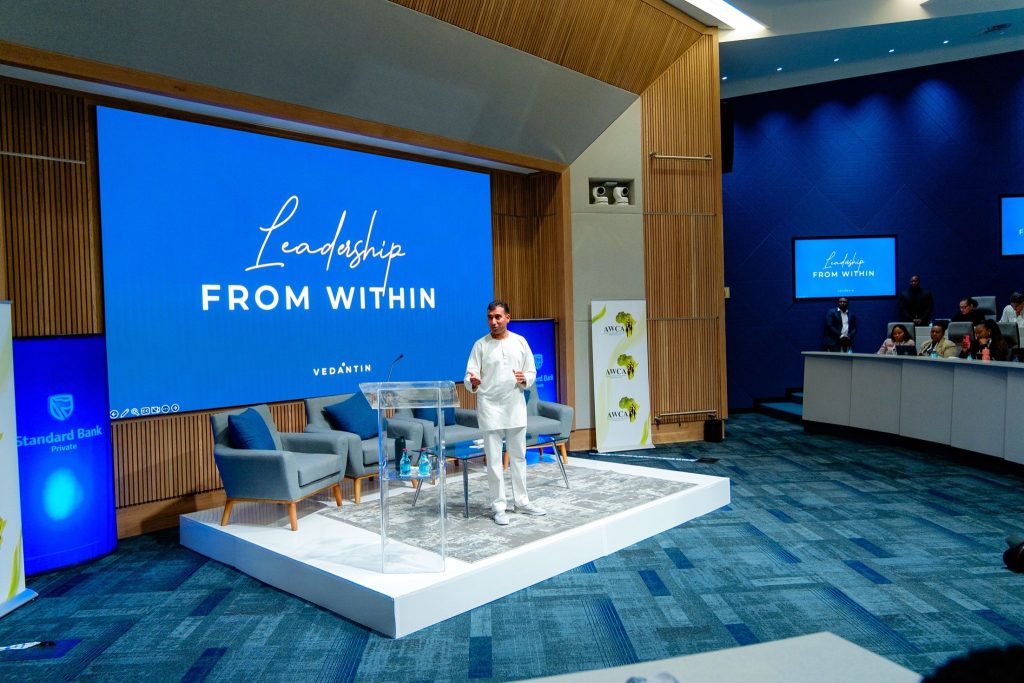
The programme leaned heavily on cross-generational dialogue. Panellists included governance specialist Nokwanda Khumalo, entrepreneur and credentialed coach Thabo Mongatane, and past AWCA leaders Buhle Hanise, Zama Khanyile and Babalwa Ngonyama, each reflecting on what it means to build and sustain an institution across changing leadership generations. Standard Bank economist Mulalo Madula offered context on Africa’s broader economic outlook, while international keynote speaker Sudhakar Dass addressed what the organisers described as “leadership from within,” framing effective leadership as an internal discipline rather than a title.
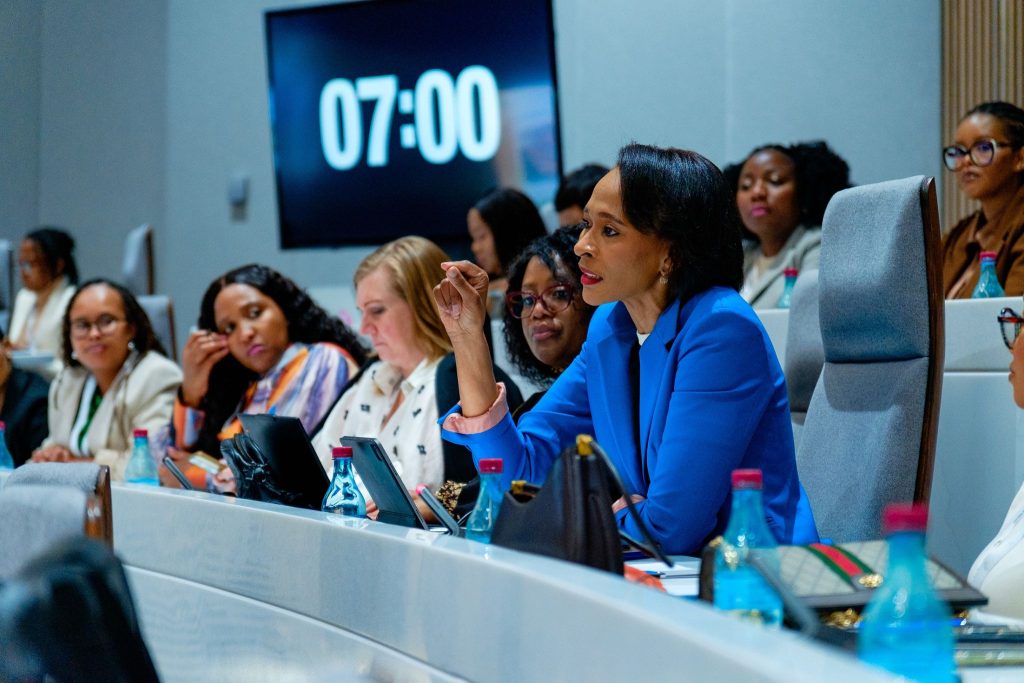
The day’s most personal moment, by the organisers’ own account, came from Dr Precious Moloi Motsepe, honoured as the 2026 Woman of Substance on behalf of the Motsepe Foundation. Her acceptance remarks, later recirculated by AWCA on Women’s Day itself, 9 August, centred on a message that leadership should listen before it acts and that women’s advancement lifts entire communities, not just individuals.
The conference was followed by a dedicated fundraising gala in support of the AWCA Bursary Fund, which the organisation described as central to growing the pipeline of African women pursuing the CA(SA) designation. AWCA framed every contribution to the fund as bringing an individual student closer to qualifying, and by extension, strengthening the profession’s long term transformation.
Azania Mosaka served as MC for the associated Women’s Month celebration recognising this year’s “Women of Substance” honourees, an event AWCA president Pumla Molope CA(SA) described as a chance to celebrate “women who are breaking barriers, building legacies, showing up for others and making their mark in their own unique way.”
Reaching Students Before They Reach the Profession
Alongside the flagship conference, AWCA’s student chapters ran a series of campus events aimed squarely at the pipeline problem the organisation was built to address.
On 15 August, the AWCA Milpark EXCO partnered with Monocle Solutions and Milpark Education to host a “Data Room” session on Microsoft Teams, examining how finance, data and technology intersect in modern accounting careers. Speakers included Catherine Horne, a partner at Monocle Solutions; Helena Geldenhuys, head of data for a corporate and investment bank; financial data analyst Nadia Louw; finance technology lead Bulelwa Mnyani; and Karabo Malete, a third year CA(SA) trainee offering a student’s eye view of the profession. AWCA framed the session as evidence that the accountant of the future will need fluency not just in numbers, but in data strategy and digital transformation.
The same day, separate “Women in Finance: Empowering Future Leaders” sessions ran at the AWCA NWU Mafikeng and NWU Potchefstroom student chapters, bringing together CA(SA) professionals and trainees, including Susan Gwamura, Elizabeth Ritho, Asisipho Gagayi, Nthabiseng Mokhothu, Linda Ndungane and Hlengiwe Moloi, among others, to speak with students about personal branding, navigating the CA(SA) qualification process, and building resilience through academic and professional setbacks. One student summed up the day’s takeaway as a reminder that the CA journey rewards persistence more than any single advantage.
Naming the Funding Barrier Directly
Not every part of the month’s programming was celebratory in tone. On 7 August, AWCA subcommittee member Agcobile Ndukwana joined a radio segment on Eastern Cape station truFM to discuss funding barriers facing aspiring chartered accountants, and why, in the organisation’s view, investment in young Black women specifically is essential to building South Africa’s future financial leadership. It was a pointed acknowledgment that access to the profession remains constrained less by talent than by money, echoing the rationale AWCA has given for its bursary fund since 2002.
Recognising the Volunteers Behind the Scenes
The month closed with an internal note of appreciation: the 2026 President’s Awards, recognising subcommittee members for advisory support and other contributions that AWCA said helped strengthen the organisation over the past year. It was a smaller, quieter event than the conference or the gala, but organisationally significant, a reminder that AWCA’s public programming depends on a volunteer base that rarely appears in the headline moments.
What’s Next
AWCA’s calendar doesn’t end with August. A Power Breakfast on the theme “Bold, Balanced and Unapologetic” is scheduled for 22 August in Gqeberha, hosted in partnership with Ayabonga Koswana Attorneys and Standard Bank Private, continuing, in the organisation’s words, conversations with “women who are redefining leadership and success on their own terms.”
The Broader Message
Read as a whole, AWCA’s Women’s Month programming resists a simple celebratory narrative. The organisation used August to honour women who have already reached senior roles in finance, banking and governance, but it paired that recognition with campus sessions, funding advocacy, and bursary fundraising squarely aimed at the entry point of the profession, where the representation gap is widest.
That dual focus reflects the numbers AWCA itself cites: a 21 fold increase in Black female CAs since 2002 is real progress, but a profession where Black women still account for only about 3% of chartered accountants nationally is not yet transformed. For an organisation built on the premise that advancement requires both role models at the top and funding at the bottom, this year’s Women’s Month activities suggest the two halves of that mission are still being run in parallel, and that AWCA sees neither as complete without the other.
This article draws on AWCA’s public communications and event programming from August 2026, alongside independently verified background on the organisation’s founding, structure and historical statistics.