

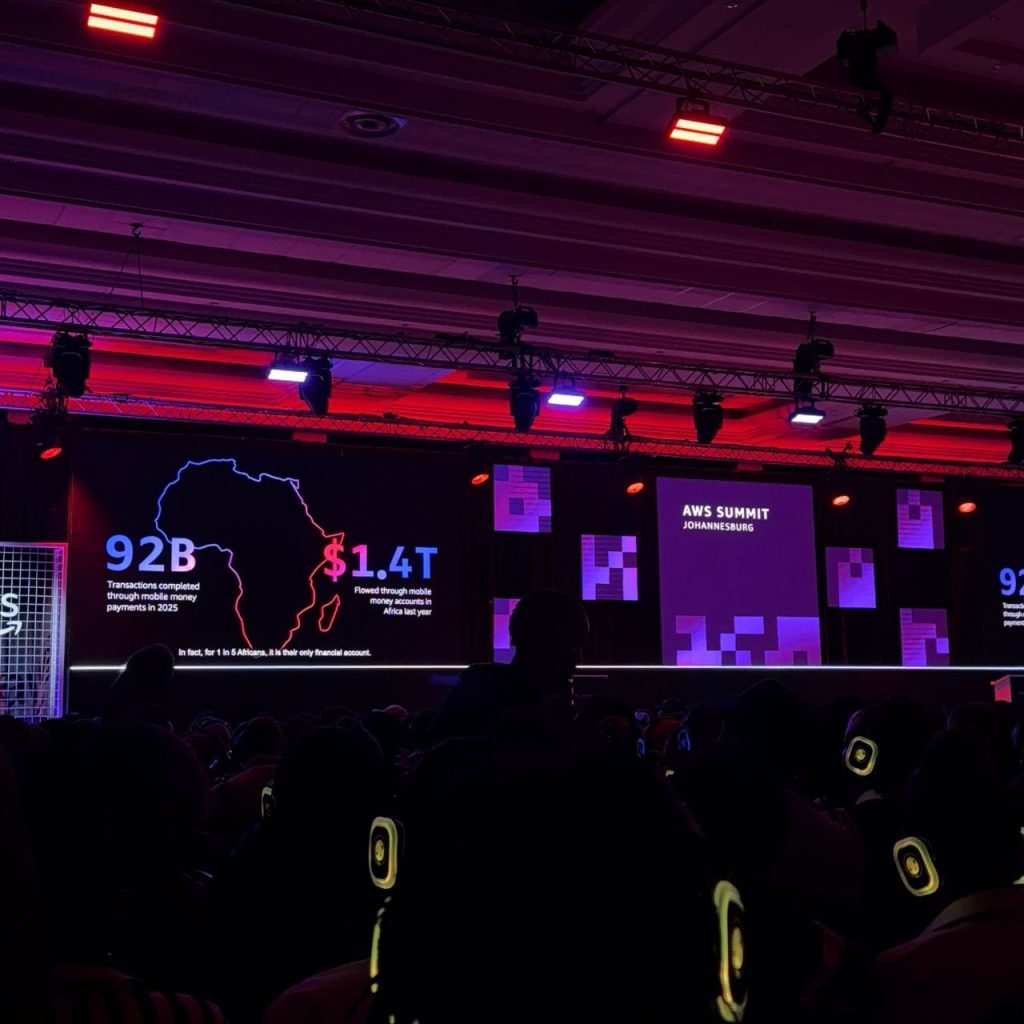
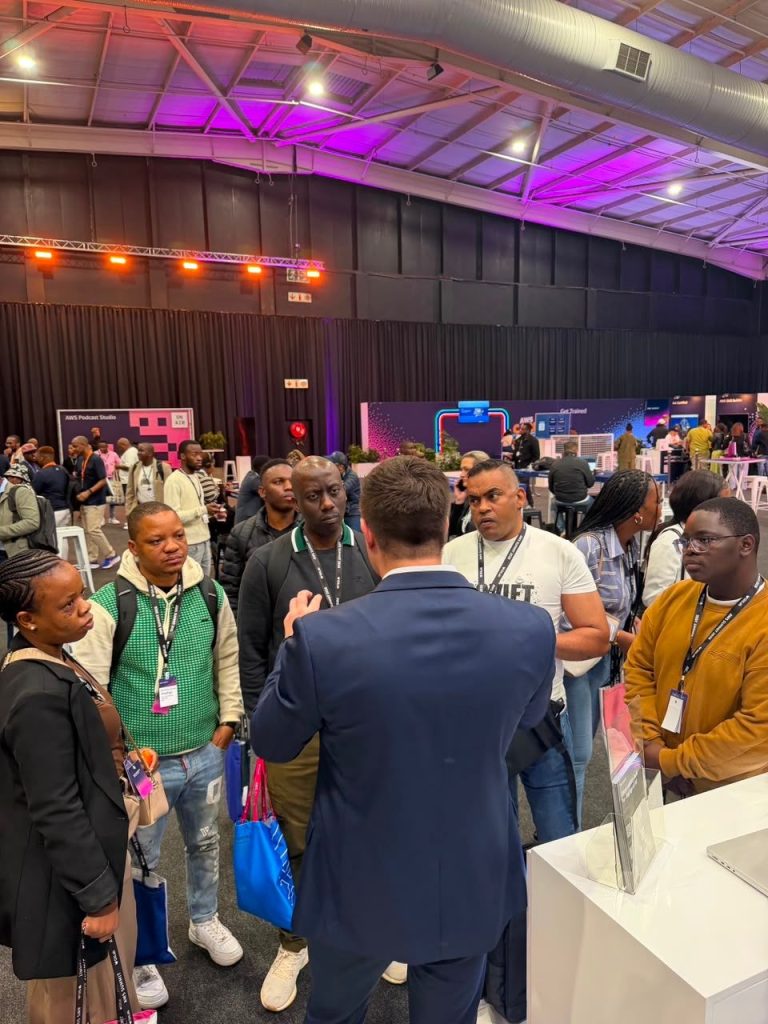
When more than 10,000 delegates converged on the Gallagher Convention Centre in Midrand for AWS Summit Johannesburg 2026, the scale alone told a story. But it was a single line, delivered in a session on database architecture, that captured the anxiety and ambition running beneath the summit’s polished keynotes: the database will cheerfully execute your worst idea; it has no opinion, and it never has. In a year when nearly every session track led back to agentic AI, that observation landed as something closer to a warning than a joke. The systems enterprises are now empowering to reason, decide, and act carry no built in judgment of their own. The judgment has to come from the organizations deploying them.
That tension, between the sheer velocity of adoption and the discipline required to govern it, was the throughline of a summit that Amazon Web Services’ Regional General Manager for Israel and Sub Saharan Africa, Harel Ifhar, described as a milestone underscoring the continent’s appetite for transformation. It was also, unmistakably, a debut moment for South Africa’s financial services sector as a reference market for enterprise AI in emerging economies.
The Banks Have Stopped Asking “Should We?”
If AWS Summit Johannesburg 2025 was about migration, the 2026 edition was about what comes after it. Standard Bank Group’s Chief Digital Officer, Khomotso Molabe, and FirstRand’s Kevin Mitchell used their keynote slots not to describe cloud journeys in progress but to report on operating models already transformed. Mitchell detailed how FNB South Africa has adopted Amazon’s agentic development environment, Kiro, to compress product development cycles, a claim echoed independently across multiple attendee accounts of the same session, suggesting the story resonated well beyond the marketing deck.
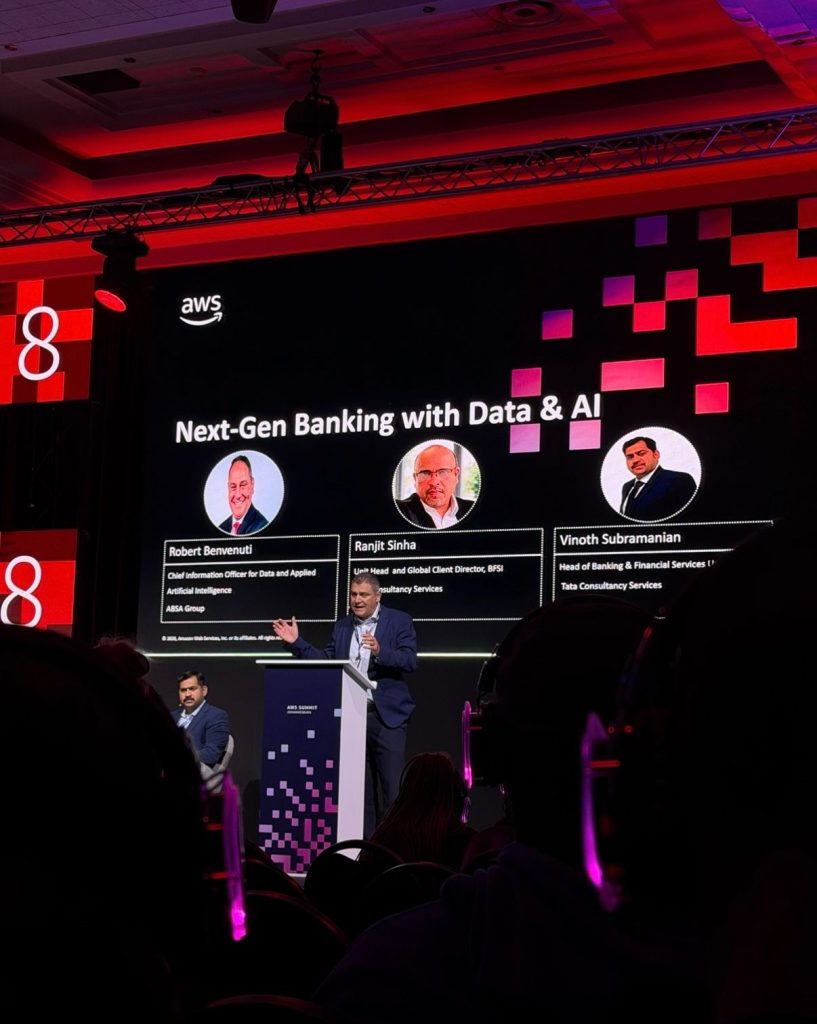
Absa’s contribution came via its “Next Gen Banking and AI” session, where Robert Benvenuti argued for a more structural shift: rather than using AI to accelerate legacy processes, banks should be designing entirely new, AI-native workflows from the outset. That framing was reinforced in a separate session tracing Standard Bank’s “Platform Effect,” a locked-down AWS Landing Zone that, according to presenters Duncan McDonald and Anica Maharaj, became the foundation not just for infrastructure migration but for the enterprise data and AI capabilities the bank is building now. Capitec, meanwhile, sent its CTO Leon Rajindrapersadh to discuss database performance and real-time query optimization directly with attendees, a detail that matters because it signals infrastructure layer AI investment, not just customer-facing chatbots.
The pattern across the financial sector sessions was consistent: institutions that spent the previous several years on migration are now treating that migration as sunk cost infrastructure for a second, more consequential build phase.
The Technical Center of Gravity: Agentic Everything
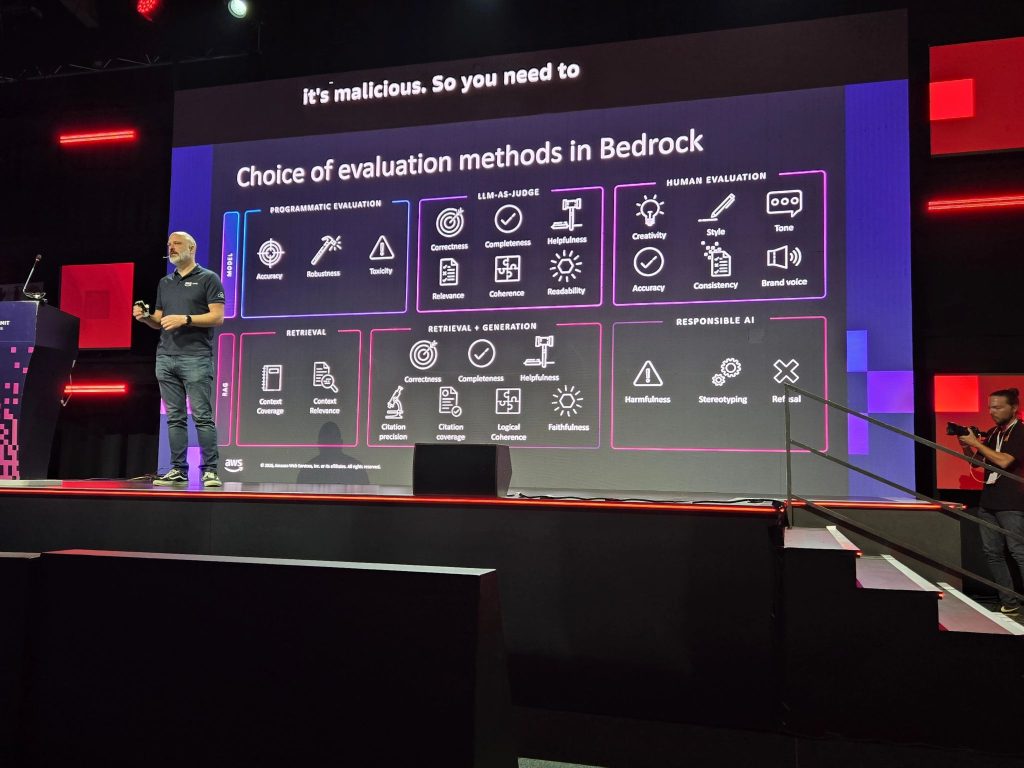
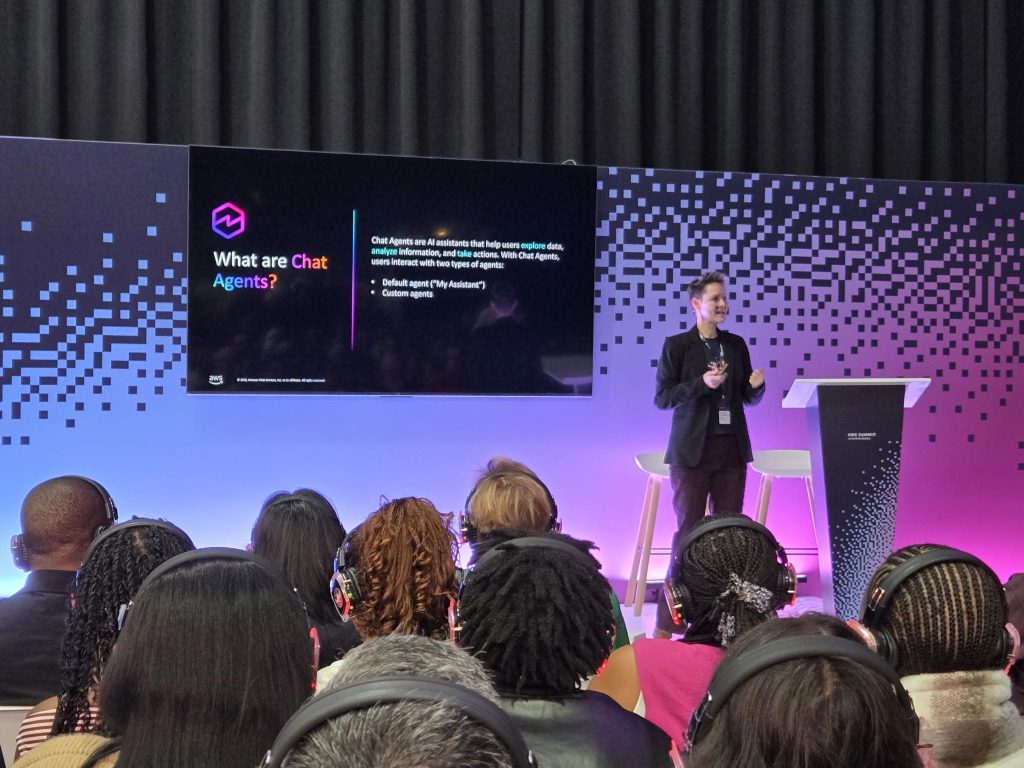
Beyond banking, the summit’s technical programming clustered heavily around agentic AI architecture. Sessions on Strands Agents introduced attendees to what several described as an “agentic loop” model: systems that reason about a goal, select tools, execute, evaluate results, and iterate, rather than following a fixed, prescripted workflow. AWS’s positioning of Strands as interoperable with Python-based tools, community-built tools, the Model Context Protocol (MCP), multiple model providers, and multi-agent collaboration patterns suggests the company is deliberately courting developers wary of platform lock-in, a notable posture shift for a hyperscaler.
Parallel sessions on AWS Blocks and rapid full-stack application development reinforced the same message from a different angle: the barrier between prototyping and shipping to production is being deliberately collapsed. For South Africa’s fast-growing base of independent software vendors and systems integrators, AfriGIS, among them, used a summit fireside chat to discuss how local ISVs can scale geospatial and AI capabilities onto the global stage and that compression matters commercially, not just technically.
Business intelligence got its own treatment through Amazon QuickSight, now powered by Amazon Q, which several attendees flagged as a practical entry point for organizations not ready for full agentic deployment: natural language querying without SQL, automated executive summaries generated from raw datasets, and machine learning-driven anomaly detection layered onto existing reporting. It is, in effect, agentic AI’s on-ramp for finance and operations teams rather than engineering teams.
Security Is Catching Up to the Hype
Not every session treated agentic AI as an unambiguous good. A packed security track examined cloud networking, multicloud connectivity, AI specific threat models, and, pointedly, the governance challenge of securing autonomous agents rather than static applications. The consistent message from that track was that the fundamentals of cloud security (identity and access management, least privilege design, monitoring, and incident response) remain the substrate on which any agentic deployment has to sit, regardless of platform. For an event so heavily weighted toward the promise of autonomous systems, the presence and depth of this track suggests AWS and its enterprise customers are, at minimum, aware that the “no opinion” database problem scales directly with agent autonomy.

The Talent Pipeline Is the Quiet Story
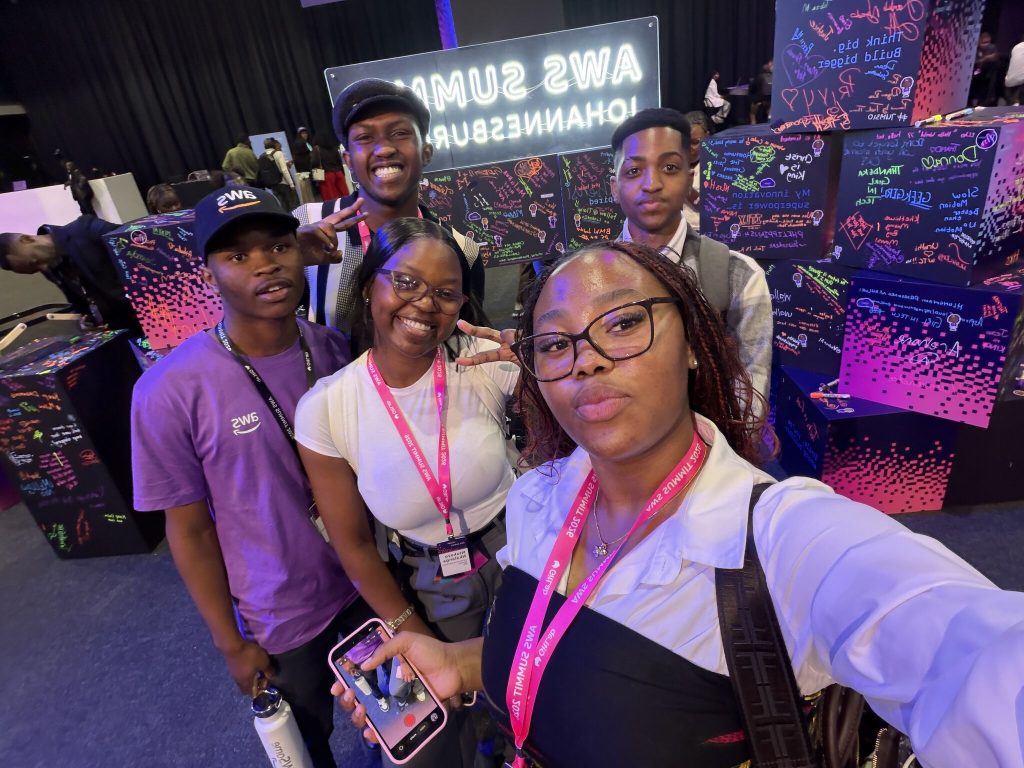
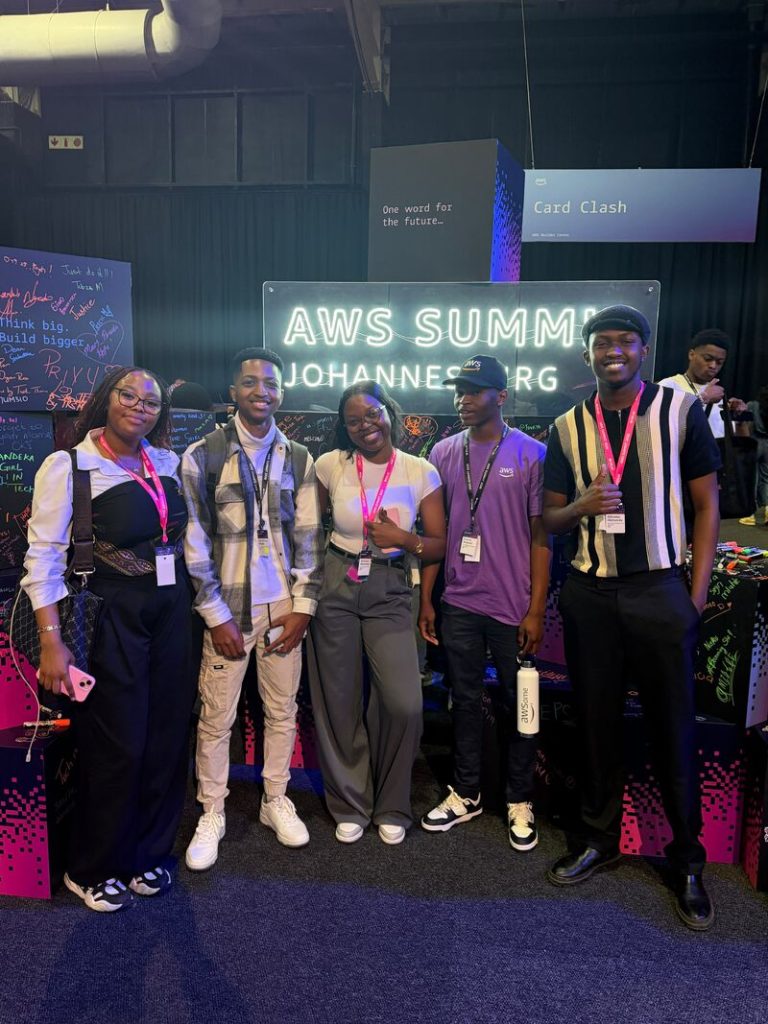
Alongside the enterprise narrative ran a second, less headline grabbing one: the scale of youth and early career engagement. University affiliated AWS Student Builder Groups from the Tshwane University of Technology and the University of South Africa were visibly present throughout, and a summit eve AI and Cloud Community Class run in partnership with Deloitte drew what organizers characterized as an unusually engaged cohort of Johannesburg based students. Absa’s own contribution to the skills conversation came through its Cloud Guild initiative, presented by Olof Neser and Amir Shalaby as a mechanism for turning cloud fluency into an AI skills multiplier across every line of business, an explicit acknowledgment that technology procurement without workforce capability is a stalled investment.
The Regional Thesis
Threaded through nearly every account of the summit, from AWS’s EMEA Managing Director Tanuja Randery to partner ecosystem leaders discussing Sub Saharan Africa’s growth trajectory, was a consistent regional thesis: Africa’s opportunity is not to catch up to markets that industrialized cloud adoption a decade earlier, but to skip several intermediate steps entirely. Attendees repeatedly framed the region’s relative infrastructure youth as an advantage, allowing enterprises to build AI native rather than AI retrofitted.
Whether that thesis survives contact with the harder governance, security, and organizational change questions raised in the summit’s own security and leadership sessions is the question worth watching over the next twelve months. The database, after all, will keep executing whatever instructions it is given. The discipline has to come from everyone standing between the AI system and the button.
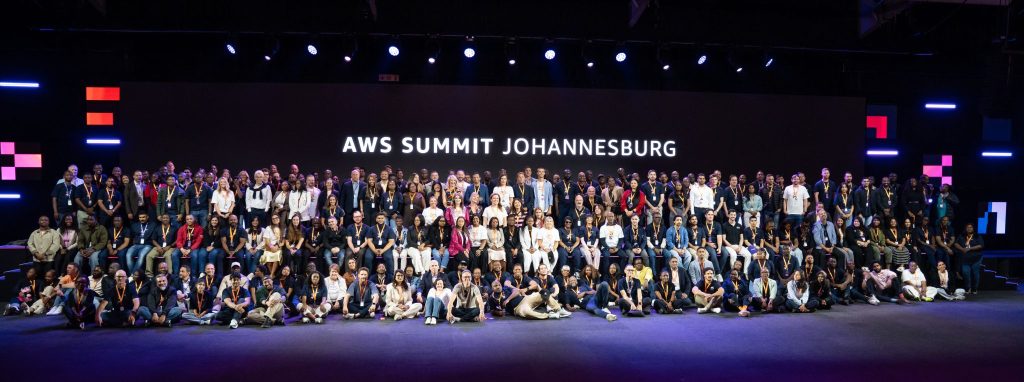
Reporting drawn from public commentary and session recaps shared by AWS Summit Johannesburg 2026 attendees, speakers, and sponsoring organizations, including Amazon Web Services, Standard Bank Group, FirstRand/FNB, Absa Group, Capitec, AfriGIS, Deloitte, and academic partners including the Tshwane University of Technology and the University of South Africa.
Keep up the good work. I love seeing you shine and contributing positivity in the Tech space
Thank you so much for your support!